Calgary homeowners face unique challenges when determining the right time to upgrade their attic insulation. Alberta’s extreme temperature fluctuations, ranging from -30°C winters to +30°C summers, place exceptional stress on insulation materials and accelerate natural degradation. Most homes built before 2000 contain insulation that no longer meets current building code requirements, resulting in higher energy bills and reduced comfort levels.
Replacement timing depends on several interconnected factors: the original material type, installation quality, ventilation performance, and visible damage indicators. Fiberglass insulation can last 80-100 years under ideal conditions, while cellulose typically requires replacement after 20-30 years. However, Calgary’s climate often shortens these timelines when moisture infiltration or inadequate ventilation compromise insulation performance.
Understanding when to schedule an attic insulation upgrade in Calgary protects your investment while maximizing energy savings. At Eco Attic Solutions, we help homeowners understand material-specific lifespans, diagnostic warning signs, age-based replacement schedules, and financial considerations for informed upgrade decisions.
What Determines the Lifespan of Attic Insulation?
Attic insulation lifespan varies considerably based on material composition, environmental conditions, and installation methodology. Each insulation type responds differently to Alberta’s demanding climate patterns.
Material-Specific Performance Expectations
| Insulation Type | Expected Lifespan | Key Characteristics |
| Fiberglass (Blown-in/Batt) | 80-100 years | Durable, maintains R-value when dry, cost-effective |
| Cellulose | 20-30 years | Settles faster, absorbs moisture readily, eco-friendly |
| Spray Foam | 80+ years | Longest lifespan, provides air-sealing, higher initial cost |
Fiberglass batt and blown-in insulation demonstrate exceptional durability when properly installed and protected from moisture, making it a cost-effective choice for Calgary homes. Cellulose insulation settles more rapidly and absorbs moisture more readily in humid attic environments. Spray foam insulation offers the longest lifespan, with closed-cell formulations providing both insulation and air-sealing properties, though higher initial costs make it less common in retrofit applications.
Alberta Climate Impact on Degradation
The City of Calgary’s Climate Projections report shows that historically, Calgary has 16.2 freeze-thaw cycles in winter (December, January, February), with projections showing an increase to 18.5 cycles by 2050. These temperature swings stress building materials and insulation systems.
Temperature differentials between heated living spaces and unheated attics create condensation risks when warm, moisture-laden air encounters cold surfaces. This moisture exposure degrades insulation performance over time, reducing effective R-values by 20-40% in severely compromised installations.
Installation Quality as a Longevity Factor
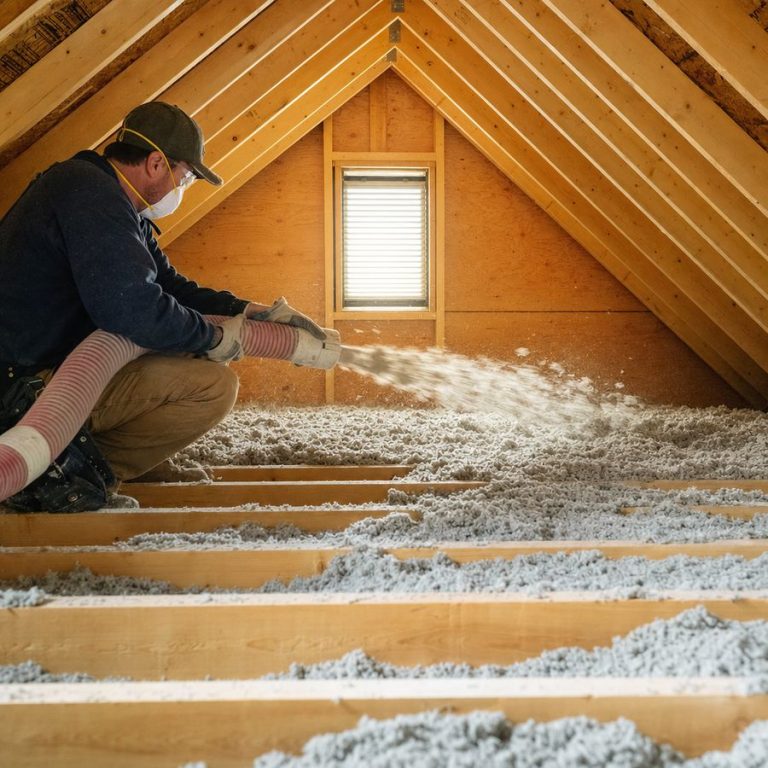
Professional installation techniques directly influence how long insulation maintains its rated performance. Properly installed blown-in insulation achieves consistent density and coverage, eliminating gaps that allow heat transfer. Poor installation creates settling patterns and thermal bridging that reduce insulation effectiveness within 5-10 years.
The National Building Code principles specify that the attic vent area shall be not less than 1/300 of the insulated ceiling area, with at least 25% of required openings located at both the top and bottom of the space. Balanced intake and exhaust ventilation creates natural convection currents that continuously replace attic air, carrying moisture vapor outdoors before condensation occurs.
Warning Signs Your Calgary Home Needs an Attic Insulation Upgrade in Calgary
Recognizing insulation failure indicators helps homeowners address problems before energy waste becomes severe or structural damage occurs.
Visible Settling and Compression
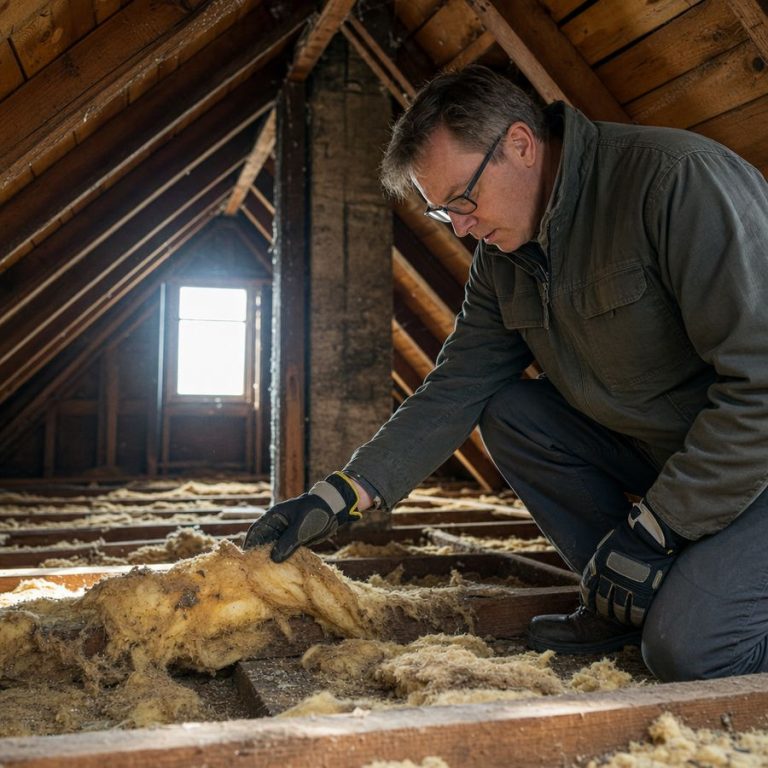
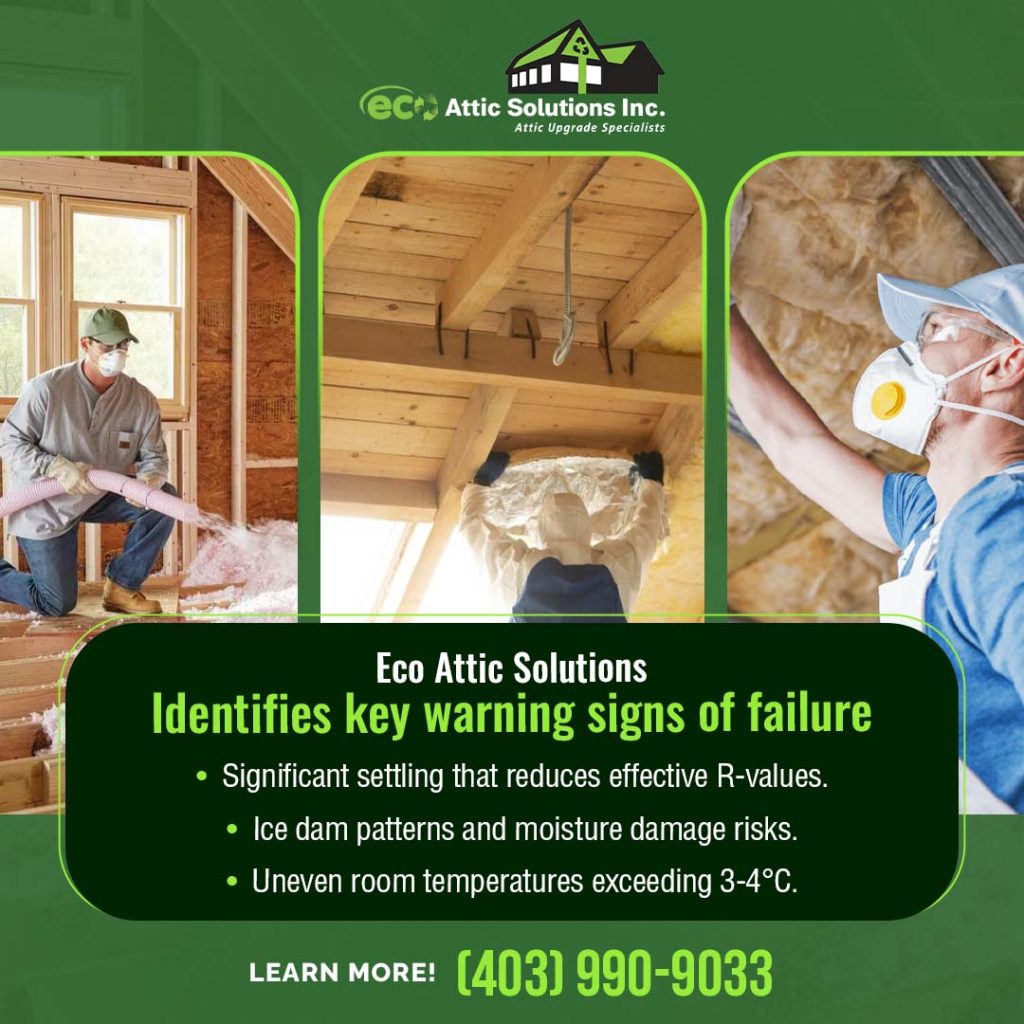
Insulation settling decreases the effective R-value, often reducing original R-40 installations to R-25 or lower over 15-20 years, especially with cellulose. Visual inspections show uneven insulation depth, with thinner coverage near eaves and deeper areas in the center. Compression from stored items on attic floors can create cold spots and higher heating costs.
Moisture Damage Indicators
Water staining on attic insulation signals active or historical moisture problems requiring immediate attention. Common moisture sources include:
- Roof leaks, penetrating through damaged shingles or flashing
- Plumbing vent condensation during cold weather
- Bathroom exhaust fans venting directly into attic spaces
- Ice dam meltwater, backing up under the shingles
Mold growth on insulation indicates prolonged moisture exposure. Mold can develop within 24-48 hours on wet organic materials, so quick action is essential to prevent health risks and structural damage. Musty odors from attic access points may signal hidden moisture issues, even if no visible damage is evident.
Ice Dam Formation Patterns
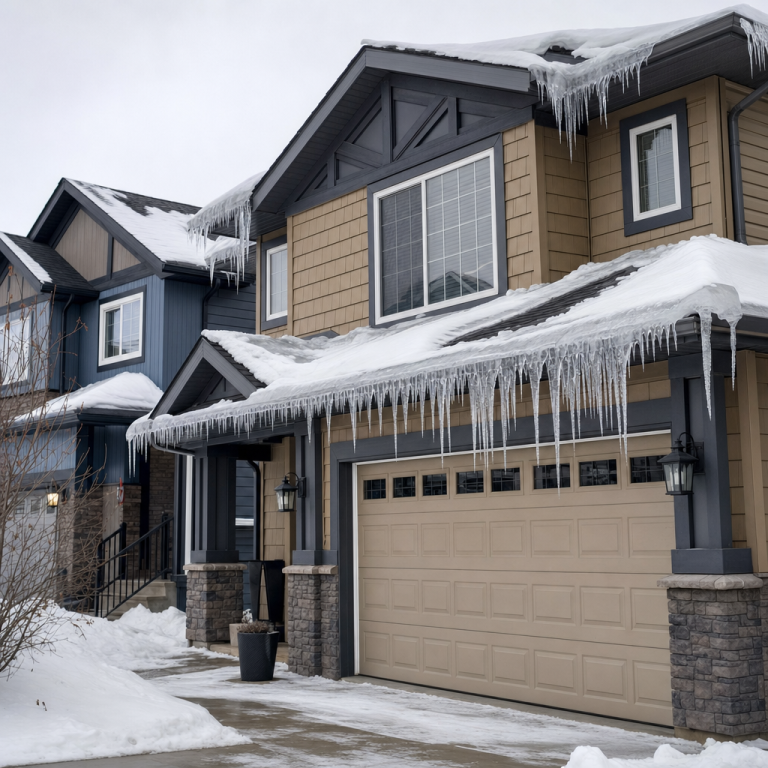
Ice dams form when heat escaping through inadequate insulation melts roof snow, which then refreezes at colder eave edges. Snowstorms resulted in $1.3 billion in insured damage in 2019, with ice dams contributing to water-related damage claims, according to Insurance Bureau of Canada data. Persistent ice dam issues, despite proper roof ventilation, suggest insulation failure that allows excessive heat loss. This heat causes localized warming, triggering the melt-freeze cycle.
Uneven Heating and Cooling Performance
Temperature differences over 3-4°C between rooms suggest insulation issues. Cold second-floor bedrooms in winter indicate heat loss through the attic, while excessive summer warmth shows poor thermal protection. HVAC systems that run continuously without reaching comfort levels often point to insulation deficiencies, leading to increased wear and higher operating costs.
Unexplained Energy Bill Increases
Natural Resources Canada notes that air leaks into the attic can account for substantial heat loss, making attic insulation and air sealing important for home energy efficiency. Energy bills rising 15-25% compared to similar-sized neighboring homes often indicate insulation problems, particularly when usage patterns remain constant. Tracking monthly energy consumption per square foot helps identify a gradual insulation performance decline that occurs too slowly to notice through comfort changes alone.
Pest Infestation Evidence
Rodents and insects nesting in attic insulation can disrupt materials and cause contamination, necessitating complete removal. Signs of pest activity include droppings on insulation, nesting patterns in blown-in materials, chewed insulation at entry points, and unpleasant odors from urine or dead animals. Professional attic insulation assessment identifies these warning signs and determines whether spot repairs or complete replacement provides the most cost-effective solution.
Age-Based Replacement Guidelines for Calgary Homeowners
The home construction era provides reliable guidance for planning insulation upgrades based on historical building practices and code requirements.
| Construction Period | Typical Original R-Value | Recommended Action | Priority Level |
| Before 1980 | R-12 to R-20 | Immediate evaluation and upgrade | High |
| 1980-2000 | R-30 to R-40 | Evaluate at 15-20 years | Medium-High |
| 2000-2010 | R-40 | Performance-based evaluation | Medium |
| After 2010 | R-45 to R-50 | Monitor for damage | Low |
Pre-1980 and 1980-2000 Construction
Properties constructed before 1980 typically contain insulation levels far below current standards, averaging R-12 to R-20 attic insulation compared to today’s R-50 minimum requirement under the Alberta Building Code. These homes often benefit most from timely upgrade planning, as improved attic insulation can help reduce heat loss and support better energy efficiency.
Homes built between 1980 and 2000 generally received R-30 to R-40 attic insulation at construction. While better than earlier standards, these levels still fall short of current requirements. Homeowners should schedule a professional evaluation at the 15-20 year mark, as settling patterns and moisture exposure often reduce effective R-values by 20-30%.
2000-2010 and Post-2010 Homes
Properties constructed between 2000 and 2010 typically met R-40 minimum requirements and should undergo inspection if occupants experience comfort issues or unexplained energy cost increases. These homes benefit from performance-based evaluation focusing on moisture control, ventilation adequacy, and air-sealing integrity rather than age-based replacement.
Homes built after 2010 generally comply with enhanced energy efficiency requirements approaching R-50 attic insulation levels and rarely require replacement within the first 15-20 years unless subjected to moisture damage, pest infestation, or catastrophic events.
Top-Up vs. Complete Removal Decisions
Adding insulation over existing materials works effectively when the current insulation remains dry and undamaged, no mold or pest contamination exists, and existing coverage provides at least an R-20 value. Complete removal becomes necessary when moisture damage affects more than 25% of the insulation area, pest infestation requires contaminated material disposal, or severe settling creates coverage gaps exceeding 30% of the attic floor area.
How Proper Ventilation and Air-Sealing Extend Insulation Life
Residential attic insulation performs optimally only when supported by adequate ventilation and thorough air-sealing. These interconnected systems work together to prevent moisture accumulation that accelerates insulation degradation.
The Whole-Attic Science Approach
Effective attic performance requires three components working in coordination: high-R-value insulation creating a thermal barrier between conditioned and unconditioned spaces, continuous air-sealing preventing warm, moisture-laden air from entering the attic, and balanced ventilation maintaining airflow that removes any moisture that does penetrate. Eco Attic Solutions’ experience shows that comprehensive approaches deliver 40-60% better long-term performance than insulation-only upgrades.
How Moisture Infiltration Accelerates Breakdown
Moisture exposure represents the primary threat to insulation longevity. When warm indoor air carrying water vapor leaks into cold attic spaces, condensation forms on insulation surfaces and within material fibers. Insulation R-values decrease by 2-3% for every 1% increase in moisture content. Severe moisture exposure can reduce effective R-values by 50% or more, eliminating most thermal protection benefits.
Priority Air-Sealing Locations
Air-sealing helps control attic moisture by stopping warm indoor air from reaching cold surfaces. Key areas to address include attic bypasses for plumbing, chimneys, ductwork, recessed lighting, and electrical penetrations. Pot lights pose specific challenges, as IC-rated fixtures can still allow air movement unless they are airtight, while non-IC fixtures need a minimum 3-inch clearance from insulation.
Why Insulation-Only Upgrades Often Fail
Adding insulation without addressing air leakage and ventilation problems produces limited benefits. Common failure patterns include increased condensation when new insulation traps moisture from unsealed air leaks, soffit vent blockage when blown-in insulation extends too far into eave areas, and ice dam persistence despite higher R-values. Professional residential attic insulation contractors assess all three components before recommending solutions, identifying the most cost-effective upgrade sequence that maximizes both performance and insulation lifespan.
What to Expect During a Professional Attic Insulation Assessment
A thorough attic evaluation reveals hidden problems and provides data necessary for accurate upgrade recommendations and cost estimates.
Thermal Imaging Inspection Process
Infrared cameras detect temperature differences invisible to human eyes, showing precisely where insulation gaps or air leakage occur. Thermal imaging works best during cold weather when temperature differentials between indoor and outdoor environments exceed 10°C. Thermal scans identify missing insulation in wall cavities or attic floor sections, air leakage patterns around penetrations and bypasses, moisture accumulation creating cooler surface temperatures, and HVAC ductwork leaks in unconditioned spaces. Thermal images provide visual documentation that helps homeowners understand problems and validate recommended solutions.
R-Value Measurements and Ventilation Evaluation
Inspectors measure existing insulation depth and calculate effective R-values based on material type and density. The current Alberta Building Code requires minimum R-50 attic insulation for new construction, though older homes rarely meet this standard. Measurement results compare existing performance to code requirements and identify specific upgrade targets.
Proper ventilation inspection examines both intake capacity at soffits and exhaust capacity at ridge or gable vents. Inspectors calculate the total net free ventilation area and compare the results to attic square footage requirements under the 1:300 ratio standard. Airflow testing may include smoke tests showing air movement patterns and identifying areas where ventilation blockages prevent effective moisture removal.
Documentation and Project Timeline
Professional evaluations provide written reports including thermal imaging photographs showing problem areas, current R-value measurements and upgrade targets, ventilation calculations and improvement recommendations, air-sealing priorities ranked by impact, material specifications and quantity estimates, and itemized cost projections for recommended work. Eco Attic Solutions Inc. provides detailed reports with thermal imaging, R-value measurements, and detailed project timelines for all Calgary-area evaluations.
Typical project progression follows this sequence:
- Initial consultation: 30-60 minutes discussing home performance concerns
- Detailed evaluation: 2-3 hours for thorough inspection and testing
- Report delivery: 3-5 business days for comprehensive documentation
- Project scheduling: 1-4 weeks, depending on season and contractor availability
- Installation completion: 1-2 days for most residential projects
This documentation serves multiple purposes: informing homeowner decisions, supporting rebate applications, and providing baseline data for measuring upgrade effectiveness.
Schedule Your Free Attic Insulation Assessment in Calgary
Knowing when to upgrade attic insulation protects your home investment while maximizing comfort and energy savings. We provide compliant attic solutions throughout Calgary and surrounding communities, addressing the interconnected systems that determine long-term insulation performance.
Whether you’re experiencing rising energy bills, comfort problems, or approaching the evaluation timeline for your home’s age, a professional evaluation provides clarity about upgrade timing and expected benefits. Call (403) 990-9033, or email admin@ecoatticsolutions.com to schedule your no-obligation thermal inspection, or visit our Contact Page to request information.
Eco Attic Solutions serves Calgary, Okotoks, Cochrane, High River, and nearby areas with professional residential attic insulation contractor services designed for Alberta’s demanding climate conditions.