Alberta commercial property owners face mounting pressure from rising operational costs and unpredictable energy markets. Heating and cooling expenses continue climbing, while aging building envelopes hemorrhage conditioned air through under-insulated attic spaces. The financial impact extends beyond monthly utility bills to include premature HVAC replacements, ice dam repairs, and moisture-related structural damage.
A strategic thermal upgrade presents a dual opportunity: immediate reduction in energy consumption paired with access to municipal financing programs designed specifically for commercial building improvements. Property owners who understand available incentives, calculate realistic payback periods, and select qualified contractors position themselves to capture both short-term savings and long-term asset value appreciation.
This guide provides practical frameworks for navigating Alberta’s commercial insulation landscape. We examine the financial mechanics of thermal upgrades, explain how integrated air-sealing and ventilation systems multiply returns, outline municipal financing structures, and establish criteria for contractor evaluation. At Eco Attic Solutions, we help commercial property owners across Calgary and surrounding Alberta communities translate technical building science into measurable bottom-line improvements.

Why Alberta Commercial Properties Lose Money Through Inadequate Roof Insulation
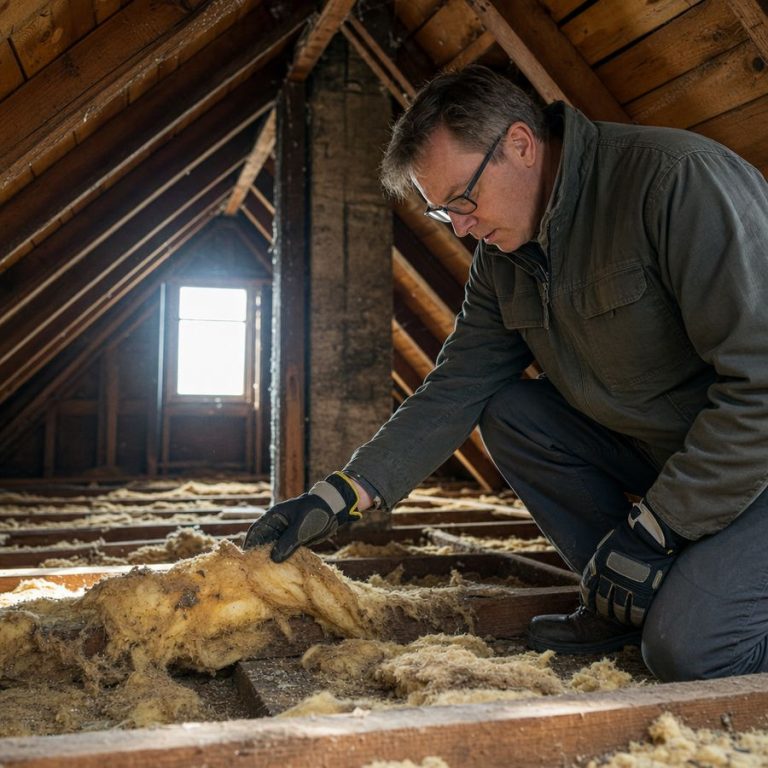
Commercial buildings constructed before 2010 typically feature attic insulation values between R-10 and R-20, far below current building code requirements of R-40 or higher. This deficiency creates continuous thermal bridging, where heat transfers directly through the building envelope rather than being retained within conditioned spaces. The financial consequences manifest in multiple ways.
Commercial and institutional buildings in Canada used roughly 1,057 petajoules of energy, or about 12 percent of national energy use, according to Natural Resources Canada. NRCan data also show that space heating accounts for the largest share of energy use in the sector. Buildings with substandard roof insulation for commercial buildings experience 25-40% higher energy costs compared to properly insulated structures of similar size and usage patterns.
Financial Impact Beyond Utility Bills
The direct costs of heat loss represent only part of the equation. Under-insulated commercial attics force HVAC systems to operate at higher capacity and longer run times, accelerating wear on compressors, heat exchangers, and blower motors. This operational stress typically reduces equipment lifespan by 3-5 years, transforming a 15-year system into a 10-12 year investment.
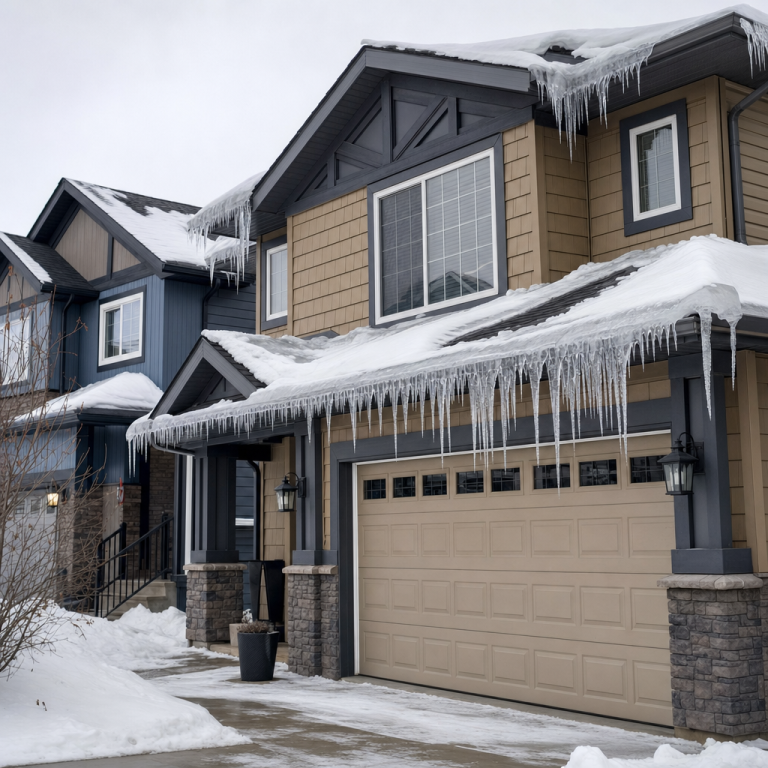
Alberta’s freeze-thaw cycles create additional problems for buildings with inadequate attic insulation. Warm air escaping through the roof deck melts snow, which refreezes at the eaves and forms ice dams. These formations block proper drainage, forcing water under roofing materials and into wall cavities. SGI Canada received 2,600 ice dam claims in early 2014 that cost $21.7 million, illustrating the scale of potential damage.
Common warning signs of inadequate commercial attic insulation include:
- Uneven interior temperatures between building zones
- Visible ice formations along the roof edges during the winter months
- Excessive HVAC runtime without corresponding comfort improvements
- Moisture staining on interior ceilings or upper walls
- Abnormally high energy costs relative to building size and occupancy
Our whole-attic science approach addresses these interconnected problems through integrated assessment rather than isolated interventions, identifying both thermal deficiencies and the structural factors that compound energy waste.
How Air-Sealing and Ventilation Multiply Your Insulation Investment Returns
Adding insulation material without addressing air leakage delivers incomplete results. Thermal resistance (R-value) measures a material’s ability to slow conductive heat transfer, but air infiltration bypasses this resistance entirely through convective movement. Warm interior air escapes through gaps and penetrations, while cold exterior air enters, creating continuous heat exchange regardless of insulation depth.
Simulated HVAC energy savings for sealed versus vented attics averaged 18% across California climate regions, demonstrating that the combined approach targets both conductive and convective heat loss mechanisms simultaneously. Similar performance improvements apply to commercial buildings in Alberta’s climate zones.
Priority Air-Sealing Zones in Commercial Buildings
- Roof penetrations for HVAC equipment, exhaust fans, and plumbing vents
- Electrical junction boxes and conduit pathways in ceiling assemblies
- Perimeter gaps where walls meet roof decks
- HVAC chase ways and mechanical room transitions
- Recessed lighting fixtures in dropped ceiling areas
Proper ventilation plays an equally important role in long-term system performance. Trapped moisture within attic cavities reduces insulation effectiveness, promotes mold growth, and accelerates structural deterioration. Balanced intake and exhaust ventilation removes moisture-laden air while maintaining consistent attic temperatures that prevent ice dam formation.
The integrated system delivers measurable ROI improvements. Buildings combining air-sealing with insulation upgrades achieve faster payback periods compared to insulation-only projects, primarily due to reduced HVAC maintenance costs and extended equipment lifespan.
Eco Attic Solutions assesses each commercial property’s specific air leakage patterns through blower door testing and thermal imaging, creating targeted sealing strategies that address the most significant energy loss pathways before insulation installation begins.
Understanding Alberta’s Municipal Energy Efficiency Financing Landscape for Commercial Properties
The Clean Energy Improvement Program (CEIP) is Alberta’s version of Property Assessed Clean Energy (PACE) financing, enabling residential and commercial property owners in participating municipalities to access flexible, long-term financing and pay it off through their property tax bill. This innovative financing mechanism addresses one of the most significant barriers to commercial building upgrades: upfront capital requirements.
The general framework provides several advantages for commercial insulation service projects. Financing is attached to the property, not the property owner, which means if the property sells, the new owner assumes responsibility for repayment while also enjoying the benefits of the upgrade. Repayment occurs through property tax billing over extended periods (typically 10-20 years), aligning payment schedules with energy savings realization.
Current Alberta CEIP Program Status for Commercial Properties
In 2022, the City of Edmonton and ABmunis partnered to launch Canada’s only active commercial PACE program, and ABmunis intends to have five commercial PACE programs in the market by the end of 2025. Calgary’s City Council approved a Commercial CEIP bylaw in April 2025, and the city is currently developing the program.
Program Availability Note: Commercial CEIP programs are currently available in Edmonton and under development in Calgary. Other Alberta municipalities may be exploring commercial programs, but availability varies significantly. Property owners should verify current offerings directly with their municipal government, as program terms, eligibility criteria, and available funding change based on provincial and municipal budget allocations.
General CEIP Program Characteristics
CEIP covers up to 100 percent of project costs and offers convenient repayment through the property owners’ regular property tax bill. Interest rates and terms are set by each participating municipality. Property owners benefit from lower interest rates secured by their municipality, and approval is primarily based on mortgage and property tax payment history.
For current information on commercial attic insulation in Alberta, financing options, consult:
- Alberta Municipalities Clean Energy Improvement Program
- City of Calgary Commercial CEIP
- Natural Resources Canada’s Building Energy Efficiency Resources
Eco Attic Solutions helps commercial property owners navigate the financing landscape by providing the technical documentation required for program applications, including thermal performance assessments and projected energy savings calculations that meet municipal review standards.
Calculating the True Payback Period for Commercial Attic Upgrades
Realistic return-on-investment analysis requires accounting for all cost components and savings variables specific to each property. Simple payback calculations that divide total project cost by first-year energy savings often underestimate actual returns by excluding secondary financial benefits and overestimating installation expenses.
Cost Components for Commercial Attic Insulation in Alberta
Material Costs:
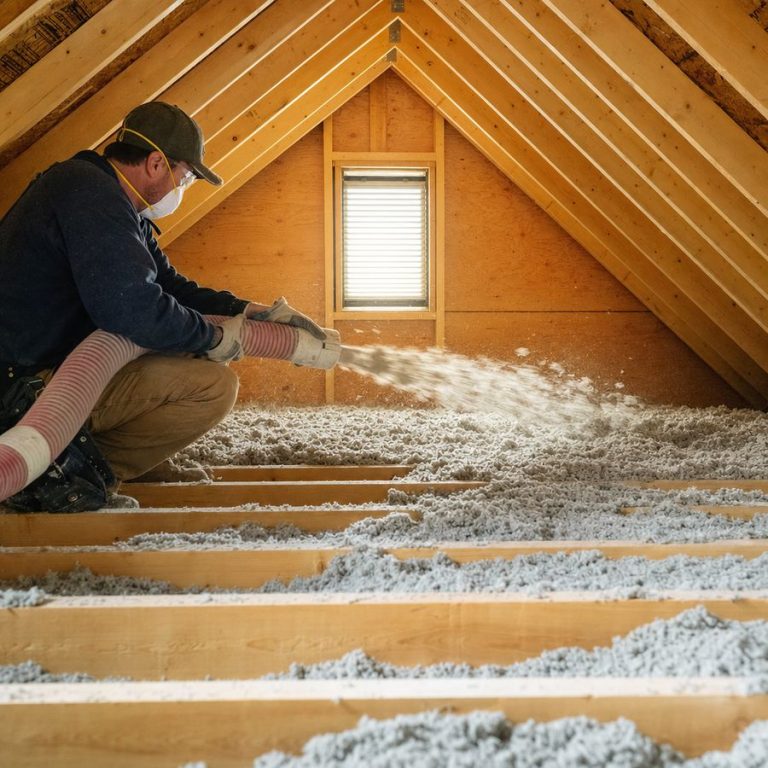
- Blown-in fiberglass insulation: $0.80-$1.20 per square foot (installed)
- Air-sealing materials (spray foam, caulking, gaskets): $0.30-$0.50 per square foot
- Ventilation improvements (baffles, ridge vents): $0.20-$0.40 per square foot
Labor and Professional Services:
- Thermal imaging: $400-$800
- Installation labor: $1.50-$2.50 per square foot
- Post-installation verification: $300-$600
Energy Savings Calculation Framework
Annual energy savings depend on multiple variables:
- Current insulation level – Lower starting R-values produce higher percentage reductions
- Building size and configuration – Larger attic surface areas amplify total savings
- Heating/cooling degree days – Calgary’s climate zone generates 5,200+ heating degree days annually
- HVAC system efficiency – Older systems waste more energy, magnifying the insulation impact
- Occupancy patterns – 24-hour operations versus business-hours-only usage
Sample ROI Calculation: 5,000 sq ft Commercial Building
| Factor | Value |
| Current annual heating/cooling cost | $6,800 |
| Projected energy reduction (R-15 to R-45) | 35% |
| Annual energy savings | $2,380 |
| Total project investment | $22,000 |
| Simple payback period | 9.2 years |
| HVAC maintenance cost reduction | $400/year |
| Adjusted annual benefit | $2,780 |
| True payback period | 7.9 years |
Calculation assumes natural gas heating at $0.09/m³, electricity cooling at $0.11/kWh, based on Alberta utility rate averages
Non-Energy Financial Benefits
The 2019 Survey of Commercial and Institutional Energy Use found over half a million commercial and institutional buildings in Canadian provinces, with total energy consumed at 948.2 million gigajoules. Buildings with above-code insulation performance command 4-7% higher property valuations in commercial real estate markets. Additional financial benefits include:
- Extended HVAC equipment lifespan (3-5 additional years)
- Reduced service call frequency (12-18% fewer maintenance events)
- Lower insurance premiums in some jurisdictions (ice dam damage risk reduction)
- Improved tenant satisfaction and retention in leased properties
When selecting a commercial insulation contractor, technical competency directly impacts these long-term performance outcomes. Eco Attic Solutions’ transparent quoting process itemizes all cost components and provides energy modeling specific to your building’s characteristics, eliminating surprises and establishing clear performance expectations.
Selecting a Qualified Commercial Insulation Contractor in Alberta
Commercial building envelope work demands specialized expertise distinct from residential insulation installation. Contractors lacking commercial project experience often misjudge access challenges, underestimate material requirements, and fail to coordinate with building operations to minimize disruption.
Critical Qualification Factors
Safety and Regulatory Compliance: A qualified commercial insulation contractor maintains current WorkSafeBC or Alberta Occupational Health and Safety certifications for confined space entry, fall protection, and respiratory protection. Commercial projects involve unique hazards, including elevated work platforms, active mechanical systems, and potential asbestos or other hazardous materials in older buildings.
Verify liability insurance coverage of at least $5 million for commercial general liability. Request certificates of insurance listing your property as an additional insured party before work begins.
Technical Capabilities: Effective roof insulation for commercial buildings requires competencies beyond material installation:
- Building envelope check-up through thermal imaging and blower door testing
- Air barrier continuity planning for complex roof geometries
- Ventilation calculation specific to commercial applications
- Integration with existing HVAC, electrical, and fire suppression systems
- Post-installation performance verification
Request references from commercial projects of similar scale and complexity. Contact those references directly to verify on-time completion, budget adherence, and post-installation performance.
Red Flags During Contractor Selection
- Reluctance to provide detailed line-item quotes separating materials, labor, and ancillary costs
- Absence of a commercial project portfolio or inability to provide verifiable references
- Unwillingness to discuss safety protocols, worker training, or site management procedures
- Lack of manufacturer certifications for specified insulation products
- No written warranty covering both materials and workmanship
Strong contractors understand municipal financing program documentation requirements and provide the technical reports necessary for application approval. They also offer performance guarantees backed by warranty coverage, typically 1-2 years for workmanship and 10-25 years for materials.
Eco Attic Solutions’ approach to commercial insulation service combines building science expertise with project management discipline. The company coordinates installation timing to minimize operational disruption, provides documentation supporting financing applications, and delivers performance verification confirming that the designed R-values and air-sealing targets were achieved
Take the Next Step Toward Lower Operating Costs
Commercial attic insulation upgrades deliver measurable financial returns when properly designed and executed by qualified contractors. The combination of reduced energy consumption, extended HVAC lifespan, and potential municipal financing support creates compelling economics for Alberta property owners facing rising operational costs.
Strategic thermal improvements require integrated inspection of insulation, air-sealing, and ventilation as interconnected systems rather than isolated interventions. This whole-attic science approach, properly executed, transforms energy-wasting building envelopes into high-performance assets that protect bottom-line profitability over decades of service.Ready to evaluate your commercial property’s upgrade potential? Contact Eco Attic Solutions at (403) 990-9033, email admin@ecoatticsolutions.com, or visit our Contact Page to schedule a thermal evaluation. We serve commercial property owners throughout Calgary and surrounding Alberta communities with transparent analysis, competitive pricing, and installation quality backed by verifiable performance guarantees.