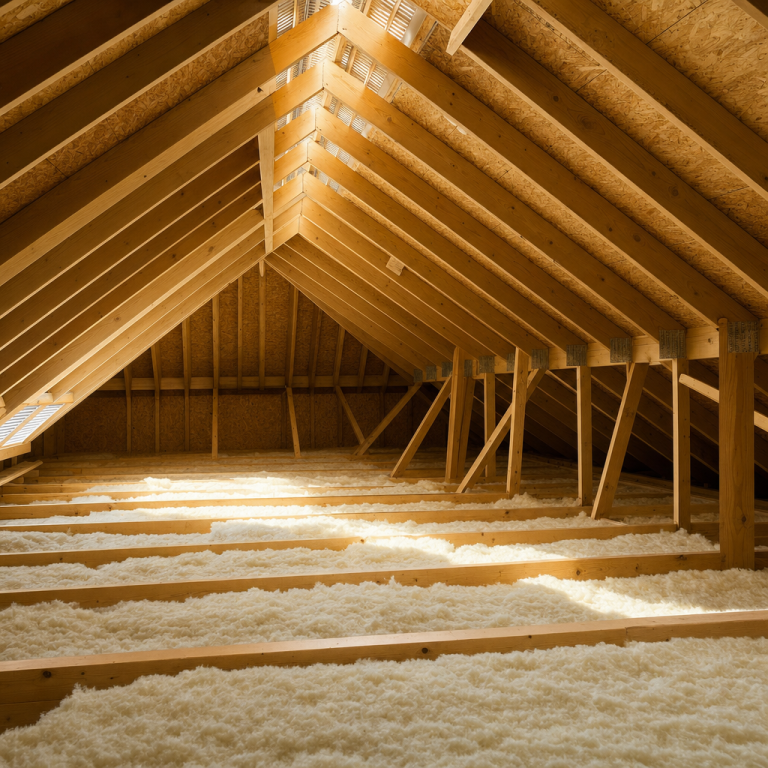
Commercial buildings face unique challenges when it comes to energy efficiency and climate control. Rising utility costs, tenant comfort concerns, and aging infrastructure create operational headaches for property owners across Calgary’s competitive real estate market. This guide examines a commercial attic insulation in Calgary project that demonstrates how strategic insulation upgrades deliver measurable financial returns while solving persistent building performance problems. At Eco Attic Solutions, we’ve completed numerous commercial projects where proper insulation transformed problem properties into efficient, comfortable spaces that meet modern energy standards.
The Challenge: Energy Loss in a Calgary Commercial Building
The property owner contacted us seeking an attic insulation upgrade in Calgary after facing mounting operational challenges. The two-story structure housed office spaces on the upper floor and warehouse operations below, serving three separate commercial tenants. Original construction included R-20 fiberglass batt insulation in the attic space, which had compressed and deteriorated over nearly four decades of Alberta weather extremes.
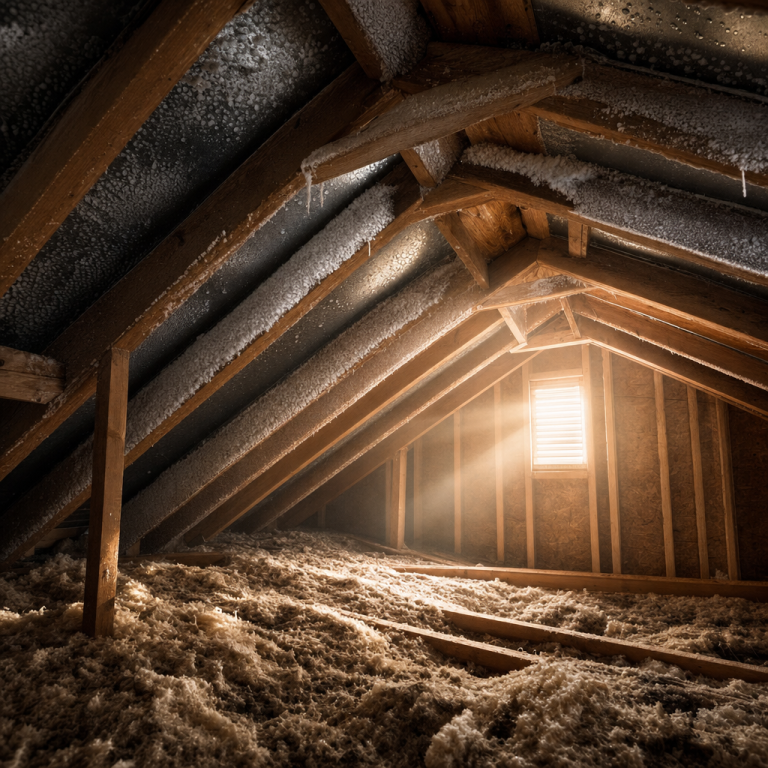
The property owner contacted us after facing mounting operational challenges. Winter heating bills had increased 40% over five years, with monthly natural gas costs reaching $2,800 during peak cold periods. Second-floor office tenants reported temperature fluctuations of 8-10°C between perimeter and interior spaces, making some workstations uncomfortably cold. Ice dams formed consistently along roof edges each winter, causing water infiltration that damaged ceiling tiles and created liability concerns.
| Building Challenge | Before Upgrade | Business Impact |
| Monthly heating costs (winter) | $2,800 | 40% increase over 5 years |
| Office temperature variation | 8-10°C | Tenant comfort complaints |
| Ice dam occurrence | Every winter | Water damage, liability concerns |
| Effective R-value | R-12 to R-15 | Below code requirements (R-40) |
An initial energy audit revealed significant thermal bridging through the roof assembly. Thermal imaging showed surface temperature variations exceeding 15°C across the ceiling plane. The existing insulation had settled to an effective R-12 to R-15 in many areas, falling far short of current commercial building code requirements of R-40 for attic spaces in Calgary’s climate zone.
With lease renewals approaching for two major tenants, addressing comfort complaints became a business priority beyond simple cost savings.
Inspection and Planning for Commercial Attic Insulation in Calgary
Professional inspection of commercial properties requires different protocols than residential inspections. Our evaluation process began with comprehensive documentation of existing conditions, building systems, and operational constraints that would affect the project scope.
Structural Evaluation and Access Planning
The technical assessment revealed bar joist construction with corrugated metal decking, creating irregular surfaces that complicated insulation installation. We documented six HVAC units mounted on the roof with supply and return ductwork penetrating the attic space, plus electrical conduit runs, fire suppression sprinkler lines, and multiple roof access hatches serving maintenance personnel. Each penetration represented a potential thermal bypass requiring specific air-sealing strategies.
R-Value Analysis and Code Compliance
Existing insulation measured R-12 to R-20 across different zones, with significant compression around mechanical equipment and a complete absence in several hard-to-reach areas. Alberta’s commercial building code requires R-40 for attic insulation in Climate Zone 7A, where Calgary is located. Achieving this target from current conditions required adding approximately 11-13 inches of blown-in fiberglass insulation, bringing the total depth to 15-17 inches, depending on existing base levels.
Ventilation System Evaluation
Commercial buildings often have inadequate attic ventilation ratios compared to residential standards. This property had only ridge vents without corresponding soffit intake vents, creating stagnant air conditions that contributed to moisture accumulation and reduced insulation performance. Our analysis calculated required ventilation rates based on attic square footage and determined that adding continuous soffit vents along all eaves would be necessary to support the upgraded insulation system.
Material Selection for Commercial Applications
For this commercial insulation contractor project, we specified blown-in fiberglass insulation rather than cellulose based on several factors. The building housed sensitive electronic equipment and data servers that required fire-resistant materials. Fiberglass offers superior fire performance ratings and doesn’t settle as much as cellulose over time, making it more suitable for commercial installations where long-term performance stability matters. We selected formaldehyde-free products to support indoor air quality standards for office environments.
Coordination and Timeline Planning
Unlike residential projects, commercial insulation upgrades must accommodate business operations and tenant activities. At Eco Attic Solutions, we developed a phased installation schedule, working evenings and weekends to minimize disruption. The project was divided into three zones corresponding to tenant spaces, allowing us to complete work in sections while maintaining building access and operations. Total installation time spanned two weeks of actual work days spread across four calendar weeks to accommodate scheduling constraints.
Installation Process and Project Execution
Executing this attic insulation upgrade in Calgary required careful preparation and systematic implementation to deliver quality results while respecting the active commercial environment below.
Pre-Work Preparations and Safety Protocols
Before beginning work, our crews established extensive protection measures. We installed temporary barriers around HVAC equipment to prevent insulation contamination of mechanical systems. Drop cloths and protective coverings were placed over stored inventory in the warehouse section, and plastic sheeting sealed doorways between work zones and occupied office spaces. All team members completed confined space safety training and wore appropriate respiratory protection, given the dusty attic environment and presence of old insulation materials.
Air-Sealing Methodology
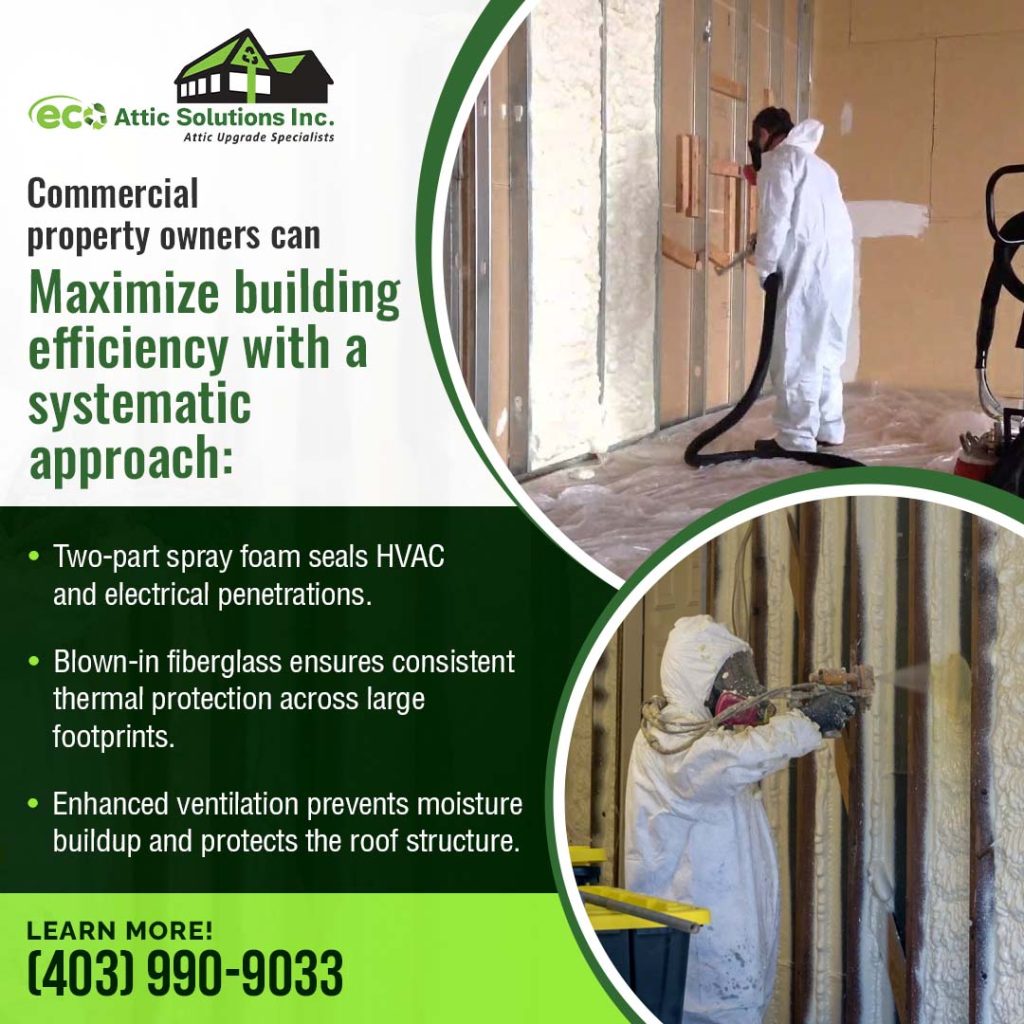
Air leakage represents the primary source of energy loss in commercial buildings, often exceeding heat transfer through insulation itself. We applied two-part spray foam around all penetrations, including:
- Plumbing vents and electrical conduits
- HVAC ductwork and mechanical equipment connections
- Structural elements where roof joists meet exterior walls
- Recessed lighting fixtures in office ceiling areas (with fire-rated barriers)
Special attention went to sealing the perimeter where roof joists meet exterior walls, a common thermal bypass in commercial construction. This thorough air-sealing strategy addresses the root cause of energy loss before adding insulation material.
Blown-In Insulation Application
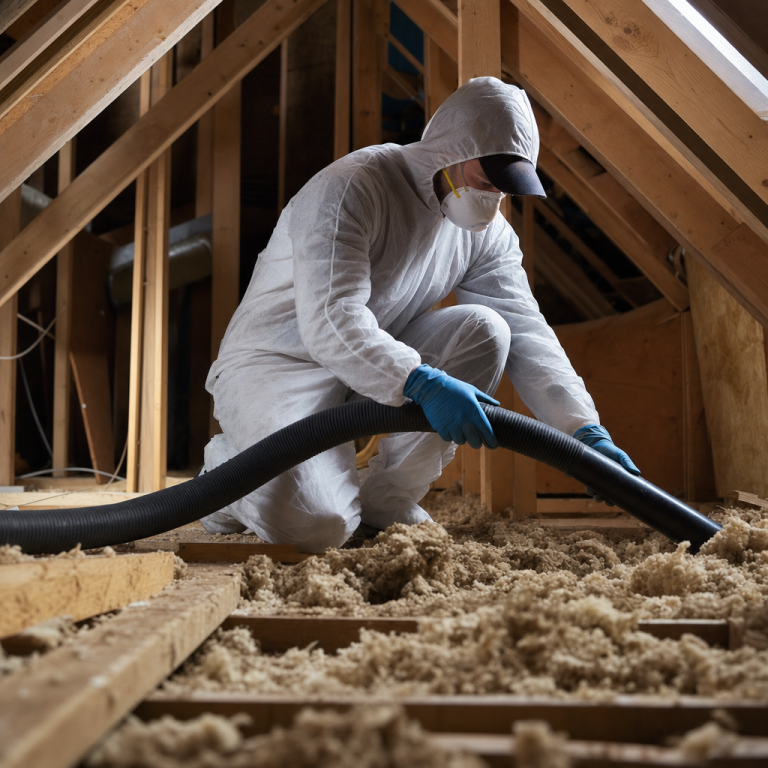
Installation began in remote attic sections and progressed toward access points to avoid compressing freshly installed material. We used pneumatic blowing equipment positioned outside the building, feeding insulation through 3-inch diameter hoses snaked through roof hatches. Depth markers were placed every 10 feet to verify consistent coverage, achieving target R-values across the entire attic floor.
In areas with irregular joist spacing or around mechanical equipment, technicians hand-distributed material to reach difficult spots that the blowing equipment couldn’t access effectively. Total insulation volume reached 410 bags of blown-in fiberglass, bringing the attic space to R-50 throughout, exceeding code requirements by 25% to account for minor settling and provide additional performance margin.
Ventilation System Upgrades
Concurrent with insulation installation, roofing crews installed continuous perforated soffit vents along all building eaves, providing 144 square feet of intake ventilation. This balanced the existing 156 square feet of ridge vent exhaust capacity, establishing proper airflow from low to high points that prevents moisture accumulation and maintains insulation effectiveness. Ventilation baffles were installed between each roof joist to maintain clear airflow channels from the soffit to the ridge.
Quality Control and Final Verification
At Eco Attic Solutions, we conducted a comprehensive inspection using thermal imaging to verify uniform insulation coverage and identify any remaining thermal bridges. We documented final R-values across multiple zones and provided the property owner with detailed before-and-after thermal scans showing dramatic improvements in thermal envelope performance. All work zones were thoroughly cleaned, removing insulation debris and packaging materials before releasing spaces back to tenant use.
Measurable Results and Performance Data
The value of any commercial insulation service ultimately comes down to measurable business outcomes. This project delivered quantifiable improvements tracked over the initial twelve months post-installation.
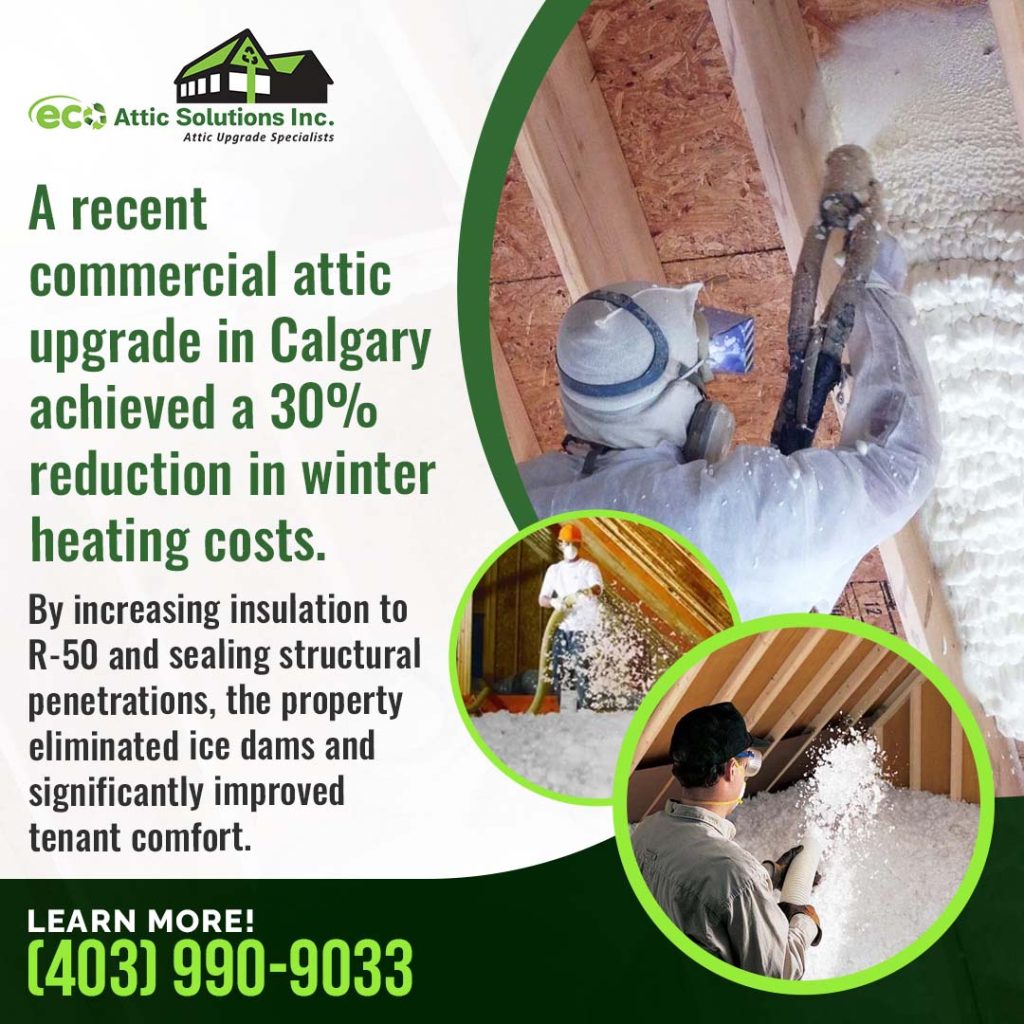
Natural gas consumption for heating dropped 30% in the first winter following the upgrade. The property owner’s utility bills decreased from an average of $2,400 per month during November through March to $1,680 per month for the same period one year later. Annual heating cost savings totalled approximately $4,320, against a project investment of $18,500.
Electricity consumption decreased 8% as HVAC systems required less runtime to maintain temperature setpoints. Post-upgrade temperature monitoring showed temperature variation between perimeter and interior workstations dropped from 8-10°C to 2-3°C. The first winter after installation produced zero ice dam formation despite severe cold snaps with temperatures below -25°C.
| Performance Metric | Before | After | Improvement |
| Winter heating (monthly avg) | $2,400 | $1,680 | 30% reduction |
| Office temperature variation | 8-10°C | 2-3°C | 70% improvement |
| Ice dam occurrence | Annual | Zero | 100% eliminated |
| Annual energy savings | — | $4,320 | Ongoing benefit |
| Annual ice dam costs saved | $1,500 | $0 | Eliminated expense |
| Annual HVAC maintenance reduction | — | $800 | Extended equipment life |
Combining direct energy savings ($4,320 annually), eliminating ice dam maintenance costs ($1,500 annually), and reducing HVAC service requirements ($800 annually), total annual operational savings reached approximately $6,620. This produced a simple payback period of 2.8 years, or 36% annual return on investment before considering applicable rebates.
Beyond quantified savings, the property owner reported improved tenant satisfaction and successfully renewed both major lease agreements, crediting the improved comfort conditions as a significant factor in tenant retention.
Lessons for Calgary Commercial Property Owners
This guide illustrates several important principles for commercial property owners considering roof insulation for commercial buildings or similar energy efficiency upgrades.
Warning Signs Indicating Inadequate Insulation
Commercial buildings should evaluate attic insulation when experiencing high heating costs relative to building size, persistent comfort complaints from tenants or employees, recurring ice dam formation each winter, or HVAC systems that run continuously without achieving temperature setpoints. Buildings constructed before 1990 often have insulation levels below current code requirements. Thermal imaging conducted during cold weather provides clear visual evidence of heat loss through roof assemblies.
Cost-Benefit Analysis for Different Property Types
Insulation upgrades typically deliver stronger returns for buildings with conditioned spaces directly below attic areas, such as office buildings, retail spaces, or multi-tenant commercial properties. Warehouse buildings with high ceilings and minimal climate control see smaller returns unless upper-level mezzanines or office areas require specific temperature ranges. Properties with high utility costs relative to square footage or those experiencing tenant turnover related to comfort issues benefit most from insulation improvements.
Supporting Sustainability Goals
Energy efficiency upgrades, including insulation, contribute to LEED certification points under Energy & Atmosphere credits. Buildings pursuing Energy Star certification benefit from documented energy consumption reductions. For commercial property owners with environmental, social, and governance reporting requirements, insulation projects offer quantifiable carbon emission reductions tied to decreased natural gas consumption.
Available Rebates and Incentives
Commercial property owners in Alberta should investigate rebate programs through local utilities and provincial energy efficiency initiatives. The Clean Energy Improvement Program (CEIP) offers financing options in participating Alberta municipalities, including Calgary. Commercial CEIP provides financing up to $1 million for eligible energy efficiency and renewable energy upgrades, with repayments made through property tax bills over terms up to 20 years, depending on the useful life of the installed upgrades. Working with experienced commercial insulation contractors who understand available incentives helps maximize financial returns on insulation projects.
Why Whole-Attic Science Matters for Commercial Properties
Insulation performs optimally only when integrated with proper air-sealing and ventilation systems. Commercial buildings with inadequate ventilation develop moisture problems that compromise insulation effectiveness and create indoor air quality concerns. Ice dams form when heat escaping through the roof melts snow, which then refreezes at the eaves. Addressing insulation alone without fixing air leakage and ventilation delivers incomplete results. At Eco Attic Solutions, we evaluate all three components and design integrated solutions rather than simply adding insulation material.
Expert Commercial Insulation Services in Calgary
Commercial insulation projects demand different expertise than residential work. Building code requirements, fire safety standards, coordination with active business operations, and integration with existing mechanical systems require contractors who understand commercial construction and can deliver results without disrupting your operations.
Our approach at Eco Attic Solutions prioritizes minimal business interruption while maintaining the highest quality standards. We develop customized schedules around your operational requirements, work during off-hours when necessary, and maintain clear communication throughout the project timeline. Our commercial project experience spans office buildings, retail centers, warehouse facilities, and light-industrial structures across Calgary and surrounding areas.
Every commercial project begins with an extensive inspection and detailed proposals that outline the scope, timeline, and expected outcomes. We provide transparent pricing that accounts for the specific challenges your property presents, and we stand behind our work with warranties covering both materials and installation quality.
Ready to improve your commercial property’s energy efficiency and reduce operating costs through strategic insulation upgrades? Call (403) 990-9033 to schedule a commercial property assessment. You can also reach us through our Contact Us page to discuss your specific building requirements. Eco Attic Solutions serves Calgary, Okotoks, Cochrane, High River, and surrounding communities with roof insulation for commercial buildings designed to deliver measurable results for property owners who demand both quality and accountability.