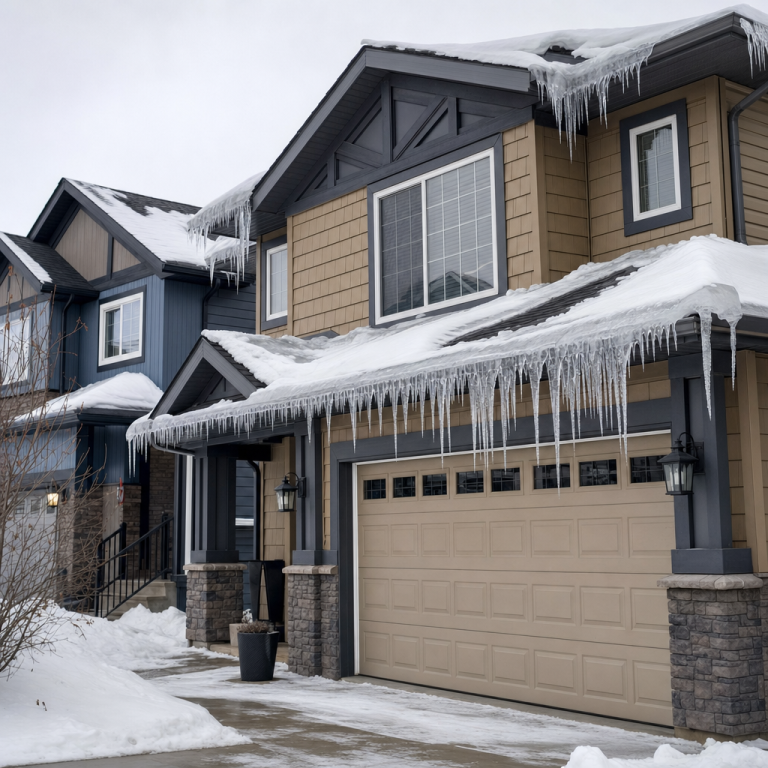
That water stain on your bedroom ceiling isn’t from a leaky pipe — it’s from an ice dam, and the insulation in your attic is the reason it keeps coming back. Every Calgary winter, thousands of homeowners discover that what they thought was a roofing problem is actually an attic insulation problem in disguise. Ice dams are spectacular in their damage and invisible in their cause, which is why so many homes get the same repairs year after year without ever fixing the root issue.
Quick Answer
Ice dams form in Calgary when heat escaping through an under-insulated attic melts roof snow, which refreezes at the cold eaves. Upgrading to R-60 attic insulation (the Alberta building code requirement), sealing air leaks, and correcting attic ventilation are the three steps that permanently prevent ice dam formation and protect your home from moisture damage.
What Causes Ice Dams in Calgary Homes?
Ice dams are the visible result of a temperature problem inside your attic. During a Calgary winter, your furnace heats your living space, and some of that heat naturally rises toward the ceiling and into the attic space above. In a properly insulated attic — one that meets the current R-60 (RSI 10.43) requirement under the National Building Code — Alberta Edition — very little of that heat transfers through to the roof deck. The attic stays cold, the roof surface stays cold, and snow accumulates uniformly without melting.
In an under-insulated attic, heat flows freely upward. The roof deck directly above your living space warms enough to melt the bottom layer of snow, which runs down the slope as water. When that water reaches the overhanging eaves — which are exposed to outside air and remain at or below freezing — it refreezes, building a ridge of ice that grows thicker with each melt-refreeze cycle. Once that ice ridge is established, it backs up water under the shingles with each subsequent melt, allowing liquid water to enter your attic and travel into ceilings, wall cavities, and electrical boxes.
Calgary’s chinook wind events make this problem uniquely severe. A chinook can push temperatures from -25°C to +10°C within hours, creating rapid snowmelt on the roof even before a proper ice dam has a chance to drain. That meltwater hits the still-frozen eave ice and refreezes repeatedly, sometimes within a single 24-hour period. According to research cited by Calgary disaster restoration experts, Calgary historically experiences approximately 16.2 freeze-thaw cycles per winter — a figure that is projected to increase further as regional climate patterns shift. Each of those cycles is an opportunity for ice dam damage to grow worse.
How Much Damage Can Ice Dams Actually Cause?
The ceiling stain is deceptive — it marks only where water finally appeared, not where it entered. By the time water shows on drywall, it has typically already travelled through insulation batts, along joists, down wall cavities, and sometimes through vapour barriers and electrical wiring. The actual penetration point may be a metre or more from where the stain appears. This is why ice dam repairs that address only the visible water damage so often lead to recurrence: the moisture pathway remains intact.
The damage cascade from a serious ice dam event includes: saturated attic insulation that permanently loses R-value; mold development in the attic framing and sheathing (which can begin within 24–48 hours of wetting in warm conditions); ceiling drywall that stains, sags, or fails; rot in roof framing if wetting is chronic; and potential electrical hazards from water reaching fixture boxes or wiring. Saturated insulation doesn’t bounce back when it dries — the fibres are compressed and the R-value is gone, creating a spot that produces more ice dams in the next storm. It’s a self-reinforcing cycle that gets more expensive with every season it goes unaddressed.
There is also a feedback loop specific to blown-in and batt insulation: once insulation becomes wet, it stops insulating, which means more heat reaches the roof deck, which accelerates snow melt, which feeds more water to the dam. A single ice dam event that soaks a section of your attic insulation can triple the rate of heat loss through that area for the rest of the winter. Our professional insulation removal service safely extracts water-damaged material before replacement — cutting the feedback loop at its source.
Does Attic Insulation Actually Prevent Ice Dams?
Yes — it is the most important preventive measure. Inadequate insulation is the underlying cause in the vast majority of ice dam cases. The logic is straightforward: ice dams require a warm roof deck to melt snow, and a warm roof deck requires heat escaping from the attic. Remove the heat loss and you eliminate the differential that creates dams. According to Great Northern Insulation, properly insulated and air-sealed attics maintain a cold roof surface that prevents the melt-and-refreeze cycle from starting.
But insulation alone is not always sufficient. Air leakage — the movement of warm, humid indoor air directly into the attic through gaps around pot lights, plumbing penetrations, attic hatches, exhaust fans, and wiring runs — often contributes as much heat to the attic as conduction through the insulation itself. Some building science experts suggest that air leakage can account for 30–40% of a home’s total heat loss, and when warm air bypasses the insulation entirely through a gap, no thickness of insulation overhead will compensate for it. The fix requires both air sealing and insulation — they work together.
The third piece is ventilation. A properly ventilated attic channels cold outside air through soffit intake vents, across the attic floor (above the insulation), and out through ridge or roof vents. This cold air flush keeps the attic cold and prevents warm air from stagnating near the roof deck. If soffit vents are blocked by insulation (a common installation error where blown-in material covers the baffles), or if ridge vents are inadequate, attic temperatures rise even when insulation depth is correct. Our attic ventilation service ensures your ventilation system works in partnership with upgraded insulation to keep the roof deck cold year-round.
What R-Value Does Your Calgary Attic Need to Stop Ice Dams?
The National Building Code — Alberta Edition mandates a minimum of R-60 (RSI 10.43) for attic ceilings. This is the starting point — the absolute minimum for a new build in Climate Zone 7A. For older homes being retrofitted, hitting R-60 is the target, but insulation professionals will often recommend higher values where the attic geometry allows, particularly in homes with histories of ice dam problems or chronic heat loss.
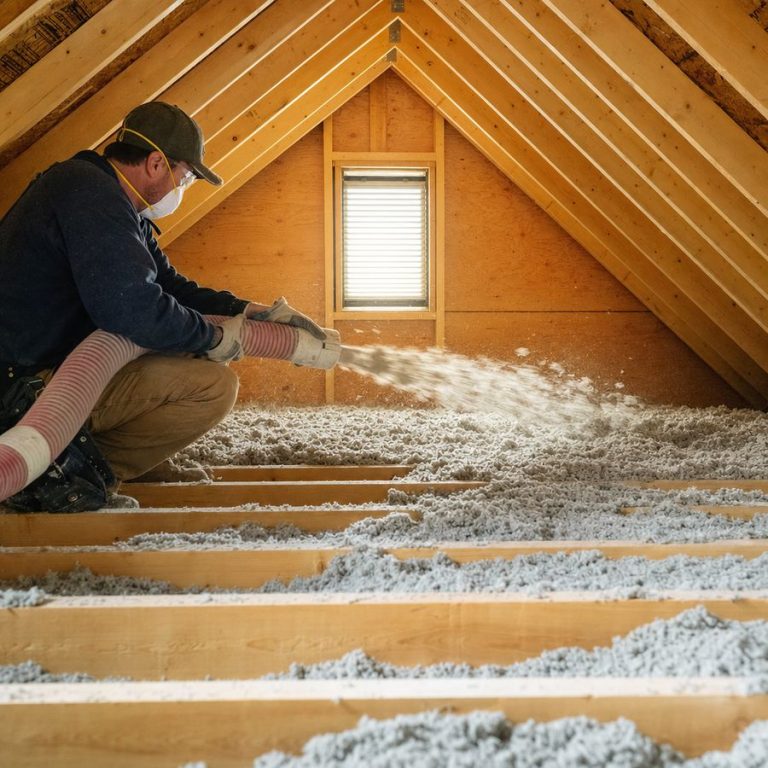
To put that in perspective: R-60 of blown-in cellulose requires approximately 14–16 inches of material depth across the attic floor. Many Calgary homes built in the 1980s and 1990s have 6–10 inches of blown-in or R-20 to R-40 batt insulation — significantly below today’s standard. If your attic hatch opens to reveal insulation that doesn’t reach the tops of the joists, or loose-fill that has settled and thinned over time, you’re well below the R-60 threshold.
The table below gives a quick reference for how insulation depth corresponds to R-value for common materials used in Calgary attics:
| Material | Depth for R-40 | Depth for R-60 | Notes |
|---|---|---|---|
| Blown-in cellulose | ~10 inches | ~14–16 inches | Eco-friendly; good air-fill in gaps |
| Blown-in fiberglass | ~12 inches | ~18–20 inches | Lightweight; settles over time |
| Fiberglass batts | ~12 inches | ~18–20 inches | Common in older Calgary homes |
| Mineral wool batts | ~10 inches | ~15–17 inches | Fire resistant; moisture tolerant |
How Do You Inspect Your Own Attic for Ice Dam Risk?
Before calling a professional, you can do a quick self-assessment that will help you understand your risk level and communicate the problem clearly. Start from outside: during a snowfall after temperatures have been below -10°C for several days, look at the rooflines of your home and your neighbours’. If neighbouring homes with similar roof pitches have a uniform snow layer while yours shows melted patches on the upper roof and ice buildup at the eaves, that’s a strong visual indicator of attic heat loss.
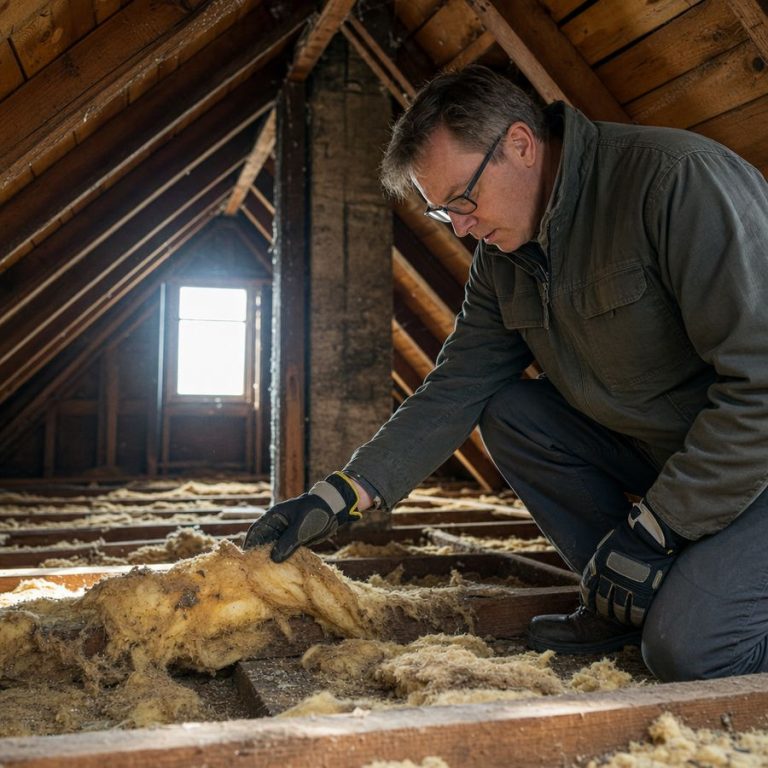
Inside the attic (if you can access it safely): measure insulation depth with a ruler in several spots, including near the eaves where insulation often thins out. Check that baffles (the cardboard or foam channels that maintain airflow from soffit vents) are in place and clear. Look at the underside of the roof sheathing — any dark staining, frost, or condensation marks indicate moisture entry. Check around any pot lights, the attic hatch frame, plumbing stacks, exhaust fans, and chimney chases for gaps where warm air is entering the attic space.
In winter, you can also look for frost on the inside surface of your attic decking. Frost inside the attic means warm, humid air is entering the cold space and condensing — the same process that drives moisture damage. If you find any of these signs, the assessment will confirm what needs to be done. Our residential attic insulation service includes a full pre-installation assessment to identify all heat loss pathways before any material is installed.
What About Government Rebates for Attic Insulation in Calgary?
Upgrading your attic insulation to prevent ice dams can be partially funded through several programs available to Calgary homeowners. The City of Calgary’s Home Upgrades Program provides free insulation and energy-efficiency improvements to qualifying low-to-moderate income households. The Clean Energy Improvement Program (CEIP) offers city-secured financing for energy upgrades repaid through your property tax bill — no upfront cost for qualifying improvements.
At the federal level, the Canada Greener Homes initiative has historically offered grants for attic insulation upgrades meeting specific energy efficiency criteria. Qualification typically requires a pre- and post-upgrade EnerGuide assessment. While specific program intakes open and close, the principle remains: upgrading your attic insulation to code or above often qualifies for some level of financial assistance, making the investment even more attractive. Ask about rebate eligibility when you request your free quote — we can help identify which programs apply to your home and situation.
The energy savings from a successful upgrade are also significant on their own: Calgary homeowners who bring attic insulation up to R-60 typically see heating bill reductions of 15–25%. See our detailed look at how attic insulation upgrades lower Calgary energy bills for specifics.
Frequently Asked Questions
Why do I keep getting ice dams even though I have insulation in my attic?
Existing insulation that is compressed, moisture-damaged, or below the R-60 code minimum allows enough heat into the attic to melt roof snow. Air leakage around pot lights, attic hatches, and plumbing penetrations compounds the problem — warm air bypasses insulation entirely. A professional assessment with air-sealing work alongside an insulation upgrade is usually required to fully resolve recurring ice dams.
Can ice dams in Calgary damage my home’s structure?
Yes. Repeated ice dam events drive water under shingles and into the attic, where it saturates insulation and contacts wood framing. Over multiple seasons, this causes rot in roof sheathing and joists, mold in the attic space, and eventual ceiling failure. Structural damage from chronic ice dams is one of the most expensive home repair scenarios Calgary homeowners face.
What is the R-value required for attic insulation in Calgary to prevent ice dams?
The National Building Code — Alberta Edition requires a minimum of R-60 (RSI 10.43) for attic ceilings in Climate Zone 7A, which includes Calgary. Homes below this threshold are significantly more prone to ice dam formation. R-60 is the baseline; homes with persistent ice dam history may benefit from targeting R-70 or higher where attic geometry allows.
How quickly can I get attic insulation upgraded to stop ice dams in Calgary?
Most residential attic insulation upgrades in Calgary are completed in a single day. Assessment, removal of damaged material (if needed), air sealing, and new blown-in installation can typically be done in one visit. Winter installations are possible, though scheduling in fall before freeze-up is ideal. Contact Eco Attic Solutions for availability and lead times in your area.
Does attic ventilation affect ice dam formation in Calgary?
Yes, significantly. Proper attic ventilation — balanced soffit intake and ridge exhaust — keeps the attic cold by flushing warm air out before it can warm the roof deck. Without adequate ventilation, even R-60 insulation may not fully prevent ice dams if air leakage is significant. Ventilation, insulation, and air sealing work together as a system. Our attic ventilation inspection is included with every insulation assessment.
How Eco Attic Solutions Helps Calgary Homeowners Stop Ice Dams for Good
Ice dams are a solvable problem — but they require fixing the right thing. Eco Attic Solutions has helped over 780 Calgary homeowners address the insulation, air sealing, and ventilation issues that cause ice dams, with results that last season after season. Our team understands Calgary’s unique climate challenges: the chinooks, the deep freeze events, the rapid freeze-thaw cycling that degrades insulation faster here than almost anywhere else in Canada.
Every job comes with a 12-Month Workmanship Guarantee. We use eco-friendly insulation materials, offer flexible financing with up to 6 months deferred, and provide free, no-pressure quotes so you know exactly what’s involved before any work begins. Whether you need a full residential attic insulation upgrade, removal of water-damaged material, or a better understanding of what your attic needs, we’re here to help.
Don’t wait for the next ice dam to leave another stain on your ceiling. Call us at (403) 990-9033 or book your free attic assessment online. We’ll identify every heat loss pathway and give you a clear, honest plan for keeping your attic cold, your roof dry, and your home protected this winter and every winter after.