Most Calgary homeowners never think about their attic insulation until something goes seriously wrong — and by then, the damage is already done. Inadequate or aging attic insulation quietly costs the average Calgary household hundreds of dollars every year in wasted energy, while simultaneously making your home less comfortable, more humid, and even less healthy to live in. The trouble is that insulation problems are largely invisible. They hide in the attic, behind drywall, and inside energy bills that slowly creep upward while you assume it’s just the cost of living in Alberta. This guide walks you through the seven most reliable warning signs that your Calgary home’s attic insulation is failing — plus what to do the moment you spot them.
Warning Sign #1: Your Energy Bills Keep Climbing Without Explanation
This is the most common — and most commonly ignored — sign of an insulation problem. If your utility bills have been rising steadily year over year without an obvious reason (you haven’t added major appliances, your family size hasn’t changed, and energy rates haven’t spiked dramatically), poor attic insulation is a primary suspect. Natural Resources Canada estimates that the attic ceiling is responsible for up to 25% of a home’s total heat loss in winter. When that insulation deteriorates, becomes compressed, or was never adequate to begin with, your furnace and air conditioner work overtime to compensate — and you pay for every extra hour they run.
A useful benchmark: if your Calgary home is older than 15 years and hasn’t had an insulation upgrade, there’s a strong chance you’re running on R-12 to R-20 in the attic — far below the current National Building Code Alberta Edition minimum of R-60 (RSI 10.43). Closing that gap doesn’t just meet code; it can reduce annual heating and cooling costs by 15–30%, according to modelling consistent with Canadian housing research. That’s real money back in your pocket every single year. Our article on how attic insulation upgrades lower Calgary energy bills breaks down the math in full.
Warning Sign #2: Uneven Temperatures Throughout the House
Walk from your basement to your top floor on a cold January morning. Notice a significant temperature difference? Or maybe your upstairs bedrooms are sweltering during Calgary’s July heat waves while the main floor stays comfortable? Uneven temperatures from room to room — or floor to floor — are a textbook sign that your thermal envelope, particularly the attic ceiling, has gaps, thin spots, or areas where insulation has settled and compressed over the years.
In Calgary’s Climate Zone 7A, where outdoor temperatures can swing 40°C between seasons — and sometimes 30°C in a single day during a Chinook event — these temperature inconsistencies become pronounced and frustrating. Your insulation should be creating a stable, even barrier between indoor and outdoor air. If it isn’t, no amount of thermostat adjustment will fix the underlying problem. Comfort complaints like “I can never get my bedroom warm” or “the upstairs is always stuffy in summer” almost always trace back to the attic. Our team can conduct a thorough assessment as part of your residential attic insulation upgrade consultation.
Warning Sign #3: Ice Dams and Icicles Along Your Roof Edge
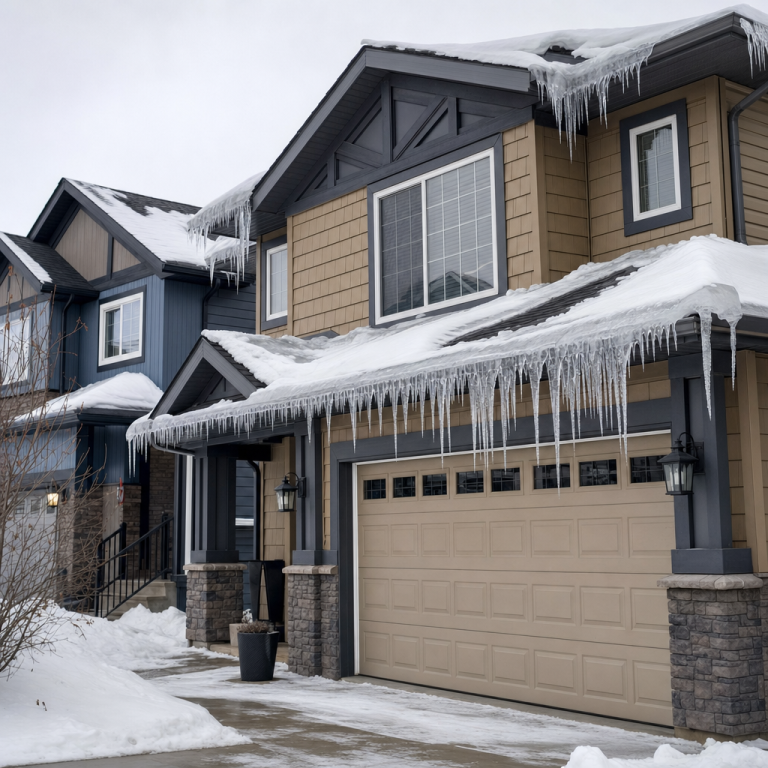
Ice dams are one of Calgary’s most destructive and most misunderstood winter problems. They form when heat escaping through an under-insulated attic warms the roof surface and melts the snow sitting on top of it. That meltwater runs down toward the eaves, hits the colder, unheated overhang, and refreezes into a ridge of ice. As more meltwater backs up behind this dam, it can work its way under shingles and into your attic, causing rot, mold, and interior water damage that can run into thousands of dollars in repairs.
Many Calgary homeowners assume ice dams are just a fact of winter life. They aren’t. A properly insulated and ventilated attic keeps the roof surface temperature consistent — cold enough to prevent the snowmelt-and-refreeze cycle that creates ice dams. The City of Calgary notes that icicles on roofs and gutters may specifically indicate inadequate roof and attic insulation. If you’re seeing ice dams during cold snaps, you have a thermal performance problem that proper insulation and ventilation can solve. Left unaddressed, the water infiltration from ice dams damages drywall, insulation, framing members, and can even affect your foundation over time.
Warning Sign #4: Drafts, Cold Spots, and Mysterious Breezes on Upper Floors
Feeling a cold draft on your upper floor even when all windows and doors are closed is a classic symptom of air infiltration through your attic floor. In an ideal home, the attic floor — which is your ceiling — acts as a complete air barrier, sealing conditioned indoor air away from the cold exterior. When insulation is compressed, disturbed, or simply too thin, gaps open up at electrical boxes, plumbing penetrations, recessed light fixtures, and attic hatch perimeters. Cold outside air seeps in through these gaps, creating those mysterious drafts that feel like a window is open even when it isn’t.
This matters especially in Calgary, where January temperatures regularly hit -20°C to -30°C. Even a small gap — the equivalent of a fist-sized opening — can allow an enormous volume of cold air infiltration over the course of a winter. Air sealing at penetration points, combined with adequate insulation depth, is the only reliable and lasting solution. If you’re wondering whether this is something you could tackle yourself, our article on DIY vs. professional attic insulation in Calgary explains in detail why proper air sealing and insulation requires professional tools and expertise — it’s not a job for a hardware store bag of batts and a long weekend.
Warning Sign #5: Visible Mold, Moisture Staining, or Musty Odors
Mold in the attic is more common in Calgary homes than most people realize, and poor insulation is a leading contributing factor. Here’s the mechanism: warm, humid indoor air escapes through gaps in the attic floor and contacts the cold underside of the roof deck. That surface is cold enough to cause condensation — and sustained moisture on wood surfaces creates ideal conditions for mold growth. Once mold establishes itself in an attic, it can spread to framing members, compromise structural integrity over time, and circulate spores into your living space through the same gaps that allowed the warm air to migrate upward.
A musty smell emanating from the ceiling or upper floors, visible dark staining on attic wood, or moisture dripping from the attic hatch after cold weather are all warning signs that warrant immediate professional attention. The solution involves both proper air sealing — to stop the warm-air migration that creates condensation — and adequate insulation depth to keep the attic floor warm enough to prevent the temperature differential that causes moisture to condense in the first place. In many cases, existing mold-damaged insulation must be removed before new insulation can be safely installed. Learn about our professional attic insulation removal services — safe, thorough removal is often the necessary first step before a proper upgrade can proceed.
Warning Sign #6: Evidence of Pest or Rodent Activity
Mice, squirrels, and birds frequently nest in Calgary attics — particularly during fall and early winter when they’re seeking warmth ahead of the cold season. These animals are highly destructive to insulation: they tunnel through batt material, push blown-in cellulose aside to create nesting cavities, and contaminate large areas of insulation with droppings and urine. A single rodent infestation can degrade substantial sections of insulation in a matter of weeks, creating thermal voids that you’d never know were there without a professional inspection or thermal imaging assessment.
If you’ve heard scratching sounds in your ceiling, noticed small droppings in the attic, or discovered chewed wiring or framing timbers — all common in Calgary’s older established neighborhoods — your insulation likely needs to be assessed for damage. Contaminated insulation also poses health risks, since rodent droppings can harbor hantavirus and other pathogens that become airborne when disturbed. In these cases, complete removal and replacement is typically necessary rather than simply adding more material on top. Check our FAQ page for answers to common questions about pest-damaged insulation and what the assessment and replacement process involves.
Warning Sign #7: Your Home Is More Than 15–20 Years Old and Has Never Been Upgraded
Even insulation that was properly installed and hasn’t been physically disturbed will lose effectiveness over time. Cellulose and fiberglass blown-in insulation both settle and compress as the years pass. That 12-inch-deep blanket of R-38 installed in 2005 may now measure only 8 inches and perform at R-24. Batt insulation can sag away from framing members, leaving gaps that effectively short-circuit the thermal barrier. And homes built before Alberta’s current energy codes were never required to meet today’s R-60 standard — they were built to the codes of their era, which were far less stringent.
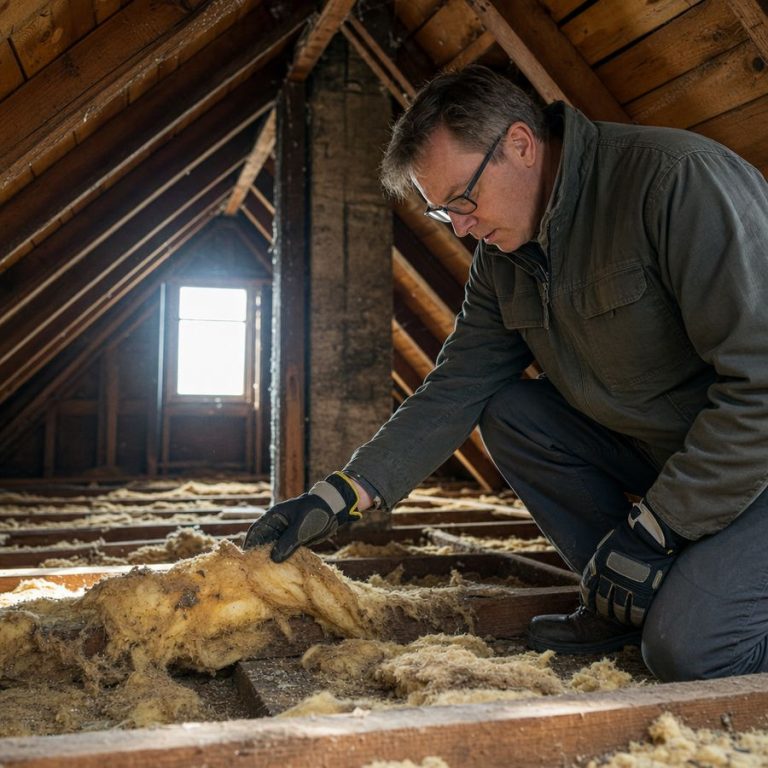
If your Calgary home is more than 15–20 years old and you can’t confirm when the attic insulation was last upgraded, there’s a meaningful chance it’s underperforming significantly. A simple self-inspection with a flashlight and a measuring tape can tell you a lot: if you see less than 16 inches of blown-in material (the approximate depth needed to reach R-60 with fiberglass), you’re likely well below the code standard. Our guide on how often to replace attic insulation in Calgary homes covers the full expected lifespan of different insulation types under Alberta conditions.
How to Do a Quick Self-Inspection Before Calling for a Quote
You don’t need a professional to check the basics. Here’s a simple checklist Calgary homeowners can follow to get an initial read on their attic insulation before scheduling a professional assessment:
- Access your attic hatch safely — use a stable ladder and wear a dust mask, safety glasses, and gloves before entering.
- Measure insulation depth — insert a ruler or tape measure into the insulation without compressing it. Less than 16 inches of blown-in material is a red flag for under-insulation.
- Look for settled or matted patches — areas where blown-in insulation has flattened significantly indicate either age-related settling or air movement through the material.
- Check for visible gaps — inspect around recessed light fixtures, exhaust fan housings, plumbing stacks, electrical wiring penetrations, and the attic hatch perimeter, where air sealing is most commonly absent.
- Look for moisture stains or dark discoloration — dark staining on rafters, roof sheathing, or insulation itself indicates condensation and potential mold activity.
- Confirm soffit vents are unobstructed — look along the eaves to verify that insulation hasn’t been pushed too close to the edge and blocked the soffit vent openings that provide critical airflow.
- Check for signs of pest activity — look for droppings, nesting material, tunnels through batt insulation, or chew marks on any wood members or wiring.
If you identify any of these issues — or even if you’re simply not sure — the next step is a professional assessment. An experienced insulation contractor can use thermal imaging and hands-on inspection to map exactly where your attic is losing performance and give you a precise, written plan to address it. According to Natural Resources Canada’s home insulation resources, a comprehensive air sealing and insulation upgrade is consistently rated as one of the highest-return energy efficiency investments available to Canadian homeowners.
How Eco Attic Solutions Helps
Eco Attic Solutions has helped more than 780 Calgary homeowners diagnose and solve exactly the problems described above. Our certified insulation specialists start every job with a thorough attic assessment — checking existing insulation depth and condition, identifying air leakage points, evaluating ventilation performance, and looking for any moisture, mold, or pest damage that needs to be addressed before new insulation goes in. We never cut corners or skip the foundational steps that determine whether your new insulation will actually deliver the performance it’s rated for.
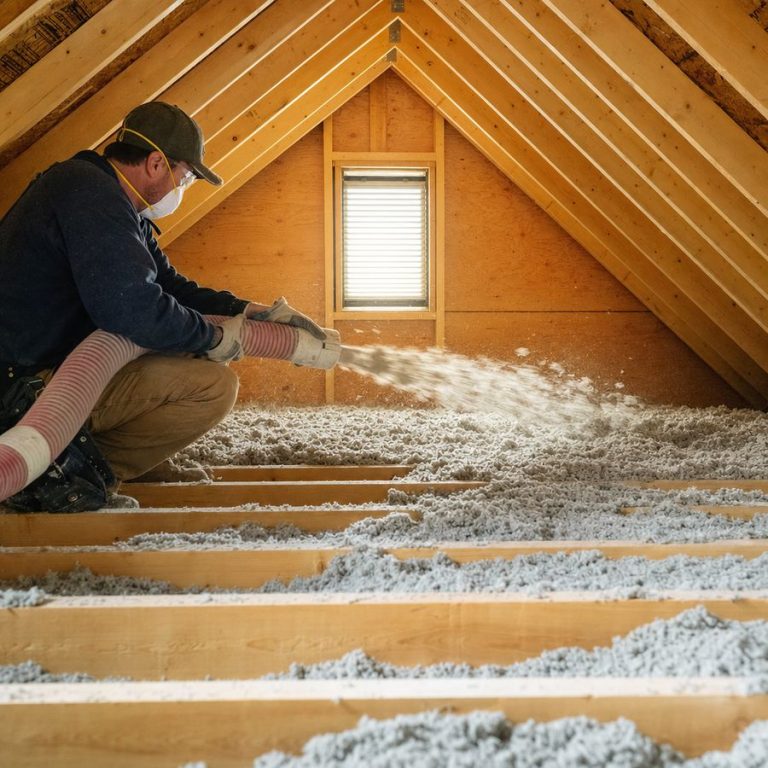
Whether your home needs a straightforward top-up to reach R-60, a full removal and replacement of contaminated or damaged material, or a combination of air sealing and new blown-in insulation, we’ll recommend exactly what the situation calls for — nothing more and nothing less. All work is backed by a 12-Month Workmanship Guarantee, and we use eco-friendly insulation materials wherever possible. Flexible financing is available with up to six months deferred payment so the upgrade you need doesn’t have to wait for the right moment in your budget.
If you spotted any of the warning signs above, don’t wait. The longer under-performing insulation stays in your attic, the more it costs you — in energy waste, in comfort, and sometimes in structural damage that compounds year over year. Call us today for a free, no-obligation quote: (403) 990-9033, or visit our contact page to book your attic assessment. We’ll tell you exactly what’s happening up there — and give you a clear, honest plan to fix it.