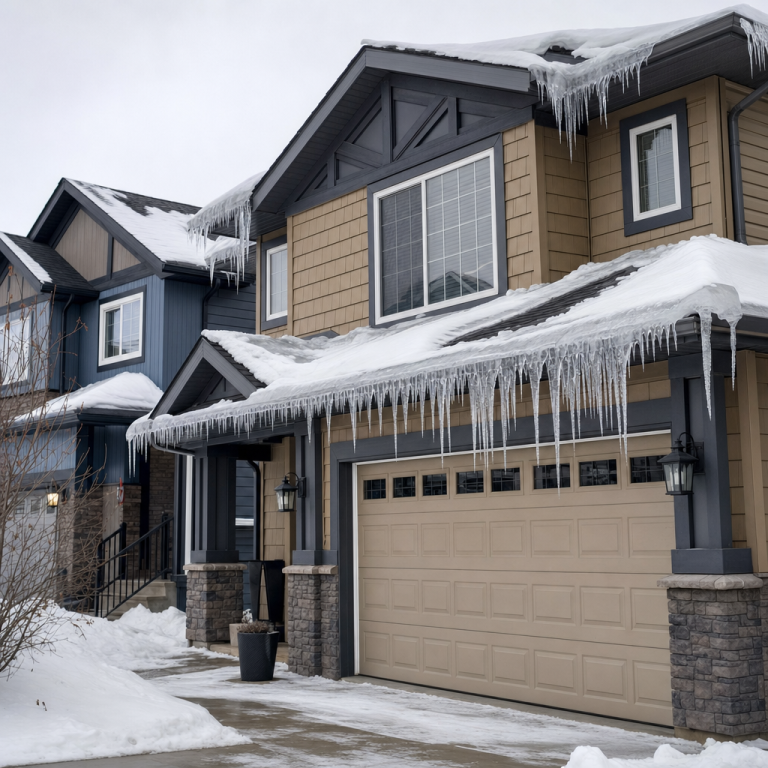
Calgary homeowners deal with some genuinely noisy weather. Summer hailstorms rattle off roofs with startling force — hailstones the size of golf balls are not unusual in southern Alberta. Prairie winds gust to 70 km/h and whistle through every gap they can find. Busy arterial roads carry traffic that drifts into bedrooms and home offices. When homeowners mention that their home feels loud, they’re often surprised to hear that the solution frequently starts in the attic — because proper attic insulation is one of the most effective and underrated ways to quiet a Calgary home.
Quick Answer
Yes, attic insulation reduces noise in Calgary homes. A well-insulated attic absorbs sound from hail, rain, and wind, and seals the air gaps that let outdoor noise sneak through. Blown-in cellulose — the most common Calgary attic material — achieves a Noise Reduction Coefficient (NRC) of 0.80–0.90, absorbing up to 90% of the sound energy it contacts. Upgrading to Calgary’s required R-60 makes a measurable difference.
The connection between attic insulation and indoor noise isn’t always obvious, but the physics are straightforward: sound energy, like heat energy, travels through air. A thin, compressed, or patchy attic insulation layer leaves both pathways wide open. Upgrade the insulation, and you address both problems at once — which is why so many Calgary homeowners report that their home simply feels quieter after an attic insulation upgrade, even when noise reduction was not the primary reason they called.
How Does Attic Insulation Reduce Noise in a Calgary Home?
Insulation reduces noise through two distinct mechanisms worth understanding separately. The first is sound absorption, measured by the Noise Reduction Coefficient (NRC). An NRC of 1.0 means 100% of sound energy is absorbed; 0 means none is. Blown-in cellulose, the most common attic insulation material in Calgary, achieves an NRC of approximately 0.80–0.90, absorbing 80–90% of the sound waves that contact it. This is why a well-insulated attic dramatically reduces the sharp impact noise of hailstones striking the roof — the sound wave hits the roofing material, then runs into a thick blanket of cellulose below the roof deck that dissipates most of its energy before it ever reaches your ceiling and living space.
The second mechanism is sound blocking, measured by the STC (Sound Transmission Class) rating. STC reflects how well an assembly — roofing, sheathing, framing, insulation, and ceiling drywall together — stops sound from transmitting from one space to another. A higher STC means less sound gets through. Attic insulation contributes mass and density to the ceiling plane, and its most important STC contribution is often indirect: by filling gaps and sealing air leaks, it eliminates the flanking paths that let sound bypass even a heavy ceiling assembly. The National Research Council Canada’s soundPATHS tool, which is built on the National Building Code of Canada’s acoustic framework, emphasizes that gap-sealing and air sealing are often the highest-impact acoustic interventions — because even a small gap in an otherwise solid assembly can allow a disproportionate amount of sound through.
For a Calgary home, the practical implication is this: if your attic insulation is thin, compressed, or gapped, you have both a thermal problem and an acoustic one. Upgrading to R-60 — the minimum required by the National Building Code – Alberta Edition for Calgary’s Climate Zone 7A attic ceilings — doesn’t just cut your heating costs. It adds a meaningful layer of sound attenuation between your living space and everything happening above and outside your roof. Our complete guide to R-values for Calgary homeowners explains how R-value relates to both thermal and acoustic performance, with specific numbers relevant to our climate zone.
What Types of Noise Does Attic Insulation Help With?
Not all noise enters a home the same way, and attic insulation is more effective against some types than others. Understanding this helps you set realistic expectations and determine whether the noise you’re dealing with is primarily an attic issue or something else entirely.
Hail and rain noise is where attic insulation delivers the most dramatic results. Calgary’s summer hail events — some with stones reaching 4–5 cm in diameter — create intense impact noise as hailstones strike the roof surface. Without adequate insulation, this sound wave travels almost unimpeded through the roof deck and joist cavities into your living space below. A properly installed R-60 attic insulation layer absorbs the vast majority of this impact energy before it reaches your ceiling. Homeowners who upgrade from R-15 to R-60 frequently describe the difference as remarkable — hailstorms that used to wake children and rattle nerves become a muffled background sound.
Wind noise enters homes primarily through gaps — cracks around the attic hatch, penetrations around plumbing stacks and electrical wiring, spaces between joists and exterior walls. A comprehensive attic insulation upgrade includes air sealing all of these penetrations before the new insulation is blown in, directly addressing the pathways that wind noise uses to enter the home. This benefit is significant in Calgary specifically: the city regularly sees sustained winds of 50–70 km/h during storms and Chinook events that can push gusts to 100 km/h or higher. Air sealing in the attic during an insulation upgrade has an outsized acoustic benefit for Calgary homeowners. Our article on how attic insulation affects indoor air quality covers the broader benefits of proper air sealing, including reduced infiltration of dust, allergens, and outdoor pollutants.
Street and traffic noise is more complex. A significant portion of exterior traffic noise enters through windows and walls rather than through the roof. Attic insulation will reduce the component of traffic noise that enters through the ceiling plane — particularly in upper-floor rooms directly below the attic — but it won’t eliminate street noise if your windows and walls are the primary entry point. For Calgary homes near Deerfoot Trail, Glenmore Trail, or busy suburban collectors, an attic upgrade is a worthwhile first step but may need to be paired with window or wall improvements for comprehensive noise control.
Which Insulation Material Is Best for Noise Reduction in Calgary?
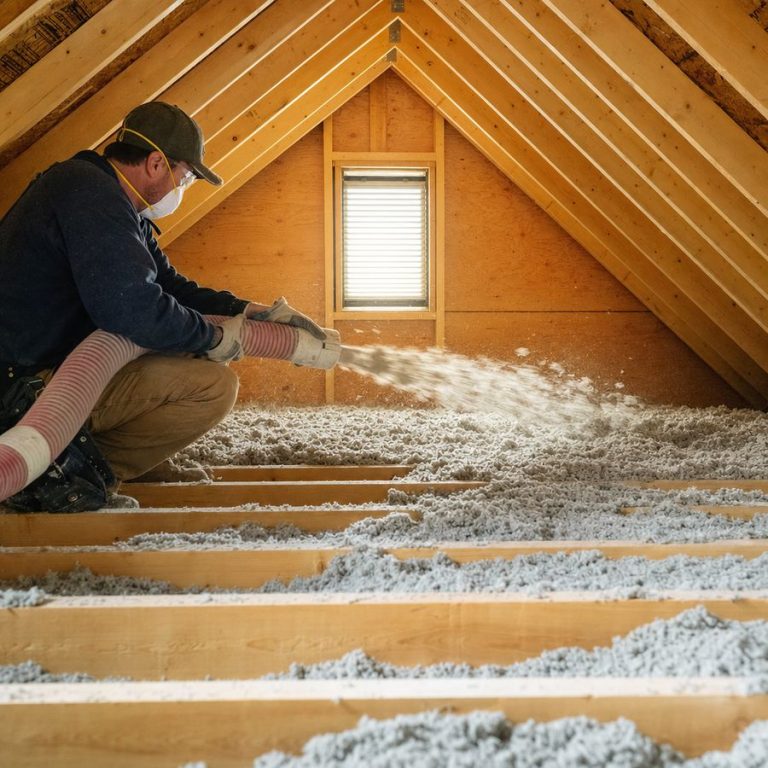
For Calgary attics, blown-in cellulose is generally the strongest performer for noise reduction, and it’s also the most common professional choice for local attic upgrades. Cellulose achieves an NRC of 0.80–0.90 and, when installed at proper depth, creates a dense, gap-free layer with virtually no air voids for sound to travel through. According to the Cellulose Insulation Manufacturers Association, blown cellulose in a standard wall assembly achieves an STC rating of 44, compared to 39 for fiberglass batts — a meaningful real-world difference. In an attic application where material depth is far greater than in a wall cavity, both materials perform even better, but cellulose’s density advantage remains.
Blown-in fiberglass is the other dominant choice in Calgary attics. It’s slightly less dense than cellulose, which makes it marginally less effective at absorbing low-frequency sounds like traffic rumble and heavy trucks, but for high-frequency impact noise like hail and rain, the two materials perform comparably at full attic depth. Fiberglass is also moisture-resistant, which is a practical advantage in Calgary attics where freeze-thaw cycling is a recurring condition and vapor management matters.
Spray foam is occasionally discussed in acoustic contexts, but its primary acoustic mechanism is air sealing rather than sound absorption. Open-cell spray foam has a moderate NRC, while closed-cell spray foam — though effective as a vapor and air barrier — is relatively dense and rigid, which actually limits its sound-absorbing properties. For most Calgary homeowners, the cost premium of spray foam is better justified by its thermal and vapor-control characteristics than by acoustic performance alone. Our blown-in vs. batts comparison guide covers material trade-offs in depth to help you choose the right fit for your home.
| Insulation Material | NRC Rating | Best For | Common in Calgary Attics? |
|---|---|---|---|
| Blown-in Cellulose | 0.80–0.90 | Hail, rain, wind, traffic noise | Yes — most common choice |
| Blown-in Fiberglass | 0.80–0.85 | Hail, rain; moisture-resistant | Yes — widely used |
| Spray Foam (Open-Cell) | Moderate | Air sealing, flanking paths | Less common; used at perimeter |
| Fiberglass Batts | 0.80–0.90 | New construction; gaps reduce STC | Older homes; blown-in preferred for retrofit |
How Much of a Difference Will You Actually Notice?
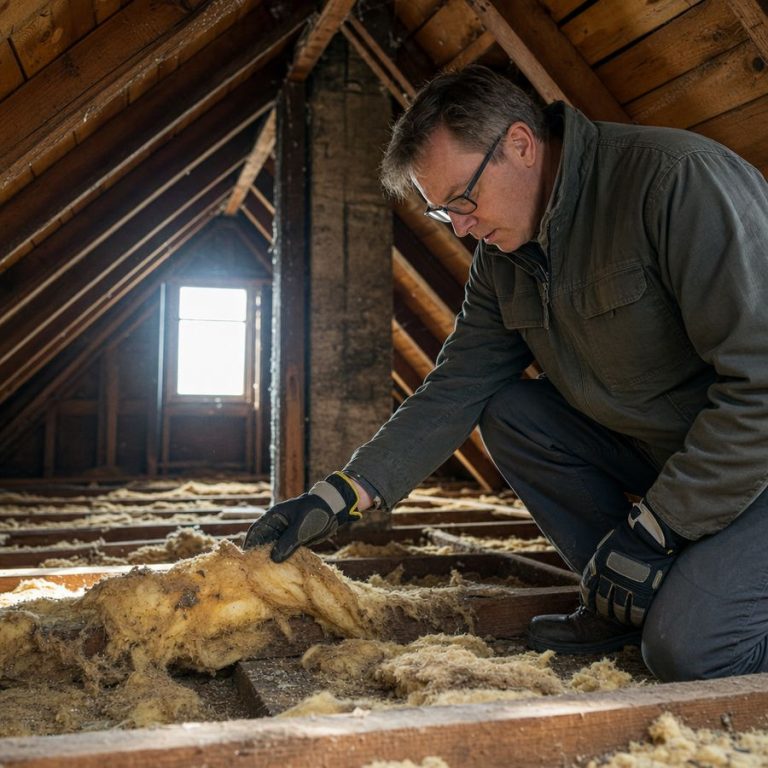
The honest answer: it depends on your starting point. If your Calgary home currently has 3–4 inches of old, compacted fiberglass batts in the attic (R-12 to R-15), upgrading to a full R-60 blown-in installation will produce a noticeable — often striking — difference in how your home sounds during hailstorms and heavy rain. The change is immediate and perceptible the same day the work is done. Homeowners in newer Calgary suburbs who have had proper attic insulation from day one notice a smaller incremental improvement because they’re starting from a better baseline.
For traffic noise and low-frequency sound, the improvement is real but more modest. Upgrading to R-60 can reduce the perceived loudness of traffic noise entering through the ceiling plane by several decibels — enough to be clearly noticeable in a quiet bedroom, but not enough to make a home on Memorial Drive feel like a countryside retreat. If street noise is your primary concern, it’s worth having a comprehensive assessment that looks at windows and walls in addition to the attic.
One often-overlooked benefit: insulation upgrades also reduce the echo and reverberation within the attic space itself, which indirectly affects how sound moves through your home’s structure. And because upgrading almost always includes air sealing work first, the gaps that allow both drafts and noise to enter are addressed at the same time. For a comprehensive look at how everything in your attic works together, browse our frequently asked questions or explore our full residential attic insulation services.
Frequently Asked Questions
Does attic insulation really reduce hail noise in Calgary?
Yes — attic insulation is one of the most effective ways to reduce hail noise in Calgary homes. Blown-in cellulose and fiberglass absorb the impact energy of hailstones striking the roof before that sound wave reaches your living space. Homeowners upgrading from R-15 to R-60 routinely report that hailstorms go from startlingly loud to a muffled, distant background sound.
What is the best type of attic insulation for noise reduction in Calgary?
Blown-in cellulose is the strongest performer for noise reduction in Calgary attics. With an NRC of 0.80–0.90 and superior gap-filling properties compared to batts, it absorbs more sound and eliminates acoustic weak points. Blown-in fiberglass is a close second and offers better moisture resistance — a practical consideration in Calgary’s freeze-thaw climate.
How much does attic insulation help with street noise in Calgary?
Attic insulation meaningfully reduces street noise entering through the ceiling plane — most beneficial for upper-floor rooms below the attic. However, much exterior noise also enters through windows and walls. For Calgary homes near major roadways, an attic upgrade is an important first step but may need to be combined with window improvements for comprehensive noise control.
Does adding more insulation to my Calgary attic make it quieter?
Yes. Thicker insulation provides better acoustic attenuation. Going from R-20 to R-60 in a Calgary attic adds substantial material mass and density above the ceiling plane, reducing sound transmission from the roof. The improvement is most noticeable for impact noise (hail, rain) and high-frequency sounds, though low-frequency traffic noise is also reduced.
Can attic insulation also reduce noise between floors in my Calgary home?
Attic insulation addresses the roof-to-top-floor noise path specifically. For noise between upper and lower floors — footsteps, voices, television — the insulation in the floor-ceiling assembly between those floors is what matters. An attic upgrade won’t significantly change inter-floor noise. Talk to our team if inter-floor sound is your primary concern; different solutions apply.
How Eco Attic Solutions Helps Calgary Homeowners Get a Quieter, More Comfortable Home
When Calgary’s summer hailstorms arrive or a cold Chinook rattles your windows at 3 a.m., your home should be a refuge — not an amplifier. Eco Attic Solutions has helped over 780 Calgary homeowners upgrade their attic insulation, and a quieter, more comfortable home is one of the most consistent benefits they report alongside lower energy bills.
We offer a free, no-obligation quote that includes a full assessment of your current attic insulation level, air sealing needs, and ventilation conditions. Every job is backed by our 12-Month Workmanship Guarantee, and we offer flexible financing with up to 6 months deferred payment so you don’t need to choose between comfort and cash flow. We use eco-friendly insulation materials and follow Calgary’s building code requirements precisely — R-60 minimum, properly air-sealed, and properly vented.
Ready to find out how much quieter your Calgary home could be? Book your free quote online or call us at (403) 990-9033. Our team is happy to answer questions about your specific situation — whether hail noise, winter cold, or rising energy bills is what’s driving the conversation. You can also explore our attic ventilation services to understand how insulation and ventilation work together to protect and quiet your home.