You’ve replaced the furnace filters. You run the kitchen exhaust fan. Maybe you’ve even bought an air purifier. Yet the dust settles just as fast, the family keeps sneezing through winter, and there’s a faint mustiness that comes and goes. What if the problem isn’t at floor level at all—but above the ceiling? Your attic insulation has a direct, measurable impact on the air your family breathes every day. In Calgary’s Climate Zone 7A, where homes are sealed tight against -30°C winters and attics endure radical temperature swings, poor or aging insulation can quietly compromise your indoor air quality in ways most homeowners never suspect.
The Invisible Highway Between Your Attic and Your Living Space
Most homeowners think of their attic as a sealed-off zone—separate from the rooms below. But in building science, attics in older Calgary homes function more like a leaky bucket. Warm, moist air rises from your living space, finds gaps around light fixtures, exhaust fans, plumbing stacks, and ceiling joists, and flows directly into the attic cavity. This process is known as the stack effect, and in a Zone 7A climate it operates every hour of every heating season—roughly eight months of the year in Calgary.
That upward airflow doesn’t just carry heat. It carries humidity, cooking odors, household chemicals, and whatever’s living in your insulation. And because pressure dynamics work both ways, air also migrates downward—particularly when exhaust fans or the HVAC system create negative pressure in the living space. Old, degraded, or improperly installed attic insulation creates the conditions for a steady exchange of air quality-compromising particles between your attic and the rooms where your family lives, sleeps, and breathes.
The solution is twofold: adequate insulation to maintain temperature and reduce condensation, combined with thorough air sealing at the attic floor to block the pathways entirely. Our residential attic insulation service always addresses both—because one without the other leaves the problem half-solved.
What’s Actually Living in Your Old Insulation
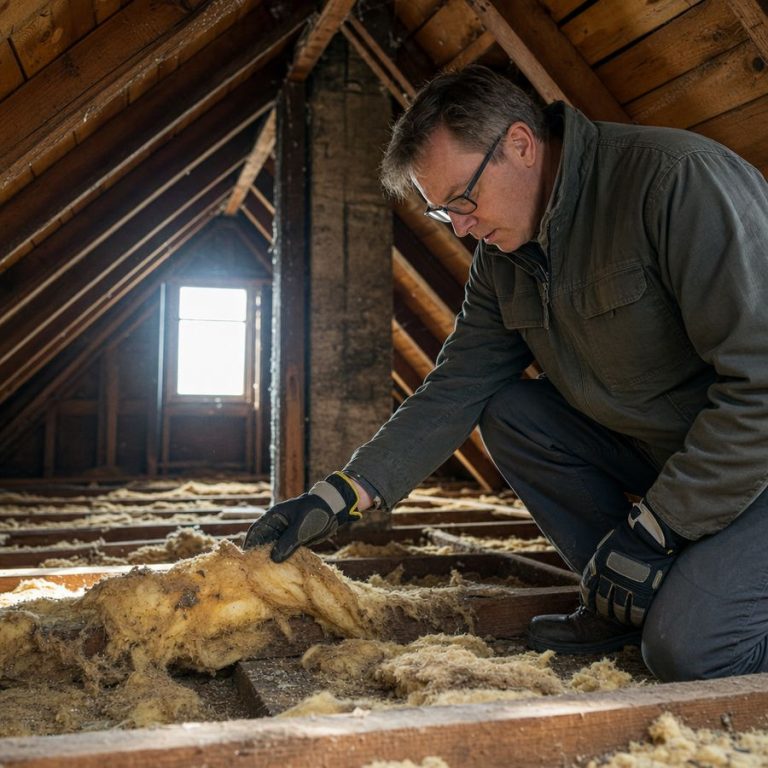
Calgary homes built before 1990 often still contain their original attic insulation. At 35+ years old, that insulation has had decades to accumulate contaminants that present-day homeowners may not realize are there. Here’s what professionals commonly find when they pull back aging fiberglass batts or compressed blown-in cellulose:
- Mold and mold spores: Where moisture from the stack effect has condensed on cold surfaces, mold colonies can establish themselves within insulation material. Once there, they release spores continuously into the surrounding air. Health Canada’s Residential Indoor Air Quality Guideline on Moulds states there is no safe exposure threshold—even low concentrations can trigger eye, nose, and throat irritation, wheezing, coughing, and worsening asthma symptoms.
- Rodent waste and debris: Mice and squirrels commonly nest in attic insulation during Calgary winters. Their droppings, urine, and nesting material can remain long after a pest problem is resolved, continuing to release allergens and bacteria. Hantavirus, while rare, is a real concern in heavily contaminated insulation.
- Fiberglass particulates: Over time, fiberglass batt insulation can degrade and break down. Fine glass fibers can become airborne—particularly if disturbed or if gaps in the vapour barrier allow air movement—and these particles are respiratory irritants.
- Dust mite populations: Dust mites thrive in environments with humidity above 50%. An attic that regularly experiences condensation during Calgary winters creates exactly those conditions. Dust mite allergens are a major driver of year-round allergy symptoms and asthma attacks.
- Legacy contaminants: Some older homes contain vermiculite insulation that may be contaminated with asbestos—a material used historically in mining regions served by certain Canadian suppliers. If your home was built before 1990 and you’re unsure what’s in your attic, a professional assessment is essential before any disturbance.
If any of these sound familiar—or if you’re simply not sure what’s up there—our attic insulation removal service includes a full inspection and can safely remove and dispose of contaminated material before new insulation is installed.
Moisture, Humidity, and Your Health: The Calgary Connection
Health Canada recommends maintaining indoor relative humidity between 30% and 50%. Below 30%, air becomes uncomfortably dry and irritates mucous membranes—a problem Calgary homeowners know well during dry Chinook-influenced winters. Above 50%, conditions become favorable for mold, dust mites, and bacteria. Staying within that band year-round is the single most important factor in maintaining healthy indoor air quality.
Your attic plays a central role in achieving this balance. When attic insulation is inadequate or damaged, two things happen simultaneously: heat escapes the living space upward (raising your energy bill) and the ceiling surface above your rooms becomes cold enough to cause condensation. That condensation seeps into materials, creates the moisture reservoir that mold needs, and gradually cycles back into your air supply. Upgrading to the National Building Code Alberta Edition requirement of R-60 at the attic ceiling dramatically reduces the temperature differential across that ceiling surface—which means far less condensation, far less moisture accumulation, and a much drier attic environment overall.
Statistics underscore the scale of the problem. Mold affects more than 20% of Canadian homes. In older Calgary housing stock—the ranchers, bungalows, and split-levels built during the 1970s and 1980s energy-crisis era—inadequate insulation and poor vapour barriers mean many homeowners are living above a hidden moisture problem without knowing it. Learning to recognize the signs that your insulation needs replacement is the first step toward a healthier home.
How Air Sealing Changes Everything
Insulation depth is only part of the equation. The other critical factor is air sealing—physically blocking the gaps and penetrations in the attic floor (your ceiling) that allow air to move between living space and attic. Even an attic upgraded to R-60 insulation will still have poor air quality outcomes if air bypasses around light fixtures, plumbing, exhaust fans, attic hatch edges, and framing gaps.
A professional air sealing job—done before or alongside insulation installation—involves applying spray foam or caulking to every identified air leakage point, installing an airtight cover on the attic hatch, and ensuring all bathroom and kitchen exhaust fans vent to the exterior (not into the attic, which is a surprisingly common installation error that can deposit moisture directly where you don’t want it). Once the attic floor is properly air-sealed, the invisible highway between your attic and your living space is effectively closed.
The payoff goes beyond air quality. Natural Resources Canada estimates that air sealing and insulation upgrades combined can reduce home heating costs by up to 30%. When fewer BTUs are escaping through the ceiling, your furnace runs less, the attic stays cooler and drier, and your home reaches a more stable equilibrium that’s better for both occupant health and energy consumption. Our guide on how insulation upgrades lower Calgary energy bills covers the financial side in detail, but the health benefits are equally compelling.
Practical Steps: How to Assess Your Own Attic’s Impact on Air Quality
You don’t need to hire a professional to take a first look at what’s happening in your attic. Here’s a practical self-inspection checklist for Calgary homeowners:
- Check insulation depth: Measure the insulation at the attic hatch. For Calgary’s Climate Zone 7A, you need at least 15–16 inches of blown-in cellulose or fibreglass (approximately R-60) or 20 inches of fiberglass batts. If it measures under 10 inches, it almost certainly falls below R-40 and needs upgrading.
- Look for moisture staining: Dark spots on the underside of roof sheathing, stained or discolored insulation, or frost on the roof deck in winter are signs of chronic moisture problems tied directly to poor air sealing or ventilation.
- Smell test: A musty odor in the attic is a near-certain indicator of mold. If you can detect it from the attic hatch without fully entering the space, the problem is significant.
- Check your attic hatch: Press your hand around the perimeter of the attic hatch on a cold day. Feeling cold air coming down or warm air escaping upward means you have an air sealing gap that’s actively affecting your indoor environment.
- Look at exhaust fan terminations: Find where your bathroom and kitchen exhaust fans exit the house. If they terminate into the attic rather than through the roof or wall to the exterior, that moisture is depositing directly into your insulation—a setup that promotes mold growth and must be corrected.
If your self-inspection raises concerns, or if you’re not comfortable going into the attic yourself, our team can perform a professional assessment. See our FAQ page for answers to common questions about what an attic inspection involves, or visit our article on DIY vs. professional attic work in Calgary for guidance on when it makes sense to call in a pro.
When to Remove and Replace vs. Top Up
Not every air quality problem requires full removal and replacement of existing insulation. If your current insulation is dry, uncontaminated, and simply thin, topping it up to R-60 with blown-in insulation—after air sealing—may be all that’s needed. However, if any of the following conditions apply, full removal is typically the right call before adding new material:
| Condition | Recommended Action |
|---|---|
| Visible mold or strong musty odor | Full removal; treat affected surfaces; reinstall |
| Evidence of rodent infestation | Full removal; pest exclusion; reinstall |
| Wet or moisture-damaged insulation | Full removal after fixing moisture source; reinstall |
| Suspected vermiculite or asbestos-containing material | Professional testing; abatement if positive |
| Insulation older than 25–30 years, compressed and settled | Evaluate R-value; often removal and reinstall is most cost-effective |
| Insulation simply below R-40, no contamination | Air seal, then top up with blown-in to R-60 |
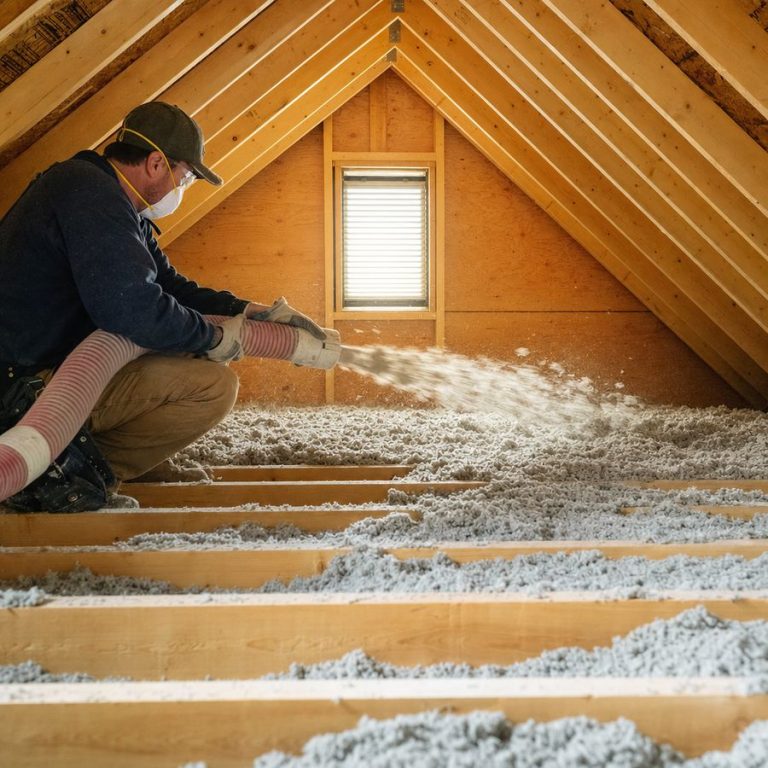
Our team at Eco Attic Solutions has the equipment and training to safely remove old insulation—including contaminated material requiring proper disposal—and reinstall a fresh, properly air-sealed, R-60 system that meets current code and protects your family’s health. According to the Government of Canada’s guide to addressing moisture and mould in the home, proper remediation of mold-affected materials and correction of moisture sources is the only effective long-term solution—surface treatments alone will not prevent regrowth if the underlying conditions remain.
How Eco Attic Solutions Helps
Indoor air quality is one of those issues that’s easy to overlook until it becomes a health problem—and by then, the underlying cause has often been growing for years. Eco Attic Solutions has helped more than 780 Calgary homeowners get to the root of their attic issues, including the air quality problems that came with outdated or contaminated insulation.
Our process starts with an honest assessment of what’s actually in your attic, whether that’s old compressed fiberglass, moisture-damaged cellulose, evidence of pests, or simply too little R-value for a Zone 7A Calgary winter. We use eco-friendly insulation materials and perform thorough air sealing as part of every installation—not as an add-on. Every project is backed by our 12-Month Workmanship Guarantee, and we offer flexible financing with up to 6 months deferred payment to make comprehensive attic work accessible. You can explore all our residential services on the residential installation page.
If you’ve been dealing with unexplained dust, musty odors, persistent allergies, or humidity that never quite stays in the right range, your attic may be the place to start. Call Eco Attic Solutions at (403) 990-9033 for a free, no-obligation quote—or contact us online and we’ll come have a look. A healthier attic means a healthier home, and we’d love to help you get there.