If you’ve ever gotten a quote for attic insulation, you’ve probably seen numbers like “R-40” or “R-60” on the page and nodded along without really knowing what they meant. You’re not alone — R-value is one of the most-searched and least-understood terms in home efficiency. And in Calgary, where a January cold snap can hit -30°C and a Chinook can swing the temperature 20 degrees in an afternoon, getting this number right is the difference between a home that holds its heat and one that quietly bleeds money out through the roof all winter.
This guide breaks down exactly what R-value means, what your Calgary attic actually needs (the answer is backed by Alberta’s building code, not a sales pitch), how to check what you have right now, and the factors that matter just as much as the number itself.
What Is an R-Value, Really?
R-value measures thermal resistance — how well a material resists the flow of heat through it. The higher the R-value, the slower heat moves through the material, and the better it keeps warm air inside during winter and outside during summer.
A useful way to picture it: think of R-value like the tog rating on a winter duvet. A thin summer sheet has a low rating and lets your body heat escape quickly; a thick down comforter has a high rating and traps it. Your attic insulation works the same way for your entire house. Heat naturally rises, so your attic is the single biggest escape route in the building — and a higher R-value is a thicker “blanket” over your living space.
Two things determine an attic’s total R-value: the type of insulation (each material has a different R-value per inch) and the depth of it. That’s why a contractor can’t just glance at your attic and call it “good” — depth and material together produce the number that matters.
What R-Value Does Your Calgary Attic Actually Need?
Here’s where Calgary homeowners get a clear, non-negotiable answer. Calgary sits in Climate Zone 7A, one of the coldest classifications in Canada. The National Building Code – Alberta Edition sets the minimum ceiling-below-attic insulation at RSI 10.43, which equals R-60. That’s not a recommendation — it’s the code standard for our climate.
Natural Resources Canada echoes this in its Keeping the Heat In guide, recommending R-50 to R-60 for attics in cold regions to maximize comfort and efficiency.
The problem is that most older Calgary homes fall well short of this. Here’s a rough guide to where homes typically land:
| Home era / situation | Typical attic R-value | Status |
|---|---|---|
| Built before 1980 | R-12 to R-20 | Significantly under-insulated |
| Built 1980–2000 | R-20 to R-32 | Below current standard |
| Built 2000–2015 | R-40 (common at the time) | Below today’s R-60 standard |
| Current Alberta code | R-60 | Recommended target |
If your home was built before 2000, there’s a very good chance your attic is operating at half the insulation value it should have — and you’re paying for that gap on every heating bill.
How to Check What You Already Have (Without a Contractor)
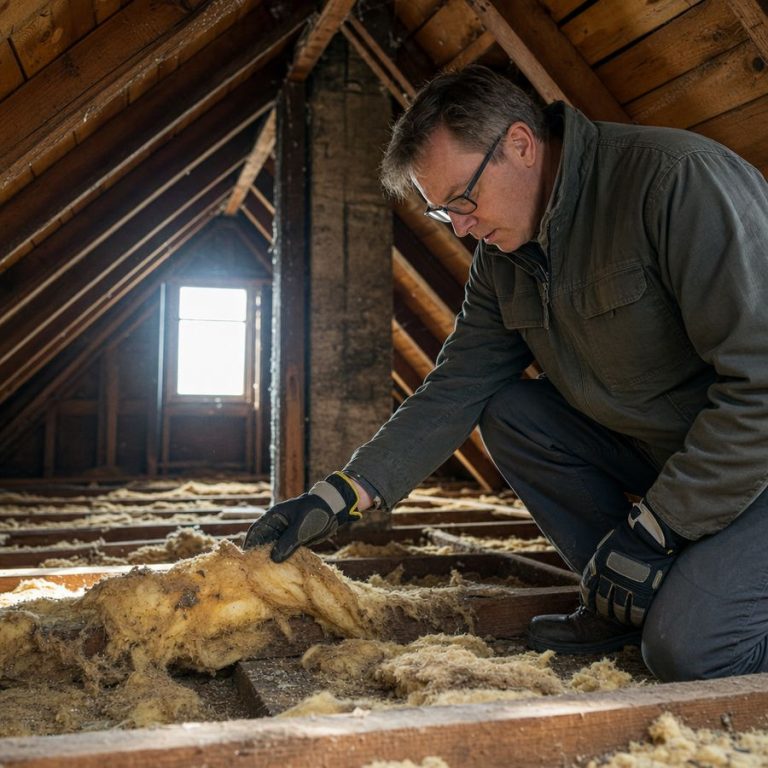
You can get a surprisingly good read on your attic in about five minutes. Grab a flashlight and a tape measure, and carefully look into your attic access hatch.
The joist test
Look at the wooden floor joists running across your attic. If you can clearly see the tops of them sitting above the insulation, your insulation is too shallow — those exposed joists act as “thermal bridges” that let heat bypass your insulation entirely. Insulation should sit well above the joists.
The depth test
Measure the depth of the existing insulation. As a rule of thumb, modern low-density blown-in insulation needs to be roughly 18 to 22 inches deep to reach R-60. If you’re looking at 6 or 8 inches, you’re nowhere near the target.
One important caveat: insulation settles and compresses over time. Insulation that was R-40 when installed two decades ago may be performing at far less today. This is exactly why we cover how often attic insulation should be replaced in Calgary homes — age quietly erodes the R-value you paid for.
R-Value Per Inch: How Insulation Types Compare
Not all insulation is created equal. The material you choose determines how many inches you need to hit R-60 — and how much it costs, how well it resists moisture, and how eco-friendly it is.
| Material | R-value per inch | Inches needed for R-60 | Notes |
|---|---|---|---|
| Blown-in fiberglass | R-2.2 – R-2.7 | ~22–27″ | Affordable, common, lightweight |
| Blown-in cellulose | R-3.2 – R-3.8 | ~16–19″ | Eco-friendly (recycled content), dense, great air-blocking |
| Closed-cell spray foam | R-6 – R-7 | ~9–10″ | Highest performance, also air-seals, higher cost |
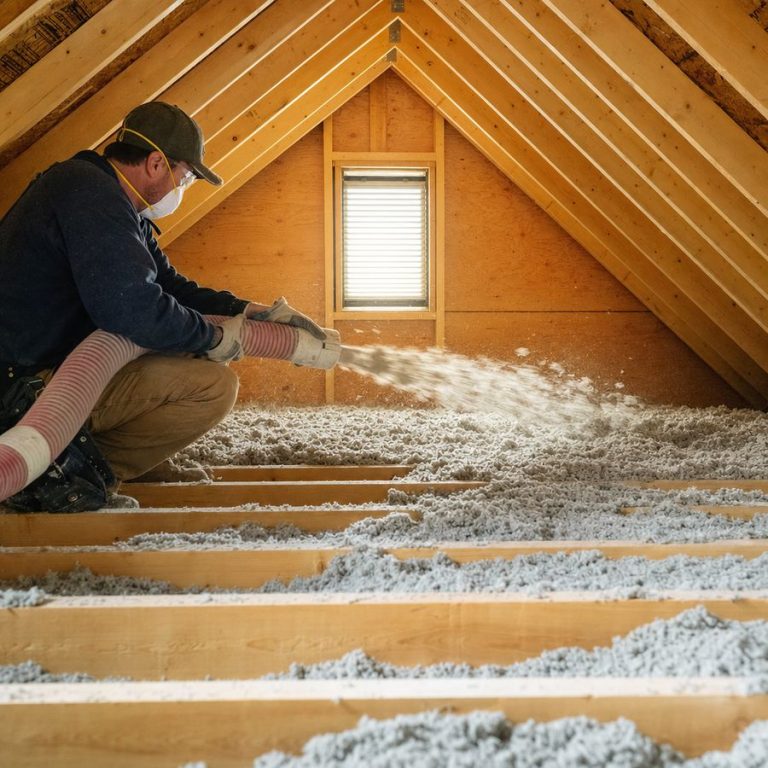
For most Calgary attics, blown-in is the practical choice because it fills irregular spaces and gets into the corners batts can’t reach. If you’re weighing your options, our breakdown of blown-in insulation vs. batts for Calgary homes walks through the trade-offs in detail, and our guide to the cost of blown-in attic insulation in Calgary gives you realistic budgeting numbers.
Why R-Value Isn’t the Whole Story
Here’s something most insulation ads won’t tell you: you can hit R-60 and still have a cold, inefficient attic. R-value measures one thing — resistance to heat conduction. It doesn’t account for three factors that make or break real-world performance.
Air leakage
Insulation slows heat moving through it, but it does little to stop warm air from leaking around it through gaps, pot lights, plumbing stacks, and the attic hatch. Air sealing before insulating is the single most cost-effective step, and skipping it means warm, moist air pushes straight up into your cold attic.
Moisture and ventilation
When that warm, moist indoor air meets the cold underside of your roof, it condenses — leading to damp insulation (which loses R-value fast), mould, and rotting roof sheathing. This is also a leading cause of ice dams. Proper attic ventilation works hand-in-hand with insulation to keep the space dry and balanced.
Old or contaminated insulation underneath
Piling new insulation on top of compacted, moldy, or pest-damaged material traps the problem instead of fixing it. In many cases, removing the old insulation first is the only way to get a clean, high-performing result.
Signs Your Attic R-Value Is Too Low
You don’t always need a tape measure to suspect a problem. Watch for these everyday warning signs:
- High heating bills that climb every winter without an obvious cause
- Uneven temperatures — the top floor is freezing while the main floor is fine
- Cold ceilings or interior walls you can feel with your hand
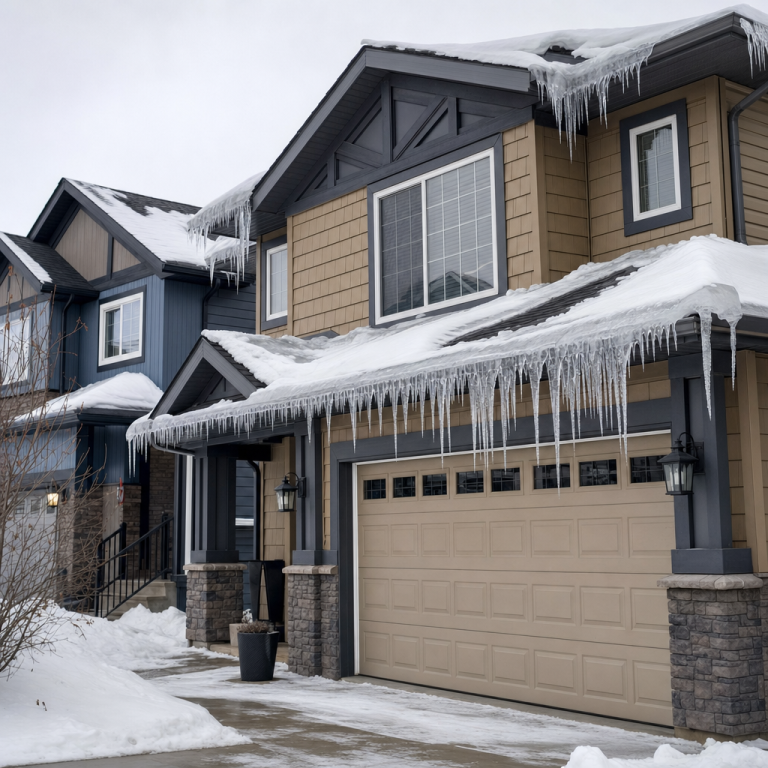
- Ice dams or large icicles hanging off your eaves — a classic sign that heat is escaping into the attic and melting the snow above
- Rooms that never seem to hold heat no matter how high you set the thermostat
The City of Calgary specifically flags icicles on your roof and gutters as a possible symptom of poor attic insulation — so if your home grows an icicle collection every January, your attic is talking to you.
The Payback: What Upgrading Actually Saves
The attic is responsible for up to 25% of a home’s heat loss, and the U.S. EPA’s ENERGY STAR program estimates that proper attic insulation and air sealing can cut heating and cooling costs by 15% or more. In Calgary’s long heating season, that adds up quickly — an attic upgrade is one of the few home improvements that pays you back month after month on your energy bills.
It’s not just about savings, either. A correctly insulated attic means a more comfortable, evenly heated home, less strain on your furnace, and protection against the moisture and ice-dam damage that cold Calgary attics are prone to. We go deeper on the dollars-and-cents side in our article on how residential attic insulation upgrades lower your Calgary energy bills.
How Eco Attic Solutions Gets Your R-Value Right
At Eco Attic Solutions, we don’t guess. Our process starts with a free attic assessment to measure your current R-value and inspect for air leakage, moisture, and old or contaminated insulation. From there we give you a clear recommendation to reach the R-60 Calgary standard — including eco-friendly cellulose options — and we air-seal before we insulate so the number on paper actually translates to comfort in your home.
Every project is backed by our 12-Month Workmanship Guarantee and a post-installation inspection, and we offer flexible financing with up to 6 months of deferred payments so a properly insulated attic fits your budget. It’s why over 780 Calgary homeowners and businesses have trusted us with their attics.
Ready to find out where your attic really stands? Get your free, no-obligation quote today — call (403) 990-9033 or reach out here. Stop paying to heat the sky, and start keeping the warmth where it belongs.