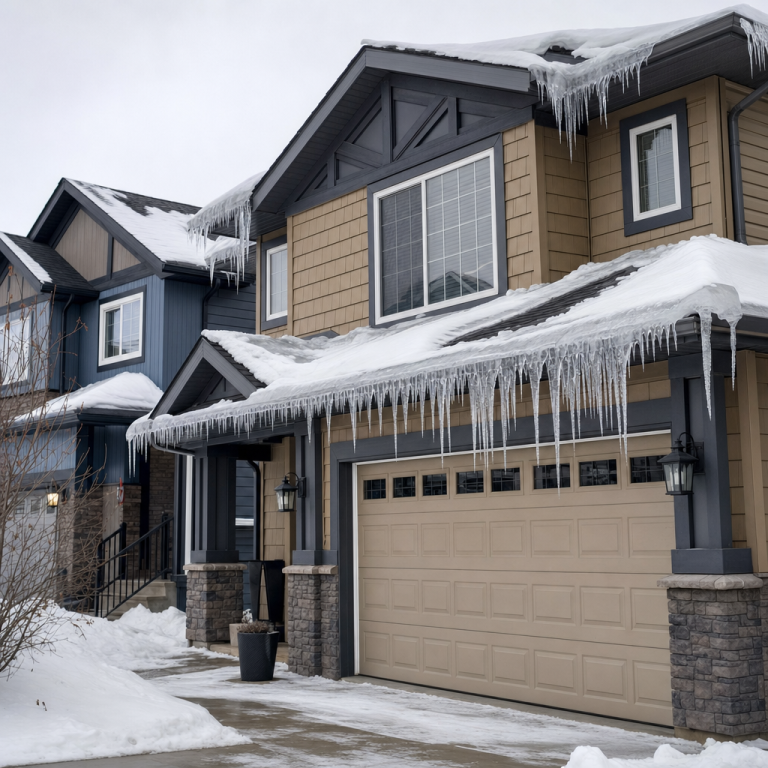
Every winter in Calgary, something quietly dangerous builds along the edges of thousands of rooftops. You might have noticed it yourself — a thick, glistening ridge of ice at the eaves, icicles dripping from gutters, maybe a damp spot on an upstairs ceiling you can’t quite explain. These are the calling cards of ice dams, and they are one of the most underestimated threats to homes in Climate Zone 7A. Left unchecked, an ice dam can force thousands of litres of water under your shingles, into your walls, and through your ceilings — turning what looks like a winter decoration into a repair bill that easily reaches $3,000 to $5,000 or more.
The good news: ice dams are almost entirely preventable. And the fix doesn’t start on your roof — it starts inside your attic.
What Is an Ice Dam, and Why Should Calgary Homeowners Care?
An ice dam is a ridge of ice that forms along the lower edge of your roof, blocking meltwater from draining properly off the surface. Here’s the cycle: warm air from your home’s living spaces escapes upward through a poorly insulated or leaky attic, heating the roof deck from below. Snow on the upper sections of your roof melts from this warmth beneath it. That meltwater flows downhill toward the eaves — which, unlike the upper roof, stay close to outdoor temperature. There it refreezes and accumulates into a dam.
As more meltwater pools behind the growing dam, it has nowhere to go but sideways — under your shingles, into the roof decking, and eventually through your ceiling. According to Cornerstone Insurance, ice dam damage to walls, ceilings, insulation, and structural components is one of the most common winter insurance claims in Alberta. Flashing repairs and insulation replacement alone can run $1,500 to $3,000, and that figure doesn’t include water-damaged drywall, mould remediation, or structural wood rot — all of which are possible when a dam goes undetected for weeks.
Unlike a single severe storm, ice dams build gradually, often over weeks. By the time a homeowner notices water staining on the ceiling, the damage above is already extensive. Most Alberta home insurance policies do cover ice dam damage, but coverage is complicated by questions of whether the damage was “preventable” — and a home with inadequate attic insulation is hard to call unpreventable.
How Calgary’s Unique Climate Creates the Perfect Ice Dam Conditions
Not all cities share Calgary’s particular combination of climate factors. While Edmonton and other Prairie cities deal with prolonged deep freezes, Calgary’s notorious Chinook winds create a far more destructive pattern: repeated, rapid freeze-thaw cycles compressed into days rather than seasons.
The Chinook Effect: Calgary’s Hidden Roof Risk
A Chinook can raise outdoor temperatures by 20°C or more within 24 hours, causing rooftop snow to melt rapidly. When the warm front passes, temperatures plunge again and all that meltwater refreezes. This cycle can repeat a dozen or more times between November and March. Each repetition allows ice to accumulate at the eaves, and the expanding ice can pry apart shingles, widen existing gaps, and push progressively deeper under the roofing material.
Calgary roofing professionals confirm that Chinook-driven freeze-thaw cycles from December through March are when ice dam damage peaks locally. Homes with inadequate attic insulation are disproportionately affected because their roofs never stay at a uniform temperature — the upper sections are warm from escaping heat, the edges are cold from outdoor air, and every Chinook event exploits that difference. The very feature that makes Calgary winters bearable is also what makes them hard on roofs.
What Ice Dams Actually Do to Your Home
The visible ridge of ice is just the beginning. Water pooling behind an ice dam behaves like a slow, pressurized leak with nowhere to go except into your home’s structure. It seeps under shingles, saturating the roof deck. From there it can travel down through the attic insulation — compressing it and destroying its R-value — and into ceiling joists and drywall below. Homeowners have opened up ceilings to find black mould growing on framing members that has been quietly advancing through an entire heating season.
Gutters are another casualty. The weight of ice accumulation can pull gutters away from the fascia board, causing both cosmetic damage and structural compromise at the roof edge. In severe cases, ice dams have caused partial roof deck failure in older Calgary homes with already-stressed rafters. Even a “minor” ice dam that doesn’t cause visible water intrusion still stresses roofing materials, accelerating granule loss, cracking sealant, and shortening the overall roof service life.
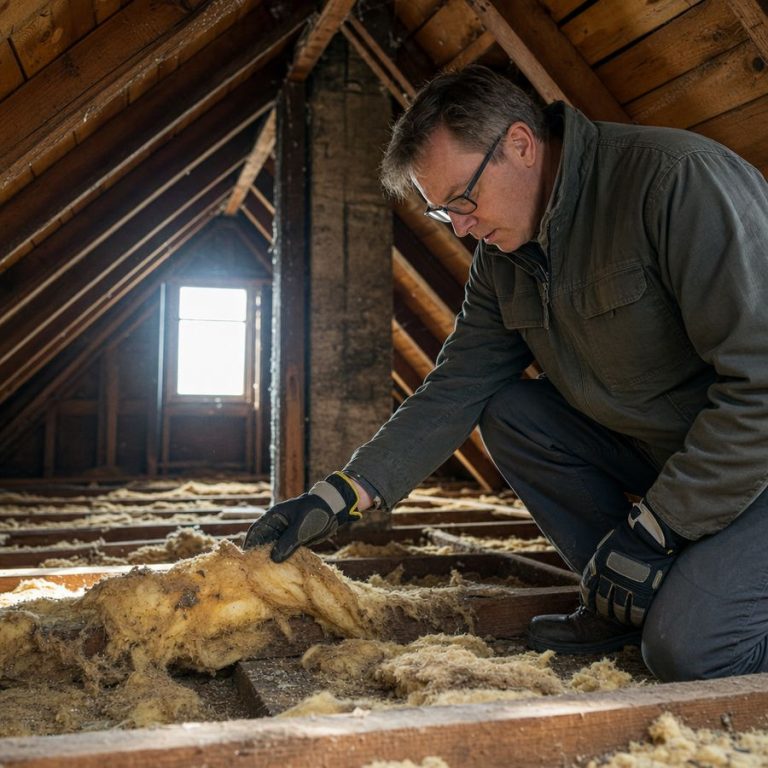
If you suspect your attic insulation has been compromised by water damage or long-term moisture exposure, our guide on how often to replace attic insulation in Calgary covers the signs of moisture-damaged insulation that no longer performs to its rated R-value — including the compaction and discolouration that indicate historic water infiltration.
The Root Cause: Heat Escaping Through Your Attic
Every ice dam investigation starts with the same question: where is the heat coming from that’s warming the roof deck? The answer is almost always the attic. Warm air from your heated living areas rises naturally, and if your attic lacks adequate insulation — or has air leaks around light fixtures, electrical boxes, plumbing vents, or the attic hatch — that warmth transfers directly to the roof deck above, creating the uneven surface temperature that makes ice dams possible.
In Calgary’s Climate Zone 7A, the National Building Code — Alberta Edition mandates a minimum of R-60 (RSI 10.43) for attic ceilings. This standard exists precisely because our winters are severe enough that anything less creates conditions for significant heat loss and the cascade of problems that follows. Yet many Calgary homes built before the mid-2000s have insulation levels of R-20 to R-30 — less than half the current requirement. These homes pay twice as much in heating costs as they need to, and they are precisely the homes at greatest risk for ice dams every winter.
The Natural Resources Canada “Keeping the Heat In” guide — Section 5: Roofs and Attics makes clear that air sealing combined with insulation is the most effective strategy for preventing heat loss through the attic assembly. Even a small gap around a recessed light or exhaust fan can allow substantial warm air to bypass a foot of insulation and heat the roof deck directly above it.
The Two-Part Solution: Insulation and Ventilation
Permanently preventing ice dams requires addressing two systems simultaneously: the insulation that keeps warm air inside your living space where it belongs, and the ventilation that keeps your attic cold and uniform in temperature. These work in concert, and either one alone is insufficient for a Calgary home.
Step 1 — Insulate to Alberta’s R-60 Standard
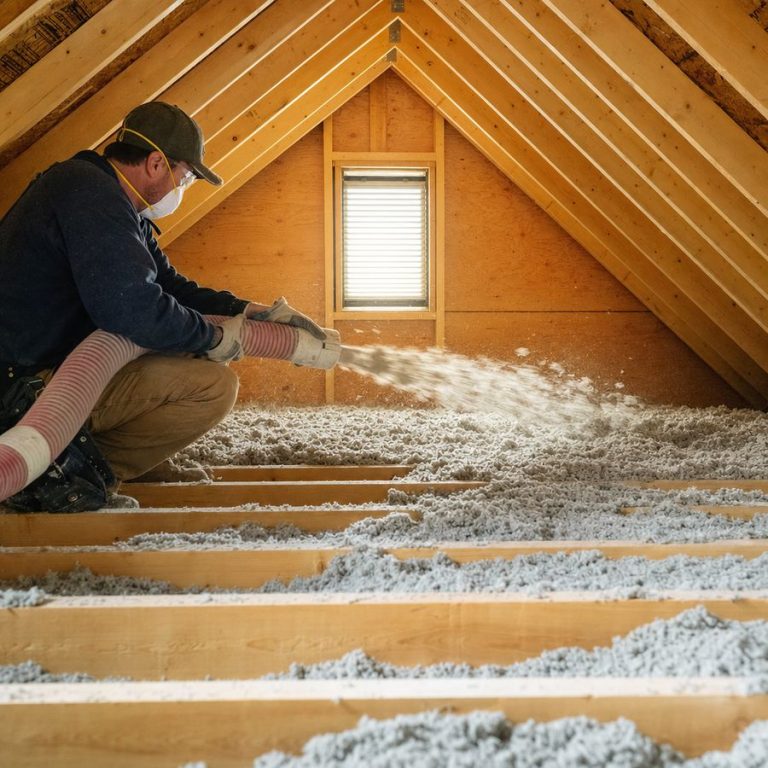
Upgrading your attic insulation to R-60 is the single highest-impact step Calgary homeowners can take to prevent ice dams. By keeping heated air in your living space, you eliminate the heat source that warms your roof deck unevenly. Professional installation using blown-in insulation achieves consistent coverage across the entire attic floor — including the hard-to-reach areas around eaves where batts often leave cold gaps that concentrace heat loss right where dams form.
Our residential attic insulation service includes professional air sealing before insulation is applied, closing the penetrations that allow warm air to bypass the insulation layer entirely. This is critical: insulation installed over unsealed air gaps simply insulates the leaks rather than stopping them. The air sealing step takes additional time but is non-negotiable for achieving real ice dam prevention rather than a partial improvement.
Step 2 — Balance Your Attic Ventilation
Proper ventilation keeps the attic itself cold and dry — at or close to outdoor temperature — so that even if a small amount of heat escapes from below, the roof deck never reaches the temperature needed to melt snow selectively. The standard approach in Canadian construction is a balanced system of soffit vents (intake) at the eaves and ridge vents or gable vents (exhaust) at the peak. When this system works correctly, outdoor air flows continuously through the attic space, flushing out any accumulated warmth or moisture.
The problem in many older Calgary homes is that blown-in insulation from a previous upgrade has blocked soffit vents, or the original ventilation was undersized for the attic volume. Our attic ventilation specialists assess your existing setup and ensure that intake and exhaust are properly balanced, typically targeting one square foot of net free ventilation area for every 150 to 300 square feet of attic floor area, depending on your vapour barrier configuration and local building requirements.
Can You Spot an Ice Dam Before It Causes Damage? A Self-Inspection Guide
Calgary homeowners don’t need special equipment to recognize the early warning signs of ice dam risk. Here’s what to look for from the ground during or after a winter snowfall:
- Thick, uniform icicles at the eaves: Small icicles are normal; a continuous, heavy curtain of ice hanging from the gutters indicates meltwater is pooling and refreezing at the roof edge.
- Snow melting unevenly on the roof: If the upper section of your roof is bare of snow while the edges remain loaded, heat is escaping through the attic and melting snow from beneath.
- Ice behind or above gutters: Ice that has pushed past the gutter line and onto the roof surface indicates active dam formation.
- Water stains on ceilings near exterior walls: Any discolouration on upstairs ceilings near the edge of the house during or after a Chinook thaw is a red flag requiring immediate investigation.
- Peeling paint along the top of bedroom walls: Moisture infiltrating from above often first shows up as paint failure at the ceiling line.
If you identify any of these signs, the priority is to understand what’s happening in the attic before more damage occurs. If existing insulation has been saturated, professional insulation removal may be necessary before any new material can be installed — wet insulation that dries in place often loses significant R-value and can harbour mould growth for years.
What to Do If You Already Have Ice Dams This Winter
If you have ice dams right now, the appropriate response is measured. Do not use a heat gun, chainsaw, or sharp tools to chip ice off your roof — these methods damage shingles and create new entry points for water. A long-handled roof rake, used carefully from the ground, can reduce the snow load driving the dam and slow its growth while you arrange for a permanent solution.
Calcium chloride ice melt placed in a stocking and laid perpendicular to the dam can create a drainage channel. This is emergency management, not a fix. The real solution — R-60 insulation, thorough air sealing, and balanced ventilation — should be planned for installation when outdoor conditions allow safe attic work, ideally in late summer or early fall before the first snow of the new season.
How Eco Attic Solutions Helps Calgary Homeowners Stop Ice Dams for Good
Eco Attic Solutions has helped over 780 Calgary homeowners and businesses upgrade their attics, and ice dam prevention is one of the most compelling reasons clients come to us each year. Every project starts with an honest, no-pressure assessment — we measure your existing insulation depth, identify air leakage points, and evaluate your ventilation configuration before recommending anything. You’ll receive a clear picture of what’s in your attic and exactly what it needs to perform correctly.
Our installation teams seal all air leakage points first, then apply blown-in insulation to achieve a consistent R-60 across your entire attic floor. We use eco-friendly materials where possible, and every project is backed by our 12-Month Workmanship Guarantee. We also offer flexible financing with up to 6 months deferred payments, so you don’t need to wait for the next budget cycle to protect your home from Calgary’s next Chinook.
Contact Eco Attic Solutions today for your free, no-obligation attic assessment, or call us at (403) 990-9033. We’ll help you understand exactly what your attic needs to stay ice dam-free — this winter and every winter after.