If you’ve invested in attic insulation and still feel cold spots, hear excessive outdoor noise, or watch your energy bills stubbornly refuse to drop — there’s a very specific reason, and it probably isn’t your insulation’s fault. The culprit is air leakage, and in most Calgary homes it accounts for up to 35% of total heat loss. That’s nearly a third of your heating bill escaping through gaps you can’t see, in a space most homeowners never inspect. Adding more insulation on top of those gaps is like pulling a thicker blanket over an open window. The R-value on the bag looks good; the thermal performance of your attic is quietly being undermined.
This article explains what attic air sealing is, where the leaks are hiding, exactly how much they’re costing you, and why combining air sealing with insulation is the foundation of every effective attic upgrade in Climate Zone 7A.
What Is Attic Air Sealing?
Attic air sealing is the process of physically blocking the gaps and penetrations that allow conditioned air to escape from your home into the attic — and allow cold outdoor air to infiltrate in the other direction. It is distinct from insulation: insulation slows the conduction of heat through solid materials, while air sealing stops the physical movement of air itself through openings in the building envelope. You need both to achieve genuine energy performance, and air sealing must come first.
The work happens at the attic floor level — specifically at the boundary between your heated living space and the unconditioned attic above it. Professionals use acoustical sealant, low-expansion spray foam, rigid foam board, and sheet metal to close every penetration and gap in this boundary before insulation is installed or topped up on top. In most Calgary homes, comprehensive air sealing takes a half-day to a full day, and the energy savings appear immediately on the next month’s utility bill.
Understanding this distinction matters before you invest in an insulation upgrade. Our comparison of blown-in insulation vs. batts for Calgary homes covers insulation product selection in detail — but regardless of which material you choose, air sealing beneath it is what allows the product to perform at its rated R-value in real-world conditions.
The 10 Most Common Air Leakage Points in Calgary Attics
According to Natural Resources Canada’s “Keeping the Heat In” guide — Section 5: Roofs and Attics, the attic is the most significant source of air leakage in a typical Canadian home. Here are the locations where that air most commonly escapes:
| Leakage Point | Why It Matters | Professional Fix |
|---|---|---|
| Recessed pot lights | Standard pot lights have large openings into the attic and generate heat, making them difficult to foam-seal without fire-rated IC covers | Install airtight IC-rated covers sealed at the perimeter, or replace with LED surface fixtures |
| Attic access hatch | Rarely insulated or weatherstripped — often a direct, unobstructed opening to the cold attic | Weatherstrip the hatch frame; add rigid foam insulation to the back of the cover |
| Plumbing stack penetrations | Gaps around pipes are often several centimetres wide and grow larger as wood shrinks and settles over decades | Seal with flexible acoustical sealant or low-expansion foam rated for plumbing contact |
| Electrical wire penetrations | Every electrical box punched through the ceiling top plate creates an air pathway — and most older homes have dozens | Seal each penetration with acoustical sealant or non-expanding foam |
| Bathroom and kitchen exhaust fans | Fans that terminate in the attic (rather than exiting through the roof) dump warm, humid air directly into the attic space | Re-route ducts to exit through the roof or soffit; seal all penetration gaps |
| Top plates of interior walls | In platform-framed homes built before approximately 1990, wall cavities connect directly to the attic above them | Seal with rigid blocking and foam at every visible interior wall top plate |
| Chimney chases | Fire code requires clearance around chimneys, but that gap must be sealed with non-combustible material — not foam | Install sheet metal flashing sealed at the edges with high-temperature caulk |
| Drop ceilings above cabinets or tubs | Boxed-in soffits above bathroom tubs and kitchen cabinets create large, unblocked chases directly into the attic | Seal the top of the soffit cavity with rigid foam or drywall and acoustical sealant |
| Attic knee walls in 1.5-storey homes | The wall separating the conditioned room from the sloped attic is often uninsulated and completely open at top and bottom | Insulate the knee wall itself and seal its top plate and bottom plate to the floor |
| HVAC ductwork penetrations | Where forced-air ducts enter the attic or pass through the ceiling, gaps often exist around the penetration collar | Seal with mastic sealant or foil tape rated for HVAC applications |
In a typical pre-1990 Calgary bungalow, these leakage points collectively add up to an opening equivalent to leaving a 30 × 30 cm hole in your ceiling — all year, every year. The energy escaping through that “hole” during a -30°C cold snap is enormous, and no amount of insulation stacked on top of it will close it.
How Much Energy Are You Actually Losing?
Natural Resources Canada estimates that air leakage accounts for up to 35% of a home’s heat loss. For the average Calgary household spending $2,400 to $3,000 per year on natural gas for heating, that represents $840 to $1,050 per year in pure waste — money spent heating your attic instead of your home. Over a 10-year period in a Calgary climate where heating bills are among the highest in Canada, that waste compounds to $8,400 to $10,500.
Industry data cited by ENERGY STAR indicates that homeowners who seal air leaks and upgrade insulation together can reduce total heating and cooling costs by 10% to 50%, depending on the starting condition of the home. Air sealing alone — without any new insulation — typically delivers 10% to 20% savings. Combined with a full insulation upgrade to R-60, the savings at the higher end of that range become achievable. For a Calgary home spending $2,800 annually on heating, a 20% saving is $560 per year — which pays back a professional air sealing project in three to four heating seasons.
If you are uncertain whether your current insulation is performing as expected, our article on how often to replace attic insulation in Calgary homes walks through the signs that insulation has degraded or was installed incorrectly — both conditions in which air sealing should be included in any remediation plan.
Beyond Energy Bills: Four More Benefits of Air Sealing Your Attic
The financial case for air sealing is strong on its own, but it isn’t the only reason Calgary homeowners pursue this upgrade. Here are four additional benefits that matter specifically in our climate:
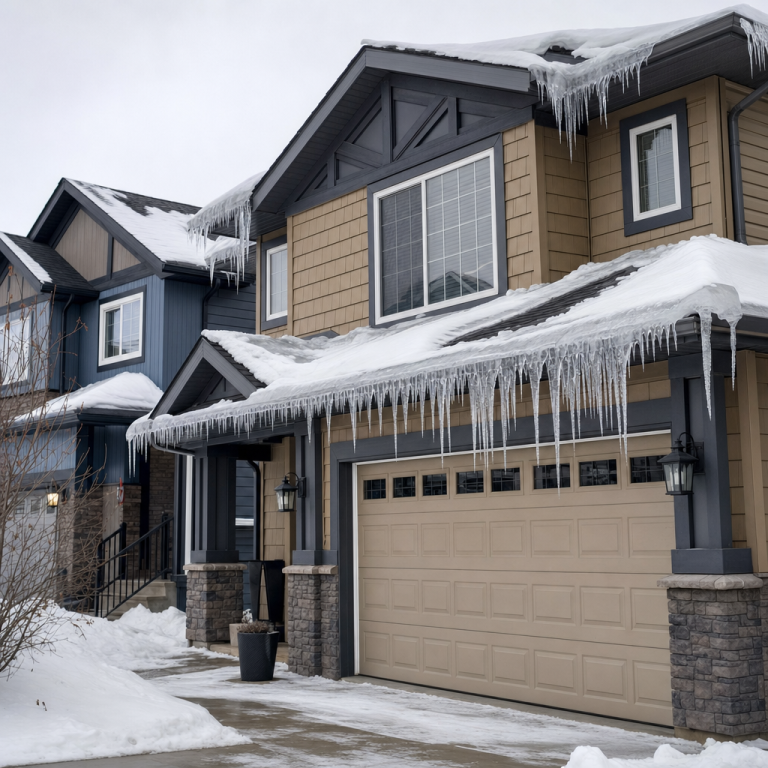
1. Ice dam prevention. When warm air cannot escape into the attic, the roof deck stays uniformly cold — matching outdoor temperature rather than the temperature of your heated rooms. This prevents the uneven snow melting that causes ice dams. For Calgary homes subject to Chinook-driven freeze-thaw cycles from December through March, proper air sealing is one of the most effective ice dam prevention strategies available, working in concert with good attic ventilation.
2. Moisture and mould control. Warm interior air carries significant moisture. When it leaks into a cold attic, that moisture condenses on cold surfaces — sheathing, rafters, roof decking. Over a season, this condensation accumulates and creates conditions for mould growth and wood rot. A properly air-sealed attic stays dry because the moisture-laden air from below never reaches the cold surfaces where it would condense.
3. Indoor air quality. Air sealing is a two-way barrier. It keeps your heated air in, but it also keeps outdoor air — with its vehicle exhaust, fine particulates, radon, and allergens — from being drawn in through stack pressure. In Calgary, where inversions during cold weather can concentrate road traffic pollution, sealing the attic boundary meaningfully improves the air your family breathes, particularly on the upper floors of the home.
4. Noise reduction. Air gaps are sound pathways. Homeowners who have had their attics properly air-sealed consistently report a noticeable reduction in wind noise, hail noise, and traffic sound. In Calgary, where summer hailstorms are a seasonal reality, the acoustic benefit alone is something many clients appreciate immediately after the work is complete.
Calgary’s Zone 7A Climate: Why Air Sealing Matters More Here
Canada’s climate zones range from Zone 4 (mild coastal) to Zone 8 (subarctic). Calgary sits in Zone 7A — a severe continental climate with temperatures regularly reaching -30°C in January and February, powerful UV exposure in summer, and the characteristic Chinook events that can compress months of thermal cycling into 48 hours. This climate makes thermal performance more consequential here than in most Canadian cities.
In Zone 7A, the temperature difference between your heated interior (typically 21°C) and the outdoor air on a January night (-30°C) can exceed 50 degrees Celsius. The physics of air pressure-driven infiltration — called the stack effect — scales directly with this temperature difference. The greater the delta, the harder warm air pushes upward through every gap in the building envelope. Leakage pathways that barely matter on a mild autumn night become major heat loss routes during a deep cold snap. This is why Calgary homes that seem to perform acceptably in fall suddenly show dramatically higher heating bills in January: the same gaps drive orders-of-magnitude more heat loss at -30°C than at -5°C.
The National Building Code — Alberta Edition’s R-60 requirement for attic ceilings reflects this climate reality, but code sets a performance floor. Many energy efficiency professionals recommend pairing R-60 insulation with comprehensive air sealing to achieve genuine comfort at every outdoor temperature Calgary can deliver. Without the air sealing step, even R-60 insulation delivers below its rated performance in cold snaps.
The Air Sealing Process: What a Professional Actually Does
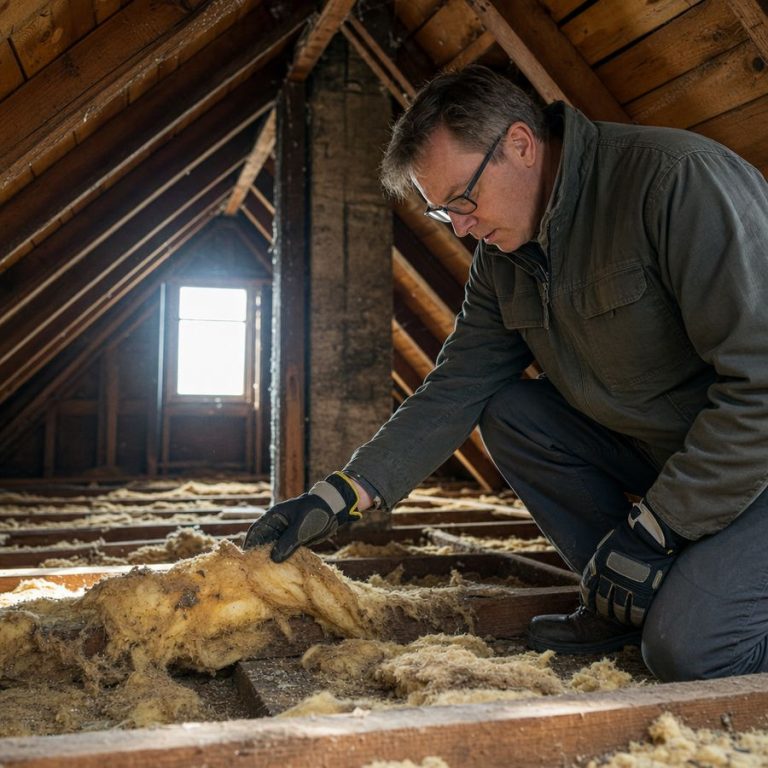
A professional air sealing project begins with a systematic inspection of the attic floor before a single tube of sealant is opened. The technician works across the entire attic space, identifying every penetration, gap, and junction between the attic floor assembly and the walls below. In many cases, a blower door test or thermal imaging survey is used to identify the highest-priority leakage areas — thermal cameras can show warm air actively escaping through penetrations as heat signatures against the cold attic background.
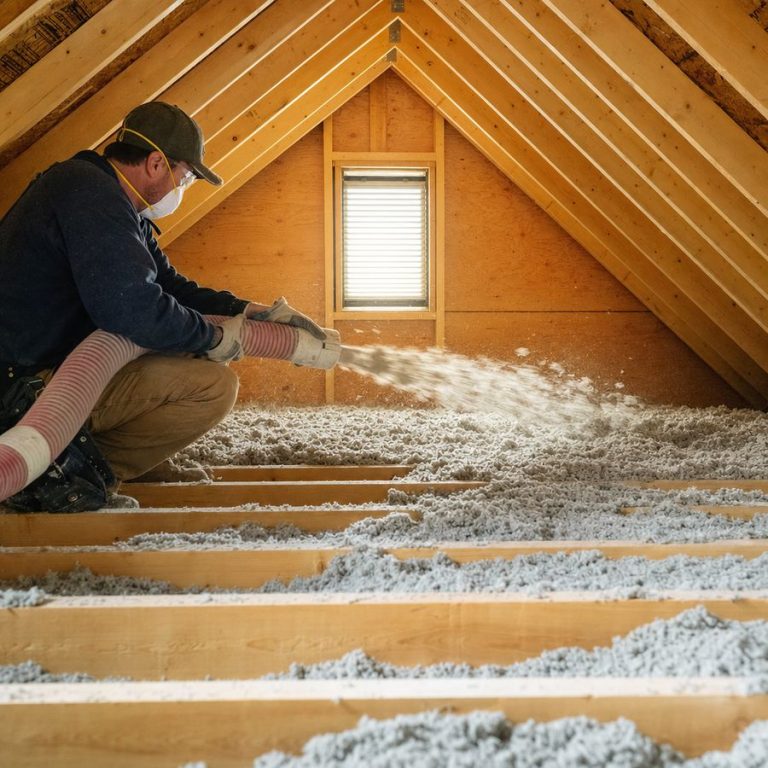
The sealing itself follows a logical hierarchy. Large gaps — chimney chases, open wall cavities, drop ceiling openings — are addressed with rigid blocking and non-combustible materials first. Electrical and plumbing penetrations are sealed with expanding foam or acoustical sealant. The attic access hatch is weatherstripped and fitted with rigid foam insulation on its back face. Exhaust fans are checked for proper termination to the exterior. Only when this work is complete does insulation go on top.
Our residential attic insulation service includes comprehensive air sealing as the first stage of every installation project — not as an add-on, but as the prerequisite that makes everything else work. For homeowners weighing whether to attempt any of this as a DIY project, our guide on DIY vs. professional attic insulation in Calgary is an honest read. Fire code requirements around chimney sealing, the challenge of working safely in a confined dusty attic space, and the difficulty of correctly identifying all leakage points are among the reasons professional air sealing consistently outperforms DIY attempts in performance testing.
Incentives and Financing for Air Sealing in Alberta
The Canada Greener Homes Grant — which offered up to $1,000 for air sealing upgrades and up to $1,800 for insulation — closed to new applicants in late 2025. However, Alberta homeowners still have meaningful options worth exploring. The 2026 Canadian Home Energy Rebates and Tax Credits guide from Ecohome documents programs still available, including the Clean Energy Improvement Program (CEIP), which provides low-interest financing attached to your property tax bill rather than to you personally. This means you can fund attic insulation and air sealing with no upfront cost and repay through your annual property tax over time — with the loan staying with the property if you sell.
Eco Attic Solutions also offers flexible in-house financing, including options with up to 6 months deferred payments, so you can have the work done now and start saving on energy bills before your first payment is due. If you have questions about which programs apply to your situation, visit our FAQ page or call us — we’ll walk you through your options without any sales pressure.
How Eco Attic Solutions Helps Calgary Homeowners Seal and Insulate Right
Eco Attic Solutions has completed attic upgrades for over 780 Calgary homeowners and businesses, and air sealing is included in every residential insulation project we complete. Our team is trained to identify and seal every type of attic penetration found in Calgary homes — from 1960s bungalows with open wall cavities to newer split-level homes with complex soffit configurations. We bring the right materials to every situation: fire-rated sealant for chimney zones, rigid foam blocking for large chase openings, and professional acoustical sealant for electrical penetrations.
Every project is backed by our 12-Month Workmanship Guarantee. After completion, your attic will meet or exceed Alberta’s R-60 code requirement — with the air sealing foundation beneath that insulation to make the R-value perform as promised in real Calgary winters. We also offer eco-friendly insulation materials for homeowners who want top performance with a lower environmental footprint.
Ready to find out exactly what your attic is doing to your energy bills? Contact Eco Attic Solutions for your free, no-obligation assessment, or call (403) 990-9033 today. We’ll measure your existing insulation, identify your air leakage points, and show you specifically what your attic needs to perform correctly — no guesswork, no pressure.