You can live in a Calgary home for years without ever seeing the inside of your attic — and that is exactly the problem. Attic mould is one of the most common and costly moisture issues facing Calgary homeowners, yet it almost always develops in silence, out of sight, until it becomes a significant structural and health concern. By the time you notice a musty smell coming from your ceiling or see water stains spreading across your upper floor, the mould may already have colonized dozens of square feet of roof sheathing and rafter wood. Understanding what causes attic mould in Calgary’s climate — and how proper insulation and ventilation can prevent it — is one of the most valuable things a homeowner can learn.
Quick Answer
Attic mould in Calgary is almost always caused by warm, moist household air leaking into a cold, under-insulated or poorly ventilated attic, where it condenses on roof sheathing and creates ideal conditions for mould within 48 hours (Health Canada). The fix: seal air gaps in your ceiling, ensure R-60 insulation, and maintain proper attic ventilation — tasks best handled by a professional in Calgary’s Climate Zone 7A.
What Causes Attic Mould in Calgary Homes?
Calgary’s Climate Zone 7A climate is a near-perfect recipe for attic mould when homes lack adequate insulation and air sealing. In winter, your living spaces are warm and humid — heated by your furnace, filled with moisture from cooking, showers, breathing, and indoor plants. That warm, moisture-laden air is constantly looking for a way to rise. If your ceiling has any gaps — around pot lights, plumbing stacks, attic hatches, electrical boxes, or HVAC penetrations — that air will find them and migrate into your attic, where it hits surfaces that can be -20°C or colder in a Calgary January.
When warm, humid air contacts cold surfaces, it releases its moisture as condensation — the same physics as a cold drink sweating on a hot day. In an attic, that condensation settles on the underside of your roof sheathing, the rafters, and trusses. Health Canada warns that mould will begin to grow in an area with excessive moisture within 48 hours — a sobering timeline that illustrates how quickly a drafty ceiling can become a mould problem. In Calgary, the condensation cycle is compounded by Chinook events: moisture that freezes on your roof sheathing in November slowly thaws when temperatures swing to +10°C in January, creating a repeated wet-dry-wet cycle that accelerates wood degradation and mould colonization.
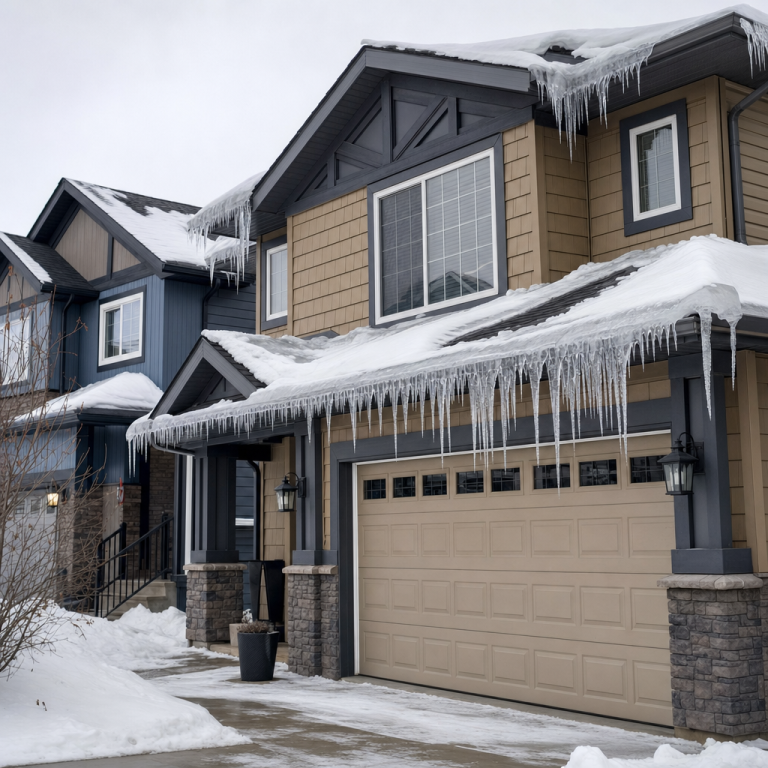
Canada Mortgage and Housing Corporation (CMHC) notes directly in its Attic Venting, Attic Moisture and Ice Dams guide that “attic condensation and ice damming are related — both can be caused by warm, moist air leaving the house and entering the attic.” In other words, if your home has ice dam problems in winter, it is very likely also generating the exact conditions for attic mould. The two issues share the same root cause: air leakage from the living space into the attic. Addressing one typically addresses the other.
How Can You Tell If Your Calgary Attic Has a Mould Problem?
The challenge with attic mould is that it almost never announces itself in ways that are visible from the living space — at least not at first. By the time you see a stain on your ceiling drywall or smell a persistent musty odour in an upstairs room, the mould in your attic may already be extensive. This is why a proactive attic inspection — done by yourself or a professional — is one of the most valuable maintenance tasks a Calgary homeowner can undertake. Once per year, in early spring after the worst of the freeze-thaw cycles have passed, is an ideal inspection window.
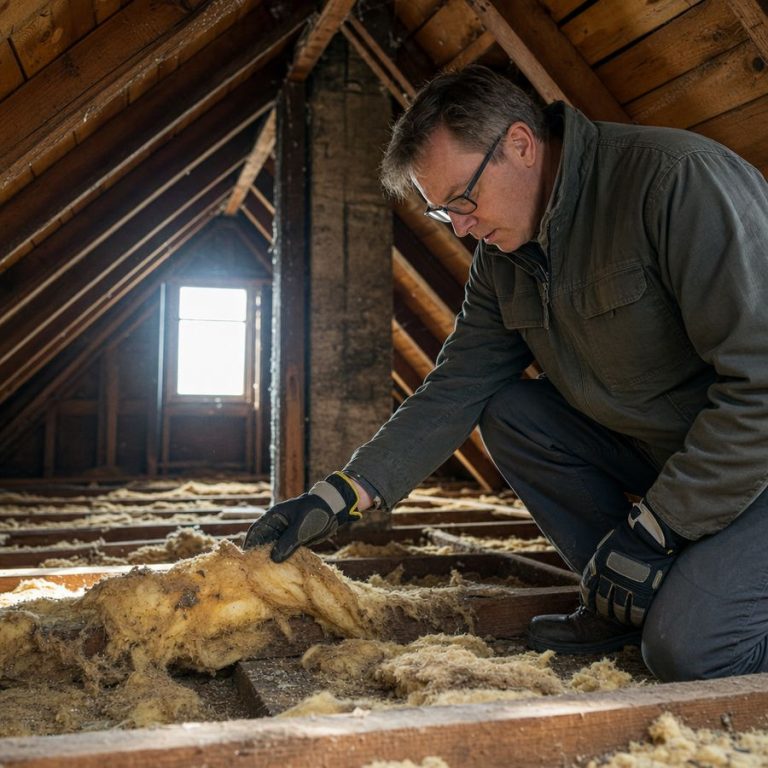
If you feel comfortable going into your attic, here is what to look for. Start at the attic hatch: is there a noticeable temperature difference, or a rush of either cold or warm air when you open it? That airflow is diagnostic — it confirms your ceiling is not properly air-sealed. Once inside, bring a headlamp and look at the underside of the roof deck (the plywood sheathing that forms the underside of your roof). Fresh mould typically appears as small black, green, or grey spots; older mould may look like a broad grey-black staining covering large sections of the sheathing. Pay particular attention to the areas near the eaves and above any ceiling penetrations in your home below. Water stains or soft, discoloured wood are also warning signs, even if no active mould spots are visible yet.
Other signs to watch for without entering the attic: unexplained increases in your energy bills (air leaking out means heat leaking out), frost visible on the underside of your roof deck through the attic hatch on cold mornings, and any musty or earthy odour that concentrates in the upper floor of your home. If you spot any of these signs, do not wait — mould spreads fastest in spring when ambient moisture peaks. Our guide on how to inspect your attic insulation walks through the full process in detail.
Can Attic Insulation and Ventilation Prevent Mould in Your Calgary Home?
Yes — and this is the most important point of this entire article. Attic mould is almost entirely preventable with the right combination of air sealing, insulation, and ventilation. Each of these three elements plays a specific and non-substitutable role. Air sealing cuts off the supply of warm, humid air reaching the cold attic. Insulation keeps the attic floor cold (by keeping heat in the living space where it belongs), which reduces the volume of moisture that any escaped air can deposit. Ventilation carries away whatever moisture does accumulate, preventing it from reaching the concentration needed for mould to establish.
In Calgary’s Climate Zone 7A, the National Building Code – Alberta Edition requires attic ceilings to achieve RSI 10.43 (R-60) of insulation. This is not just a regulatory requirement — it reflects decades of building science research showing that this level of thermal resistance is necessary to prevent the dangerous heat and moisture differentials between living spaces and attics in cold Canadian climates. Homes built before the mid-1990s in Calgary typically have R-20 to R-30 in the attic — less than half of what is needed — which is a major reason why older Calgary homes are disproportionately affected by both ice dam and attic mould problems. Read more about proper attic ventilation in our complete attic ventilation guide.
It is critical to understand the right sequence: air sealing comes first, insulation second, and ventilation third. A common mistake is to add more soffit or ridge vents without addressing air leaks — this improves airflow but does nothing to stop the volume of warm air bypassing your ceiling. Adding insulation on top of existing air leaks can also trap moisture at the old insulation surface. The correct approach, which Eco Attic Solutions follows on every project, is to do a comprehensive air seal of all ceiling penetrations before adding insulation — a process that dramatically reduces both energy loss and mould risk at the same time. Our article on why professional attic insulation beats DIY in Calgary explains why this sequencing matters so much in practice.
When Should You DIY Mould Remediation — and When Do You Need a Pro?
If you discover mould in your attic, Health Canada provides clear guidance on when homeowner remediation is appropriate versus when professional help is required. For small areas — up to 1 square metre (roughly 10 square feet) in a single patch — careful DIY cleanup with N95 respirator, safety glasses, and disposable gloves is acceptable, using unscented soap and water (Health Canada explicitly advises against bleach, which can damage wood surfaces and does not penetrate porous materials). For areas with multiple patches, or any single contaminated area between 1 and 3 square metres, a professional assessment is recommended before you proceed. For any mould colony exceeding 3 square metres — roughly the size of a standard bathroom — professional remediation is required.
In practice, attic mould almost always warrants professional involvement because of where it grows. Attic mould typically colonizes structural wood — roof sheathing, rafters, and trusses — not just a surface that can be wiped down. These are structural elements of your home, and treating them correctly requires proper containment, HEPA vacuum equipment, and antimicrobial treatments that penetrate the wood grain. Attempting DIY remediation on roof sheathing without proper containment also risks spreading mould spores into your living space through ceiling penetrations, potentially creating a health problem that did not exist before you started.
After any mould remediation, the critical next step is addressing the root cause: the insulation and air sealing deficiencies that allowed the mould to develop in the first place. Remediation without addressing root causes is temporary — the mould will return, typically within one to two heating seasons. In many Calgary homes, the right solution is a full attic insulation removal to expose and treat the affected sheathing, followed by a full air seal and new insulation upgrade to R-60. This eliminates both the existing mould and the conditions that created it.
Does Attic Mould Affect Your Health and Your Calgary Home’s Value?
The health implications of attic mould extend beyond a musty smell. Health Canada identifies mould exposure as a cause of “eye, nose and throat irritation; coughing and phlegm build-up; wheezing and shortness of breath; and worsening of asthma symptoms.” People particularly vulnerable include infants, children, seniors, pregnant individuals, and anyone living with asthma or other respiratory conditions — groups that represent a significant portion of Calgary’s population. While attic mould is typically separated from living areas by a layer of insulation and drywall, spores can and do infiltrate living spaces through the same ceiling gaps that allowed warm air into the attic in the first place.
From a property value perspective, attic mould is a significant disclosure issue. Calgary home inspectors routinely access attics during the inspection process, and the discovery of mould during a sale negotiation can trigger price reductions, delayed closings, or collapsed deals. Proactive identification and remediation before listing is strongly advisable. For residential attic insulation clients who are planning to sell, we often complete the full remediation-and-upgrade sequence specifically to protect the home’s market value and avoid surprises during buyer inspections.
Frequently Asked Questions
What causes attic mould in Calgary homes?
Attic mould in Calgary is almost always caused by warm, humid household air leaking through unsealed ceiling gaps into the cold attic, where it condenses on roof sheathing. In Calgary’s Climate Zone 7A, -30°C winter temperatures create extreme cold-surface conditions, and Chinook freeze-thaw cycles repeatedly wet the same wood surfaces. Inadequate insulation (below R-60) and poor attic ventilation accelerate the problem.
How do I know if my Calgary attic has mould?
Look for black or grey spots on roof sheathing and rafters, musty odours in upper-floor rooms, unexplained energy bill increases, or frost visible on the underside of your roof deck in winter. A Calgary spring inspection — after Chinook cycles have peaked — is the best time to catch early mould before it spreads across large areas of structural wood.
Can I clean attic mould myself in Calgary?
Health Canada permits DIY mould cleanup for areas up to 1 square metre using an N95 respirator, safety glasses, and unscented soap (not bleach). For attic mould larger than 1 square metre — which is common — professional remediation is recommended. DIY attic mould cleanup also risks spreading spores into living areas through ceiling gaps, making professional containment advisable in most cases.
How does insulation prevent attic mould in Calgary?
Proper insulation at R-60 (required by the National Building Code – Alberta Edition for Calgary attics) combined with thorough air sealing cuts off the supply of warm, moist air reaching cold attic surfaces. Without that moisture source, mould cannot establish. Air sealing and insulation must be done together — adding insulation alone without sealing air leaks does not solve the root cause.
How much does attic mould remediation cost in Calgary?
Professional attic mould remediation in Calgary typically costs $1,500–$5,000+ depending on the extent of contamination and the area of affected sheathing. When combined with full insulation removal, air sealing, and re-insulation to R-60, total project costs range from $5,000–$12,000 for an average home. The investment prevents structural damage, health issues, and significant real-estate disclosure problems down the road.
How Eco Attic Solutions Handles Attic Mould in Calgary
Eco Attic Solutions offers Calgary homeowners a comprehensive solution to attic mould: from diagnosis through remediation to long-term prevention. Our team understands that mould is a symptom of an underlying insulation and air sealing problem, and we treat both — not just the visible surface contamination. Every project starts with a thorough attic assessment to identify the extent of any moisture damage and the air leakage pathways driving it.
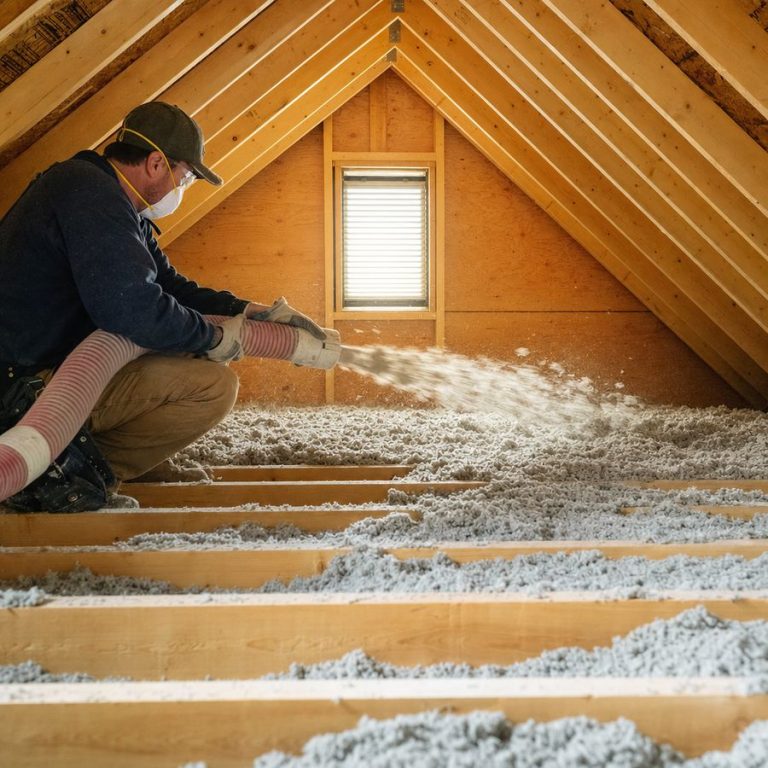
Our attic insulation removal service clears the way for proper remediation, followed by a complete air seal of every ceiling penetration before we install new eco-friendly insulation to R-60. The result is an attic that is not just mould-free today, but structurally resistant to the conditions that allow mould to return. All work is backed by our 12-Month Workmanship Guarantee, and we have completed this process for over 780 Calgary homeowners. Eco-friendly insulation materials — including cellulose and mineral wool options — are available as standard, in line with our commitment to sustainable, low-impact solutions.
Don’t wait until you are looking at a real-estate disclosure problem or a health complaint. Book a free, no-obligation attic assessment today and find out exactly what is happening above your ceiling. Call (403) 990-9033 or visit our contact page to schedule your visit. Flexible financing is available, including up to 6 months deferred, to make the full remediation and upgrade as manageable as possible. Have questions before you call? Check our attic insulation FAQ for answers to common questions about the process, timeline, and cost.