Most Calgary homeowners think about attic insulation in terms of what’s going in, not what needs to come out first. But before new insulation can do its job, old, damaged, or contaminated material often has to be completely removed. In some cases — particularly with vermiculite insulation in older homes or with rodent-infested attics — leaving old material in place isn’t just inefficient, it’s a genuine health and safety risk. This guide walks through exactly when attic insulation removal is necessary for Calgary homeowners, what the process involves, what health hazards you need to know about, how much it costs, and what responsible contractors do before new insulation ever goes in.
Five Situations That Require Attic Insulation Removal
1. Severely Degraded or Compacted Insulation
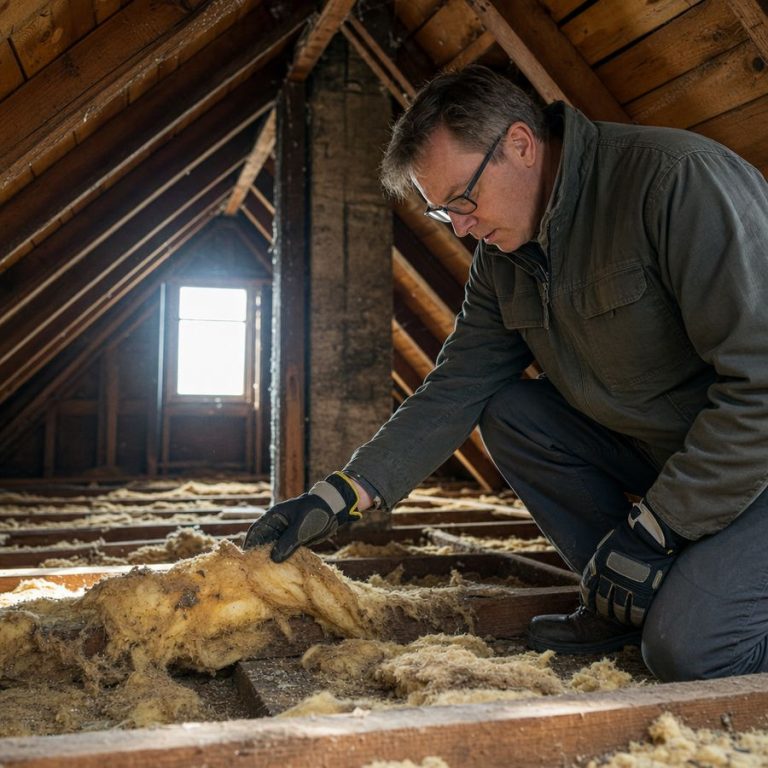
Attic insulation doesn’t last forever, particularly in Calgary’s climate where roughly 128 freeze-thaw cycles per year introduce repeated moisture stress. Fibreglass batts and loose-fill cellulose lose R-value over time as they absorb moisture, compact under their own weight, and develop gaps and voids. Insulation installed at R-20 in the mid-1980s may be delivering the equivalent of R-12 today. When insulation is visibly sagging, matted, heavily discoloured, or has been repeatedly wetted and dried, it typically cannot be restored by simply adding more material on top. The degraded layer must be removed so that air sealing can be completed and new insulation can be installed on a clean, dry substrate.
The clearest signals that removal is warranted rather than a simple top-up: visible insulation voids above exterior walls with near-zero coverage, an energy audit showing heating performance far below what the insulation depth would suggest, or visible mould or staining across multiple zones of the attic floor. Our FAQ page covers common questions about when replacement is the right call versus adding depth, and a free professional assessment from Eco Attic Solutions will give you a definitive answer specific to your home.
2. Vermiculite Insulation (Possible Asbestos)
If your Calgary home was built before 1990 and the attic contains grey, lightweight, pebble-like insulation, it may be Zonolite-brand vermiculite from the Libby Mine in Montana. That mine, which supplied the majority of global vermiculite from the 1920s to 1990, contained natural deposits of tremolite asbestos that contaminated the product. Health Canada’s guidance on vermiculite insulation states that while undisturbed vermiculite poses low immediate risk, any disturbance — attic access, electrical work, HVAC servicing, renovation — releases asbestos fibres and requires handling by a certified abatement contractor. This is not a DIY situation under any circumstances.
Before any work is done on a suspected vermiculite attic, samples must be collected by a trained inspector (using wet techniques to minimize fibre release) and tested by a laboratory using Polarized Light Microscopy or Transmission Electron Microscopy. Testing costs $35–$80 per sample plus inspector fees, and most residential attics require 3–10 samples. If asbestos is confirmed, Alberta’s Occupational Health and Safety Code classifies vermiculite removal as Type 3 — the highest risk category — requiring full negative-pressure containment, certified abatement workers in full PPE, and certified disposal. Any pre-1990 home with grey pebble-like attic insulation should be tested before anyone enters the attic for any reason, including adding a new light fixture or running a cable.
3. Rodent Infestation
Calgary’s fall temperature drops drive deer mice, house mice, and other rodents into attic spaces every year. Rodent-infested insulation is not a situation where spot-cleaning is possible. Rodent urine permeates fibreglass and cellulose throughout the affected areas and cannot be cleaned out — the entire contaminated insulation layer must be removed. The health stakes are serious: deer mice in Alberta carry Hantavirus, which is transmitted by inhaling airborne particles from disturbed rodent droppings, urine, or saliva. Health Canada identifies Hantavirus Pulmonary Syndrome (HPS) as having an approximately 30% case mortality rate with no antiviral treatment available. This is why you should never sweep or vacuum dry rodent droppings — the correct small-scale protocol requires a 1:9 bleach solution and wet paper towels; attic-wide contamination requires professional remediation.
Warning signs of rodent-infested attic insulation include a strong ammonia-like odour, visible dark droppings scattered across the attic floor, shredded insulation used as nesting material, and tunnels or channels burrowed through the insulation. If you observe any of these signs, stay out of the attic and contact a professional immediately. Alongside the insulation removal, all entry points in the building envelope must be identified and sealed before new insulation is installed — otherwise the problem simply recurs the following fall. Our attic insulation removal service covers all of these contamination scenarios.
4. Water Damage and Mould
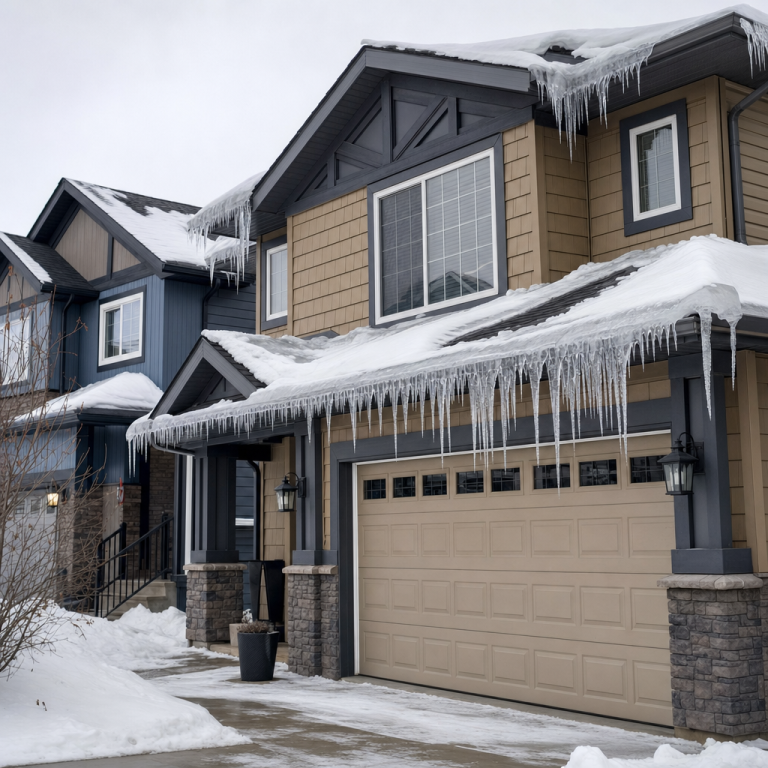
Water-damaged attic insulation is common in Calgary homes, frequently caused by the city’s notorious “attic rain” phenomenon: frost that accumulates during cold snaps melts rapidly during Chinook events and cascades through ceiling penetrations. Insulation that has been thoroughly wetted loses most of its R-value immediately and cannot recover that performance by drying alone. Once mould colonizes the insulation fibres — which can happen within 24–48 hours in the right conditions — the material must be removed completely. The wood substrate beneath it must then be treated before replacement, since mould-contaminated framing continues to degrade air quality and creates ongoing structural risk to roof decking and trusses. Leaving mould-contaminated insulation in place while adding new insulation on top traps the problem and guarantees it spreads.
5. Fire or Smoke Damage
Smoke-damaged insulation absorbs odour compounds from combustion and off-gases them indefinitely into the living space. It cannot be cleaned. Following any fire, however small and localized, the affected insulation in the attic must be removed completely before structural repairs and reinstallation proceed. Building insurance typically covers this cost — document the damage thoroughly with photographs before removal begins, and confirm with your adjuster before work starts.
What the Professional Removal Process Looks Like
Professional attic insulation removal is a controlled, systematic process, not simply vacuuming up material. It begins with a thorough inspection: insulation type, condition, moisture levels, pest evidence, attic height and access constraints, and whether asbestos testing is required before work proceeds. The actual extraction uses industrial-grade vacuum equipment stationed outside the home. A 6-inch-diameter hose is threaded through a window near the attic hatch, keeping all dust, fibres, and particulates out of the living space while all extracted material is filtered directly into sealed bags in the vacuum truck. Technicians work through the attic in systematic passes, extracting loose-fill from every corner, around joists, and behind baffles. Any remaining batt insulation is removed by hand, bagged, and the surface is then vacuumed clean down to the drywall or vapour barrier.
For asbestos abatement, the process is substantially more intensive. Dual-layer polyethylene containment is constructed around the work area. A negative-pressure system ensures air flows into rather than out of the containment zone. All workers wear Tyvek suits, respirators rated for asbestos, and gloves. Wet removal techniques minimize airborne fibre release. After removal, a HEPA vacuum clears all residue, and independent air clearance testing is completed before containment is removed. Asbestos waste is double-bagged in 6-mil poly bags, clearly labelled, and disposed of at a designated certified facility per the Alberta Asbestos Abatement Manual. This is not a process that can be shortcut — every step exists to protect the occupants, workers, and the surrounding structure.
How Much Does Attic Insulation Removal Cost in Calgary?
Removal costs vary substantially based on the type of material, its condition, and whether hazardous materials are present. The table below gives representative ranges for Calgary and Alberta-area projects:
| Scenario | Estimated Cost Range |
|---|---|
| Standard removal — clean, dry insulation (per 1,000 sq ft) | $1,000–$1,500 |
| Water or mould-damaged insulation | $2,000–$3,000 |
| Rodent-infested insulation | $2,500–$3,500 |
| Vermiculite/asbestos abatement (typical Calgary home) | $4,500–$12,000 |
| Combined removal + new installation (Alberta average) | $2.00–$5.50/sq ft |
Key pricing variables include attic square footage, ceiling height and ease of access, insulation type (loose-fill is faster to extract than batts), material condition, presence of hazardous materials, and disposal requirements. Asbestos testing adds $35–$80 per sample plus an inspector’s fee, typically required for 3–10 samples per attic. The cost of doing nothing is also worth considering: an attic performing at half its rated R-value can add hundreds of dollars per year to heating costs, and water or mould damage that spreads into roof framing creates remediation costs that can dwarf what removal and replacement would have cost. For an accurate, itemized quote specific to your home, contact Eco Attic Solutions for a free assessment. Our detailed breakdown of installation costs following removal is covered in our article on the cost of blown-in attic insulation in Calgary.
Alberta Regulations for Asbestos Removal — What Calgary Homeowners Must Know
Alberta’s Occupational Health and Safety (OHS) Code governs all asbestos work in the province. Before any work that may disturb or release asbestos fibres, contractors are required to provide written notification to Alberta OHS at least 72 hours in advance — this is a hard legal requirement, not optional. Vermiculite attic insulation typically falls under Type 3 classification (the highest-risk category) because it is friable — easily crumbled, releasing airborne fibres on contact. Type 3 work requires full containment, negative-pressure ventilation, workers certified in asbestos handling, and independent air clearance testing before re-occupancy. Hiring a general contractor without asbestos abatement certification for vermiculite removal is both illegal and dangerous.
Any Calgary home built before 1990 with grey, pebble-like attic insulation should be tested before any attic work is performed — including work as simple as adding a new electrical circuit or replacing a bathroom fan. The cost of testing is minimal compared to the liability and health consequences of undiscovered asbestos exposure. When you book a free quote visit with Eco Attic Solutions, identifying the insulation type — and whether testing is required before any work proceeds — is the first step in our assessment process.
What Comes After Removal: Air Sealing and Fresh Installation
The removal step is also the best opportunity to address a problem that likely existed before the old insulation went in: air leakage. Once the attic is stripped clean, every ceiling penetration is exposed and accessible — recessed lights, plumbing stacks, electrical boxes, bathroom fans, and attic hatches — and each can be sealed with spray foam or acoustical sealant before new insulation covers them again. This air sealing step is what separates a genuinely effective insulation upgrade from one that delivers disappointing results despite adequate insulation depth. Natural Resources Canada is explicit: air sealing must precede insulation installation for the insulation to perform as rated.
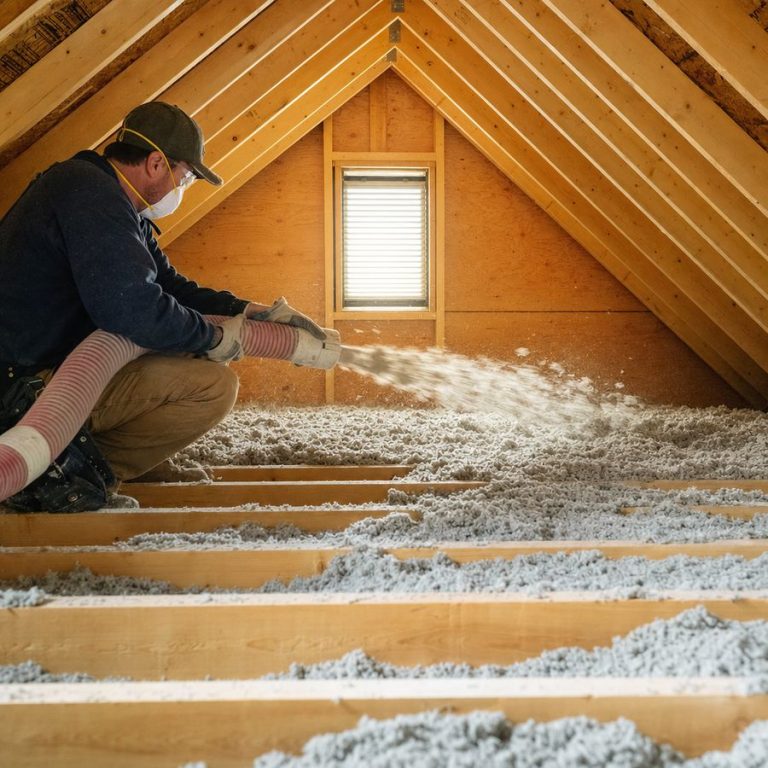
Our team also assesses and corrects ventilation before reinstallation. Rafter baffles are installed at every soffit opening to maintain a clear airflow channel from soffit to ridge, and we verify that the total ventilation meets the NRCan 1:300 standard (one square foot of unobstructed vent area per 300 square feet of insulated ceiling). New insulation is then installed to meet Calgary’s required R-60 (RSI 10.43) under the National Building Code — Alberta Edition. The comparison between insulation types for a Calgary replacement project is covered in our guide to blown-in insulation vs. batts for Calgary homes. And if you’re weighing whether to hire a professional or attempt any attic work yourself, our breakdown of DIY vs. professional attic insulation in Calgary covers why professional removal in particular is not a DIY project.
How Eco Attic Solutions Handles Attic Insulation Removal in Calgary
Eco Attic Solutions has performed attic insulation removal and replacement for over 780 Calgary homeowners. We bring industrial vacuum equipment, handle all aspects of material removal and responsible disposal, perform full air sealing of the attic deck, and install new insulation to meet or exceed Calgary’s R-60 code requirement. Our 12-Month Workmanship Guarantee applies to every project, and we offer eco-friendly insulation materials and flexible financing with up to 6 months deferred payment — making it straightforward to take action even when the scope of work is significant.
If you suspect your attic needs removal — whether from rodent activity, water damage, severely degraded insulation, or concern about vermiculite — the first step is a professional assessment. We’ll inspect your attic, advise honestly on whether removal is warranted and why, and provide a clear, itemized quote with no obligation. Call us at (403) 990-9033 or request your free quote online. Our team is Calgary-based, experienced across every removal scenario, and ready to handle whatever your attic has been hiding.