In Calgary, where January temperatures routinely plunge past -30°C and Chinook winds can swing the thermometer by 20 degrees in a single afternoon, your attic is either your home’s best defence or its most expensive liability. Yet most homeowners rarely think about what’s above their ceilings — until the heating bill arrives, a water stain appears, or an ice dam buckles their eavestroughs. An uninsulated or under-insulated attic doesn’t just let heat escape; it triggers a chain reaction of damage, discomfort, and cost that worsens every winter you wait.
Quick Answer
An inadequately insulated attic in Calgary increases heating and cooling bills by 20–40%, causes destructive ice dams, enables moisture infiltration and mould, and accelerates structural deterioration. Alberta’s Building Code requires R-60 (approximately 20–22 inches of blown-in insulation) for attic ceilings in Climate Zone 7A — most older Calgary homes fall far short.
How Does Inadequate Attic Insulation Drive Up Your Calgary Energy Bills?
Heat moves relentlessly from warm spaces to cold ones, and in a Calgary winter, the temperature difference between your heated living room and the frigid outdoor air can exceed 50°C. Without adequate insulation, your attic acts like an open window — drawing warmth upward and out of the building envelope faster than your furnace can replace it. Natural Resources Canada’s Keeping the Heat In guide identifies the attic as one of the primary areas homeowners should address first, noting that air leakage through attic penetrations — plumbing stacks, electrical boxes, chimneys — can account for substantial heat loss on its own, separate from conductive losses through insulation.
Calgary homeowners with under-insulated attics typically see energy savings of 20–40% after a proper upgrade, according to industry data compiled from Alberta retrofits. For a household spending $3,000 per year on heating and cooling, that’s $600 to $1,200 back in your pocket annually. Homes built before the mid-2000s often have only R-20 to R-40 in the attic — half or less of what the Alberta Building Code now requires at R-60. Every degree of difference between your attic and the outside is money you’re paying AltaGas or ENMAX to generate heat that simply vanishes through your ceiling.
Chinook winds add a uniquely Calgary dimension to this problem. When a warm Chinook rolls in and temperatures jump from -20°C to +8°C within hours, pressure differentials across your building envelope shift dramatically. Air infiltration increases, and any gaps around penetrations in your attic floor act like small bellows — pumping conditioned air out and cold air in. Without proper insulation and air sealing working together, even a mild winter day can cost you more than you’d expect. As our article on how insulation upgrades lower Calgary energy bills explains, the combination of insulation depth and air sealing is what produces real, measurable savings.
What Structural Damage Can a Poorly Insulated Calgary Attic Cause?
The structural consequences of inadequate attic insulation are often invisible until they become expensive. When warm, moist air from your living space rises through ceiling penetrations and contacts the cold underside of your roof deck, it condenses. Over time, repeated wetting and drying cycles cause wood to swell, crack, and eventually rot. Roof sheathing, rafters, and ridge boards are all vulnerable. What starts as a minor moisture issue can evolve into five-figure structural repairs if left unaddressed for several Calgary winters.
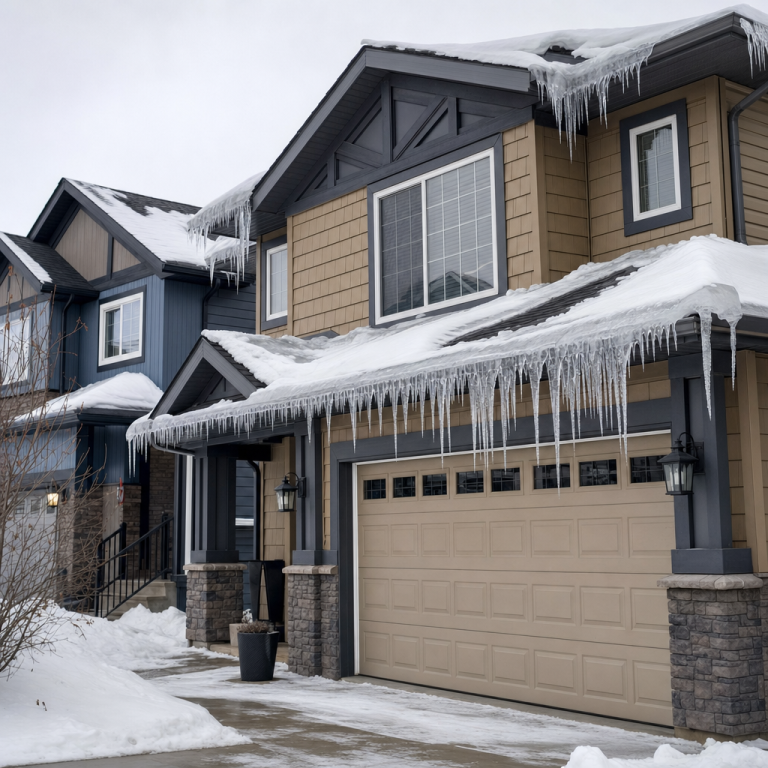
Ice dams are the most dramatic and visible form of structural damage tied to poor attic insulation. When insufficient insulation allows heat to escape into the attic, it warms the underside of the roof deck. Snow melts, runs to the cold eaves (which are above unheated overhang), and refreezes. The resulting ice dam backs water up under shingles, past flashing, and into your attic and walls. Natural Resources Canada notes that the primary solution to ice dams is not heating cables or ice-melt products — it’s keeping house heat out of the attic through proper insulation and air sealing. Calgary’s pattern of heavy snowfall followed by Chinook melts creates ideal ice dam conditions, typically multiple times each winter.
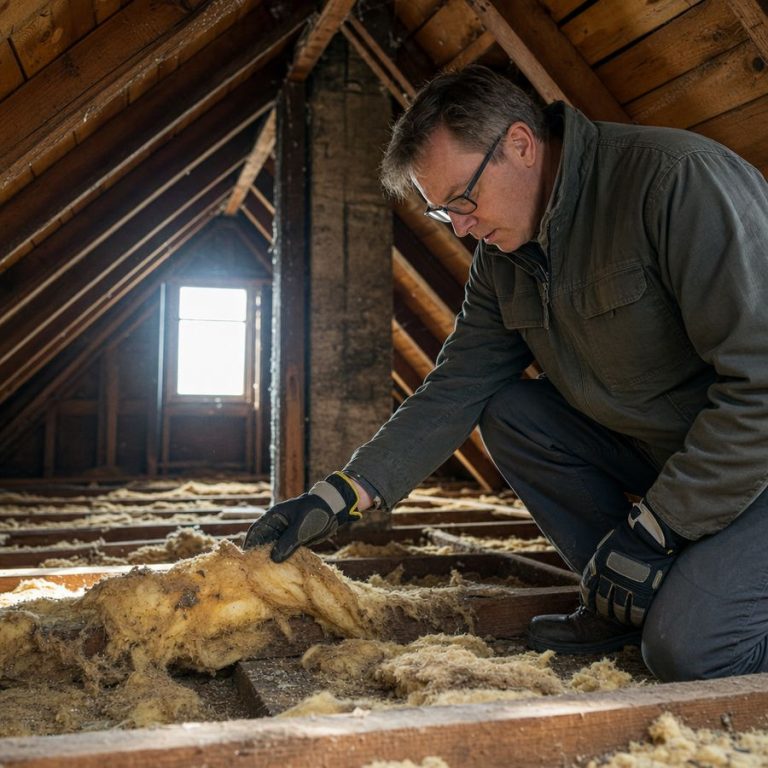
Frost buildup is another structural warning sign. NRCan’s guidelines indicate that 10mm (3/8 inch) or more of frost on the underside of the roof deck signals a serious ventilation and moisture problem. This level of frost is almost always accompanied by inadequate insulation — the two issues compound each other. If you’ve noticed your roof is the last on the block to lose its snow cover, or if you’ve seen icicles forming from the eaves, your attic insulation likely needs urgent attention. Our team’s guide to attic insulation removal covers what to expect when damaged or wet insulation must be replaced before new material can be installed.
How Does an Under-Insulated Attic Affect Comfort and Air Quality in Your Home?
Comfort is often the first thing Calgary homeowners notice when their attic insulation is inadequate, even if they don’t immediately connect the two. Cold floors in upstairs bedrooms, drafts near the ceiling, rooms that refuse to reach thermostat temperature, and a furnace that seems to run continuously — these are the daily symptoms of heat escaping through an attic that isn’t doing its job. In summer, the problem reverses: an under-insulated attic can reach 60–70°C on a hot Calgary day, radiating that heat down into living spaces and forcing your air conditioner to work overtime.
Air quality is a less-obvious but equally important concern. When warm air rises through ceiling gaps into the attic, it carries household moisture — from cooking, showers, and breathing — into a space that can become a breeding ground for mould if condensation occurs. Mould spores from the attic can re-enter living spaces through the same gaps that allowed the warm air to escape, potentially affecting the health of everyone in the house. Proper insulation combined with air sealing interrupts this cycle. Our detailed look at how attic insulation affects indoor air quality explores this relationship in depth.
Sound transmission is another comfort factor that surprises many homeowners. An attic with minimal insulation does little to buffer the sound of rain, hail (common in Calgary summers), and wind against the roof. Dense blown-in insulation significantly reduces noise transmission, making your home noticeably quieter. While not the primary reason to insulate, it’s a meaningful quality-of-life benefit that comes at no additional cost when you upgrade to meet R-60.
What Does Alberta’s Building Code Require — and What Happens If Your Home Doesn’t Meet It?
The National Building Code — Alberta Edition sets a minimum of R-60 (RSI 10.43) for attic ceilings in Climate Zone 7A, which covers Calgary and much of southern Alberta. This isn’t a guideline or a suggestion — it’s the code minimum for new construction and major renovations. Homes built before this standard was adopted often have far less: R-20 or R-30 was common in homes built in the 1970s through the 1990s. If you’ve never had your insulation professionally assessed, there’s a reasonable chance your attic falls short of current requirements.
Falling short of R-60 doesn’t just cost you money in energy bills — it can also affect your home insurance, your ability to sell your home, or your eligibility for certain rebate programs. Some insurers now ask about insulation levels as part of underwriting. Prospective buyers or their inspectors may flag sub-code insulation as a deficiency. And provincial rebate programs, such as those offered through Alberta’s energy efficiency programs, typically require upgrades to at least the code minimum to qualify for incentives. Our 2026 guide to attic insulation rebates and financing for Calgary homeowners breaks down what’s currently available and how to qualify.
Think of R-60 like a speed limit: it’s the minimum considered safe for the conditions. Driving 40 km/h in a 60 km/h zone might feel cautious, but in the context of insulation, going below the code minimum doesn’t save you money — it costs you. Every point of R-value you’re missing is thermal resistance your furnace has to compensate for, every hour of every day, for the entire heating season.
How Much Does It Cost to Fix an Under-Insulated Attic — and Is It Worth It?
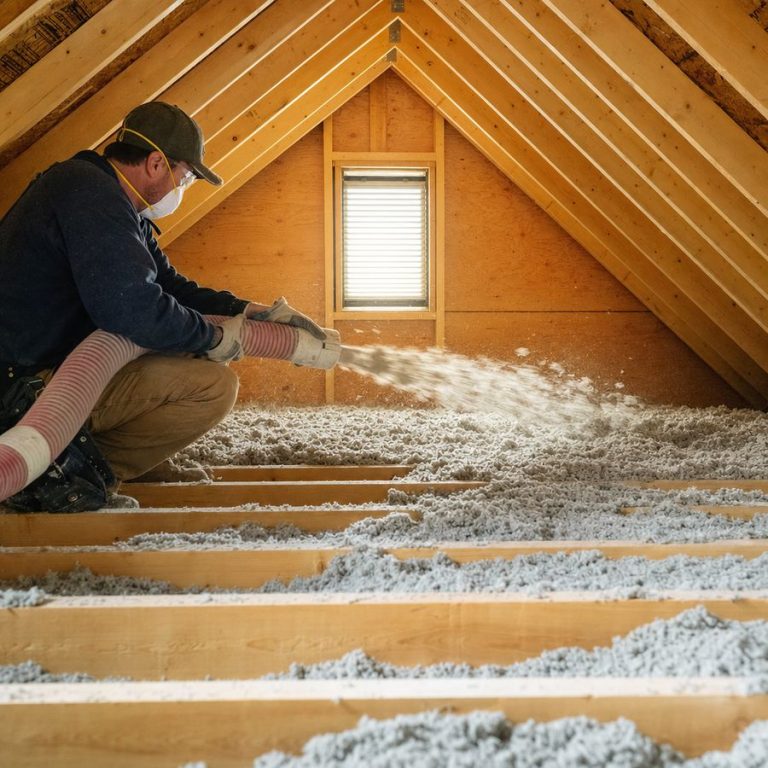
The cost to bring a typical Calgary home’s attic up to R-60 with blown-in insulation generally ranges from $1,500 to $4,000 depending on attic size, accessibility, and whether old insulation needs to be removed first. That investment typically pays for itself in energy savings within one to three years in Calgary’s climate — and then continues generating savings for 20–30 years. A Bowness homeowner who upgraded from R-20 to R-60 reported saving over $1,100 on heating in the first winter alone, according to publicly available case data from Alberta retrofit projects.
If your existing insulation is damaged, contaminated with mould, or infested with rodents, removal is necessary before new material is added — a process that affects the total project cost. Our attic insulation removal service handles this safely and completely. Once the attic is clean, new blown-in or batt insulation can be installed to code, and many homeowners pair the upgrade with professional air sealing to maximize both comfort and savings. Professional installation consistently outperforms DIY in achieving consistent coverage depth across the full attic floor, which is critical to hitting R-60 in every corner.
Financing options also make the decision easier. Eco Attic Solutions offers flexible financing with up to 6 months deferred, meaning you can start capturing energy savings immediately while spreading out the upfront cost. Between financing and available rebates, many Calgary homeowners find that their monthly energy savings offset a significant portion of their monthly financing payment from day one.
Frequently Asked Questions
What happens if you don’t insulate your attic in Calgary?
In Calgary’s Climate Zone 7A, an inadequately insulated attic leads to significantly higher heating bills (typically 20–40% more), recurring ice dams, moisture and mould problems, structural wood damage, and uncomfortable temperature fluctuations year-round. Calgary’s extreme cold and frequent Chinook pressure swings make the consequences more severe than in milder climates.
How much can I save on energy bills in Calgary by adding attic insulation?
Most Calgary homeowners save between 20–40% on heating and cooling costs after bringing their attic up to R-60. In dollar terms, this typically means $300–$1,200 per year depending on your current insulation level, home size, and heating fuel. Many homeowners recover the full cost of insulation within one to three heating seasons.
Does an uninsulated attic cause ice dams in Calgary?
Yes. Ice dams form when heat escapes into the attic and warms the roof deck, melting snow that then refreezes at the cold eaves. Calgary’s pattern of heavy snowfall followed by Chinook warming events creates multiple ice dam cycles each winter. Proper attic insulation and air sealing — not heating cables — is the proven long-term solution.
What is the R-60 requirement for Calgary attics, and does my home meet it?
R-60 (RSI 10.43) is the minimum required by the National Building Code — Alberta Edition for attic ceilings in Calgary’s Climate Zone 7A. Homes built before the 2000s commonly have only R-20 to R-40. A professional attic assessment — which Eco Attic Solutions provides free of charge — will tell you exactly what you have and what’s needed to reach code.
How do I know if my Calgary attic insulation is inadequate?
Key signs include high energy bills, rooms that are difficult to heat or cool, a furnace running constantly in winter, visible ceiling joists through the insulation (meaning it’s below R-22), frost or moisture stains in the attic, and ice dams forming at the eaves. A free professional inspection will give you a definitive answer and an upgrade quote.
How Eco Attic Solutions Helps Calgary Homeowners
Eco Attic Solutions has helped more than 780 Calgary homeowners resolve exactly the problems described in this article — from under-insulated attics wasting hundreds in energy every month, to ice-dam damage and moisture issues threatening the structure of the home. We offer residential attic insulation upgrades using eco-friendly materials, professional air sealing, and expert installation that reaches R-60 consistently across the entire attic floor — not just the easy-to-access middle section.
Every project comes with our 12-Month Workmanship Guarantee: if anything we installed fails due to workmanship within the first year, we fix it at no charge. We also offer flexible financing with up to 6 months deferred payments, so there’s no reason to delay an upgrade that will start saving you money from the very first heating season. And because we use eco-friendly insulation materials, you get performance without unnecessary environmental impact.
Ready to find out exactly what your attic has — and what it needs? Book a free, no-obligation attic assessment today. Call us at (403) 990-9033 or visit our contact page to schedule at a time that works for you. Have questions first? Our FAQ page covers the most common questions Calgary homeowners ask before booking.