Every Calgary winter, your furnace fights a battle it was never designed to fight alone. When temperatures drop to −30°C — a routine reality in Zone 7A — your heating system must replace heat faster than it escapes your home. The attic is where most of that heat escapes. A single poorly insulated ceiling can force your furnace to run 20–25% longer per cycle, driving up energy bills and grinding down mechanical components that were built for normal use. If your HVAC system seems to cycle constantly, struggles to maintain temperature, or has needed more frequent repairs than expected, your attic insulation may be the hidden culprit.
Quick Answer
Poor attic insulation forces Calgary furnaces to run 20–25% longer each heating cycle, accelerating mechanical wear and inflating energy bills. In Zone 7A, where homes face over 5,000 heating degree days per year, upgrading to the Alberta-mandated R-60 can reduce heating and cooling costs by 18–20% and meaningfully extend your HVAC system’s service life.
According to Natural Resources Canada’s Keeping the Heat In guide, approximately 61% of the energy used in the average Canadian home goes directly to space heating. The attic ceiling is the single largest thermal boundary between your living space and the cold — and it is often the most under-insulated surface in the house. Getting the attic right is not a luxury upgrade; it is the highest-return investment most Calgary homeowners can make in their HVAC system and their comfort.
How Does a Poorly Insulated Attic Force Your Furnace to Overwork?
Your furnace’s job is straightforward: bring your home to the thermostat’s set temperature and maintain it. In a well-insulated home, the furnace reaches that target quickly, shuts off, and the home holds its warmth for a long time before the cycle repeats. In a poorly insulated home, the dynamic reverses. Heat escapes through the ceiling almost as fast as the furnace can generate it, so the unit runs nearly continuously, chasing a temperature it cannot reliably hold.
Think of it this way: running a bath with the drain partly open. You can eventually fill the tub if you turn the tap all the way up — but the tap, the hot water heater, and the pipes are all under constant strain, and your water and energy bills are enormous. Close the drain (insulate the attic properly), and the same tap fills the tub easily, then idles. Your furnace operates on exactly the same principle.
Industry research backed by U.S. Department of Energy data shows that proper attic insulation reduces furnace runtime by 20–25% while maintaining the same indoor comfort level. The mechanical consequence is significant: a furnace running 25% less per year accumulates far less wear on its heat exchanger, blower motor, igniter, and control board. This is one reason homes with upgraded insulation report 30–40% fewer HVAC service calls in the five years following installation. A furnace rated for a 20-year lifespan can realistically achieve that — or exceed it — in an energy-efficient home. In an under-insulated Calgary home, the same unit may need major repairs or replacement in 12–15 years.
There is also a comfort dimension that energy numbers alone do not capture. An overworked furnace struggles to maintain even temperatures throughout the home. You may notice certain rooms staying cold, floors feeling perpetually chilly, or the system cycling on and off rapidly. All of these are signs the thermal envelope — starting with the attic — is failing.
Why Calgary’s Zone 7A Climate Makes Attic Insulation Critical for HVAC Longevity
Calgary sits in Canadian Climate Zone 7A, defined by approximately 5,000 Heating Degree Days (HDD18) per year. In practical terms, this means Calgary homeowners must heat their homes for the equivalent of five thousand degrees of thermal deficit every year — a burden exceeded in Canada only by the far North. When the outside temperature is −30°C and your home is set to 20°C, the temperature differential across your ceiling is 50°C. The greater that differential, the faster heat flows through any given material, and the harder your furnace must work.
Calgary’s famous Chinook winds add another layer of stress. When a warm Chinook pushes temperatures from −20°C to +10°C in hours, then cold returns within days, the rapid thermal cycling creates stress on building materials and HVAC components alike. A well-insulated attic buffers these swings, reducing the demand swings your furnace must respond to.
Calgary’s heating season also dictates what kind of furnace the local industry installs. Most new Calgary furnaces operate at a minimum of 95% AFUE (Annual Fuel Utilization Efficiency) — because the heating season is so long and cold that a less efficient unit would be economically punishing. But even a 95% AFUE furnace cannot compensate for a ceiling that is leaking heat as fast as the burner generates it. High-efficiency equipment and high-performance insulation work together; one without the other leaves significant money and comfort on the table.
What R-60 Means for Your Heating System — and Why Most Calgary Homes Fall Short
The National Building Code — Alberta Edition requires RSI 10.43 (R-60) for ceilings below attic spaces across Alberta, including Calgary. R-60 represents the minimum the code considers adequate for our climate, not the optimal level. To reach R-60 with blown-in fiberglass, you typically need 18–22 inches of material in the attic cavity. Many homeowners who install a ruler in their attic find 6–10 inches — enough to achieve only R-19 to R-30.
The gap between what most Calgary homes have and what they need is enormous, and it has direct consequences for every cubic foot of natural gas your furnace burns. ENERGY STAR research shows that in cold climates like Calgary’s, homeowners who air-seal and add attic insulation save 18–20% on annual heating and cooling costs — well above the 15% average for milder climates. For a Calgary home spending $2,400 per year on natural gas, that is $430–$480 back in your pocket every year.
Homes built before the 1990s are particularly likely to fall short of R-60. Insulation from that era often relied on R-12 to R-20 fiberglass batts that have since settled, compressed, or been disturbed by attic work. Each of these factors further reduces the effective R-value, compounding the strain on your heating system. To understand how insulation ages and when it needs replacement, many Calgary homeowners are surprised to learn that insulation does not last forever.
How Does Attic Insulation Affect Air Conditioning and Summer HVAC Performance?
Insulation is a two-way thermal barrier. In winter, it keeps heat in. In summer, it keeps heat out — or more precisely, it slows the rate at which the sun’s energy bakes through your roof and radiates into your living space. Without adequate insulation, attic air temperatures in a Calgary summer can reach 60–70°C, turning the ceiling into a radiant heat source that your air conditioner must constantly overcome.
The result mirrors the winter problem exactly: your air conditioner runs longer, works harder, and wears out faster trying to cool a home with a built-in heat source overhead. Homeowners with upgraded attic insulation consistently report that their cooling season is also more comfortable — upper floors stay cooler, temperature gradients between floors shrink, and the A/C runs in shorter, more purposeful cycles.
Proper attic ventilation works hand-in-hand with insulation to manage summer heat. A well-ventilated attic exhausts hot air continuously, keeping the attic space far cooler than a sealed, unventilated one — reducing the temperature differential your insulation must manage. Insulation without adequate ventilation leaves heat trapped; ventilation without insulation lets conditioned air escape. Both are essential.
How Much Can Better Attic Insulation Save on HVAC Costs in Calgary?
The savings calculation for Calgary homeowners is straightforward and compelling. If your home currently has R-20 attic insulation and you upgrade to R-60, you are eliminating the majority of conductive heat loss through the ceiling — the largest single source of energy waste in most homes. Combine that upgrade with basic air sealing (caulking around light fixtures, plumbing penetrations, and the attic hatch), and you address both conductive and convective heat loss simultaneously.
Real-world results in Alberta back up the numbers. Calgary homeowners who have completed full attic insulation and air-sealing projects report first-winter heating bill reductions of $400–$1,100, depending on home size and starting insulation level. With professional installation costs typically ranging from $2,000–$5,000 for a residential attic, the payback period falls between 3 and 6 years — one of the fastest returns available in home renovation. After payback, the savings are pure reduction in your ongoing costs. Read more about what these upgrades cost in our detailed breakdown of blown-in attic insulation costs in Calgary.
There is also a less obvious financial return: deferred HVAC replacement. A new furnace in Calgary runs $3,000–$7,000 installed. If proper attic insulation extends your current furnace’s life by even three to five years, that is a meaningful financial benefit that most homeowners never think to attribute to their insulation upgrade. For more on how insulation upgrades translate to lower energy bills long term, see our guide on how attic insulation upgrades lower Calgary energy bills.
Signs Your Furnace Is Struggling Because of Poor Attic Insulation
Not every furnace problem is a furnace problem. Before calling an HVAC technician, consider whether your attic insulation could be the root cause. The following signs point strongly toward an insulation-related issue:
- Short cycling: Your furnace turns on and off frequently without completing a full heating cycle. This happens when the thermostat is satisfied momentarily, then heat escapes so quickly that the call for heat returns almost immediately.
- Uneven temperatures: Rooms near the exterior walls or directly below the attic are noticeably colder than rooms near the center of the home.
- Furnace runs for hours without reaching set temperature: On the coldest Calgary nights (−25°C to −35°C), an under-insulated home may never fully reach the thermostat target because the ceiling is losing heat faster than the furnace can supply it.
- Energy bills creeping upward year over year: If your bills are rising without a change in usage patterns, settledinsulation losing R-value is a probable factor.
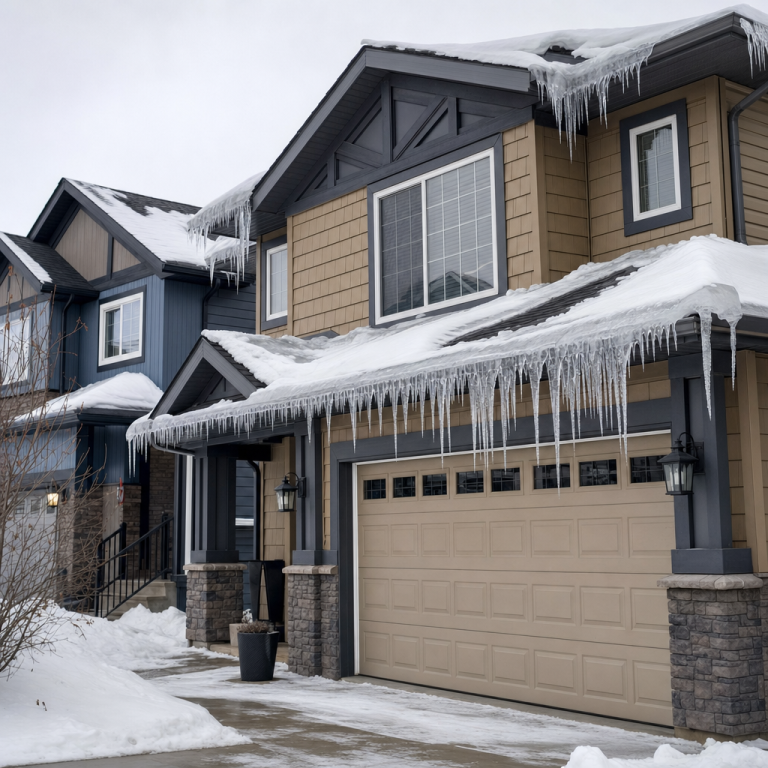
- Ice dams forming at the eaves: Ice dams are almost always a sign that heat is escaping through the attic, warming the roof deck above the eaves and melting snow that then refreezes at the cold overhang.
- HVAC service calls becoming more frequent: Blower motor, igniter, or heat exchanger issues that recur may be downstream symptoms of a furnace running far more hours per year than it was designed for.
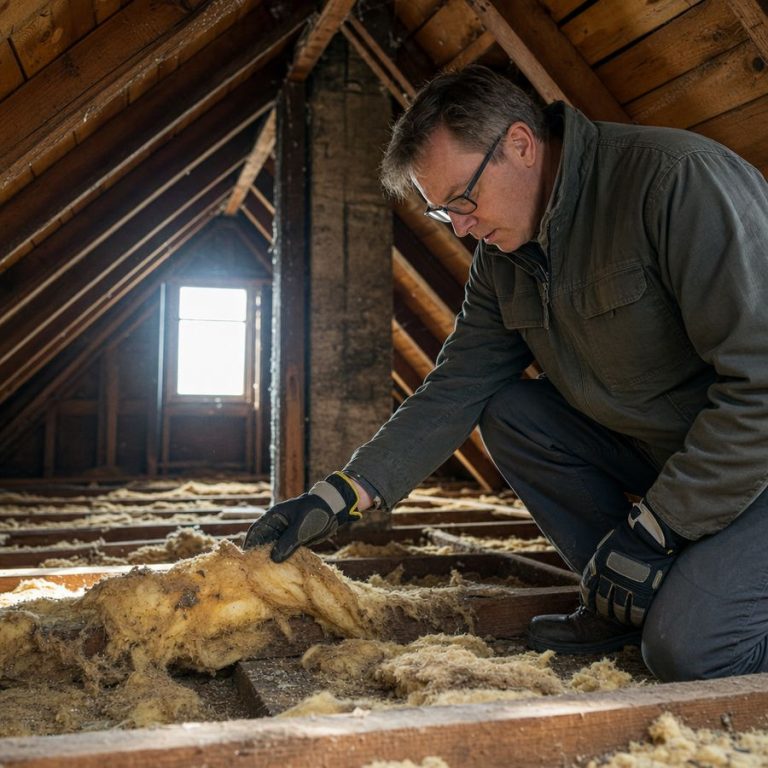
If any of these signs are familiar, the most cost-effective first step is not HVAC service — it is an attic inspection. Learn how to inspect your own attic insulation with our step-by-step guide, or book a professional assessment.
Frequently Asked Questions
How much can attic insulation reduce my furnace runtime in Calgary?
Upgrading attic insulation to R-60 in a Calgary home typically reduces furnace runtime by 20–25%. In Zone 7A, where homes face over 5,000 heating degree days per year, this translates to real savings of 18–20% on annual heating costs. The exact reduction depends on your starting insulation level, home size, and air sealing quality.
Does attic insulation really extend HVAC lifespan?
Yes. A furnace that runs 20–25% fewer hours per year accumulates significantly less wear on its heat exchanger, blower motor, and controls. Homes with well-insulated attics consistently report fewer HVAC service calls and longer equipment life — which can translate to delaying a $3,000–$7,000 furnace replacement by several years.
What R-value does my Calgary attic need for efficient HVAC performance?
The National Building Code — Alberta Edition requires a minimum of R-60 (RSI 10.43) for attic ceilings in Calgary. Many homes, particularly those built before 1990, have only R-12 to R-20. Upgrading to R-60 is the baseline; some experts recommend R-60 to R-80 for maximum efficiency in Calgary’s extreme winters.
Will new attic insulation fix my Calgary home’s cold rooms?
In many cases, yes. Cold rooms near the attic or exterior walls are often a direct result of insufficient ceiling insulation and air leaks. Upgrading attic insulation and sealing penetrations addresses the most common cause. If cold rooms persist after insulation, a ventilation assessment is the logical next step.
How long does it take to recoup the cost of attic insulation in Calgary?
Most Calgary homeowners recoup attic insulation costs in 3–6 years through reduced heating and cooling bills. On a $2,500 project saving $450/year on energy, payback arrives in under 6 years. HVAC maintenance savings and extended equipment life shorten the effective payback further.
How Eco Attic Solutions Helps Calgary Homeowners Protect Their Furnace and Comfort
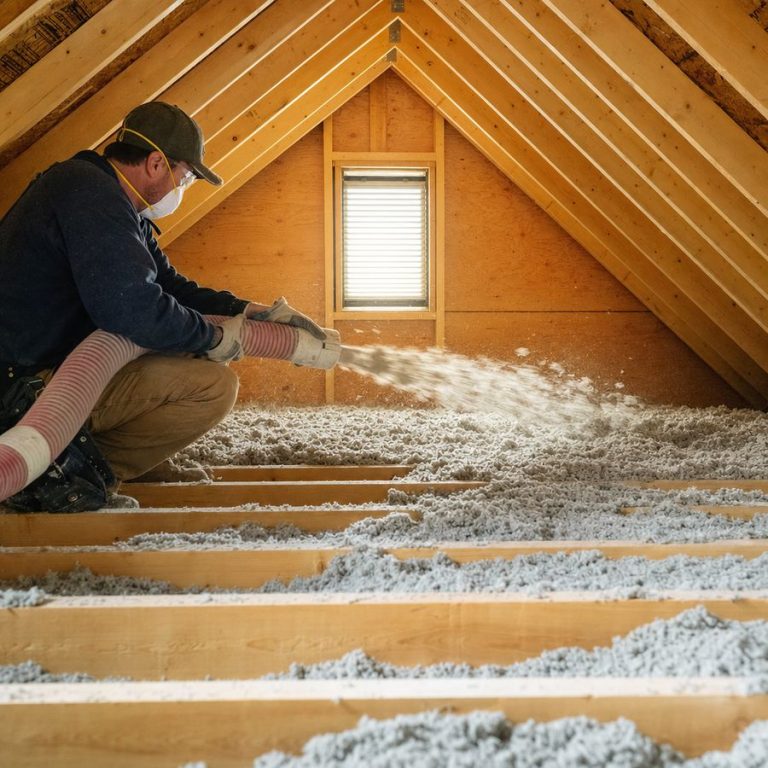
Eco Attic Solutions has helped over 780 Calgary homeowners upgrade their attic insulation — and in doing so, has helped extend the life of hundreds of furnaces and HVAC systems across the city. Our team assesses your current insulation levels, identifies air leaks and thermal bridges, and installs eco-friendly blown-in insulation to bring your home to R-60 or beyond. Every project comes with a 12-Month Workmanship Guarantee, so you can invest with confidence.
We offer flexible financing with up to 6 months deferred payment, and our free no-obligation quotes mean you can know exactly what your project will cost before committing. Whether you are trying to reduce a sky-high heating bill, prepare for Calgary’s harshest winter months, or simply make your furnace’s job easier, we are here to help. Explore our residential attic insulation services or visit our attic insulation FAQ to learn more.
Ready to stop letting heat — and money — escape through your ceiling? Book your free quote today or call us at (403) 990-9033. Our team serves Calgary and surrounding communities, and we are ready to help you make your home more comfortable, more efficient, and easier on your HVAC system — starting this season.